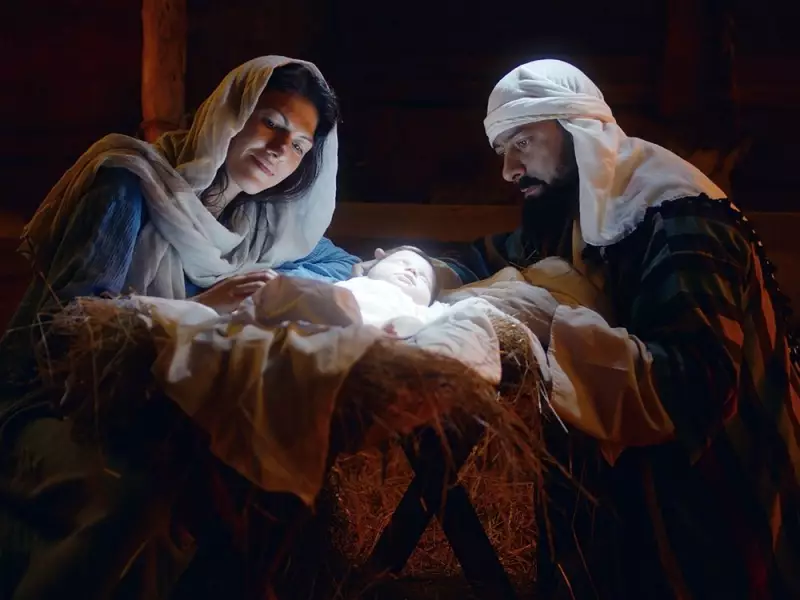
A new national poll has uncovered a fascinating divide in how Canadians view the Christmas season, highlighting significant ambiguity about its fundamental purpose. The survey, commissioned by the Association for Canadian Studies and conducted by Leger, reveals that while a slim majority still connects the holiday to its religious roots, a substantial portion of the population holds more complex, even contradictory, views.
The Defining Ambiguity: Sacred Holiday or Civic Festival?
Jack Jedwab, president of the Association for Canadian Studies, identifies the poll's most striking finding as a core "ambiguity" about why Christmas is celebrated. Canadians are split on whether it should be regarded primarily as a major Christian holy day commemorating the birth of Jesus, or as a major modern civic winter holiday centered on figures like Santa Claus. Jedwab interprets this data as clear evidence of "the desire to de-Christianize Christmas in the spirit of state secularism."
The poll was conducted online between December 19 and 21, 2025, with 1,723 adult respondents. It found that 51% of adult Canadians believe it is important to remember the role of Jesus when celebrating Christmas. This majority, however, is nuanced by demographic divides and the presence of two particularly noteworthy minority groups.

The Curious Minorities: Atheists and Believers at Odds
The data reveals two demographically curious groups that stand out. First, 10% of Canadians who do not believe in God at all nevertheless think it is important to remember Jesus at Christmastime. Conversely, 18% of Canadians who affirm a belief in a god do not think it is important to remember Jesus during the festival marking his birth.
Jedwab suggests that the responses from non-believers who value Jesus's place in Christmas are less about personal conviction and more a societal observation. These individuals might be cultural traditionalists, aesthetes who appreciate the ritual and music, or people who prefer the holiday's unifying, historical aspects over its metaphysical claims. They are "outliers" making a statement about what Christmas should represent in contemporary Canadian society, given its traditional origins.
Broader Belief Trends and Regional Divides
The broader poll results on belief in God align with previous studies. It shows 54% of Canadians say they believe in God, while 32% say they do not, and 14% declined to answer. Belief is stronger among older demographics, with 60% of those over 55 affirming faith, compared to 48% of those under 35.
Provincially, belief runs from a low of 42% in Quebec to a high of 69% in the combined region of Manitoba and Saskatchewan. This regional split is reflected in the Christmas question, where a slim majority of Quebecers feel it is not important to remember Jesus, while younger Canadians nationally are more divided on the issue.
The poll paints a picture of a holiday in transition, serving dual roles in a multicultural society. For many, Christmas remains a sacred time. For others, it is a secular season of goodwill. And for a significant segment of the population, as the data shows, the lines between these interpretations are intriguingly—and quintessentially—blurred.