

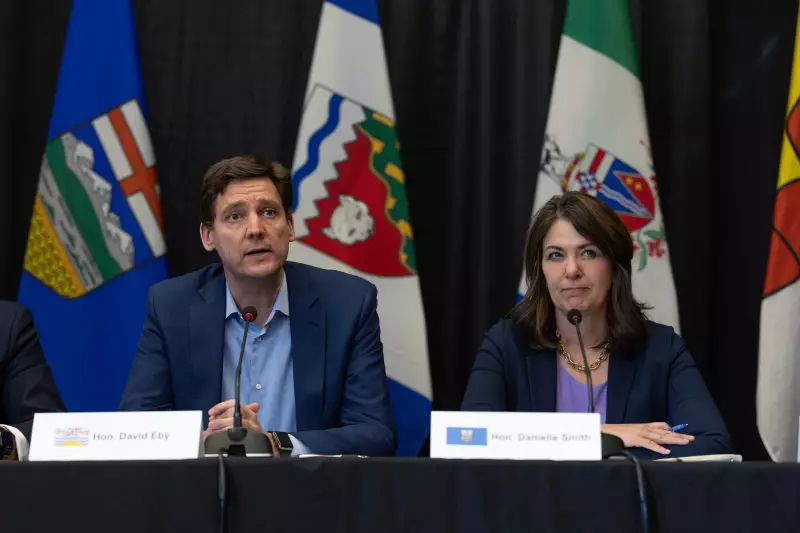
Alberta Premier Danielle Smith has reaffirmed her commitment to seeking collaboration with British Columbia, while still holding out hope for the province's eventual support in lifting the federal oil tanker ban off the northern B.C. coast. The statement underscores the ongoing and complex dialogue between the two Western provinces over energy and environmental policy.
A Persistent Hope for Policy Change
The core of Premier Smith's position remains her desire to see the federal tanker ban rescinded, a move she argues is critical for Alberta's energy sector and Canada's economic interests. This ban, formally known as the Oil Tanker Moratorium Act, prohibits oil tankers carrying more than 12,500 metric tons of crude oil from stopping, loading, or unloading at ports along B.C.'s northern coast.
Smith's approach, however, has evolved to emphasize partnership over confrontation. She acknowledges the political and environmental sensitivities in British Columbia and is now publicly framing her strategy around working with B.C. Premier David Eby's government to find common ground. This shift indicates a recognition of the need for provincial buy-in for any significant policy shift to gain traction nationally.

The Context of Western Relations
The dynamic between the two premiers was on display during the 2024 Western Premiers' Conference in Whitehorse in June. While the tanker ban was a point of discussion, the leaders also addressed broader issues of interprovincial cooperation. Smith's latest comments suggest these lines of communication remain open, even on contentious topics.
For British Columbia, the tanker ban is intertwined with coastal protection, Indigenous rights, and environmental concerns. Premier Eby's government has historically supported the moratorium, aligning with both federal policy and significant public sentiment within the province. Smith's continued outreach represents a long-term effort to alter this calculus by highlighting potential economic benefits and energy security.
Implications for National Energy Dialogue
This ongoing discussion between Alberta and British Columbia is a microcosm of the larger national debate balancing resource development, environmental stewardship, and interprovincial trade. Smith's public stance serves to keep the issue on the political agenda, applying gentle pressure while advocating for a collaborative path forward.
The path to any change in the tanker ban remains steep, requiring not just B.C.'s support but also federal legislative action. However, by positioning Alberta as a seeking partner rather than a demanding adversary, Smith aims to foster a more productive dialogue. The success of this strategy will depend on whether tangible proposals can address the core environmental and economic concerns of both provinces.
As of December 1, 2025, the ball remains in the court of continued diplomacy, with Alberta's leader signaling patience and a persistent hope for a future consensus.






