Saskatchewan's $819-Million Deficit Budget Passes Amid Opposition Criticism
The 2026-27 provincial budget for Saskatchewan, which projects a substantial $819-million deficit, has officially passed in the legislature following a party-line vote of 33 to 18. The vote occurred on Thursday, March 26, 2026, with clear divisions between the governing party and opposition members who voiced significant concerns about the fiscal approach.
Premier Moe's Defense of the Budget
Premier Scott Moe addressed the assembly before the crucial vote, acknowledging the budget's imperfections while defending its necessity. "It is by no means a perfect budget ... I'd like the deficit to be zero," Moe stated candidly. He attributed the deficit primarily to global economic uncertainty, noting that Saskatchewan's per-capita deficit remains lower than that of other Canadian provinces.
Moe emphasized that difficult decisions were required in a challenging economic year. He highlighted several key budget components, including record municipal revenue sharing, affordability measures, plans for constructing an artificial intelligence data center, and substantial health care investments. The premier dedicated much of his address to health care, explaining that constituent conversations influenced this focus.

Health Care Investments and Criticism
The budget strongly supports the recently announced Patients First Health Care Plan, which aims to connect every Saskatchewan resident with a primary care provider and reduce surgery wait times to three months by 2028. "This budget certainly protects the rate of investment and the rate of innovation that's coming into our health care system," Moe asserted. "It's protecting the opportunity that we have to improve the outcomes in our health care system for Saskatchewan families."
However, the health care plan has drawn criticism for repeating targets established in previous initiatives from 2009 and 2012, and for bearing a name nearly identical to the earlier Patient First Review. The current plan emphasizes training, recruitment, and retention of health care professionals, including expanding nurse practitioner practices and increasing health care training seats by 20 at the University of Saskatchewan's College of Medicine.
Moe framed the widening of the Saskatchewan Healthcare Recruitment Agency's mandate as a transformative step toward attracting health care workers to the province. "This is a market change, and this is actually putting, in many ways, the power back into our communities to work alongside being supported by the government," he explained.
Opposition Leader's Strong Rebuttal
Opposition Leader Carla Beck challenged the government's fiscal management during her assembly address, accusing them of attempting to hide behind what she called "a pretty small fig leaf right now in this province." Beck expressed particular concern about health care funding, stating, "No one over there figured out that they might have to eventually pay for a fair deal for those health care workers who are keeping our health care system intact right now."
Her comments echoed concerns raised by Bashir Jalloh, leader of CUPE 5430, the province's largest health care union. The opposition's criticism centered on what they perceive as inadequate planning for fair compensation and sustainable health care workforce development.
Budget Passage and Future Implications
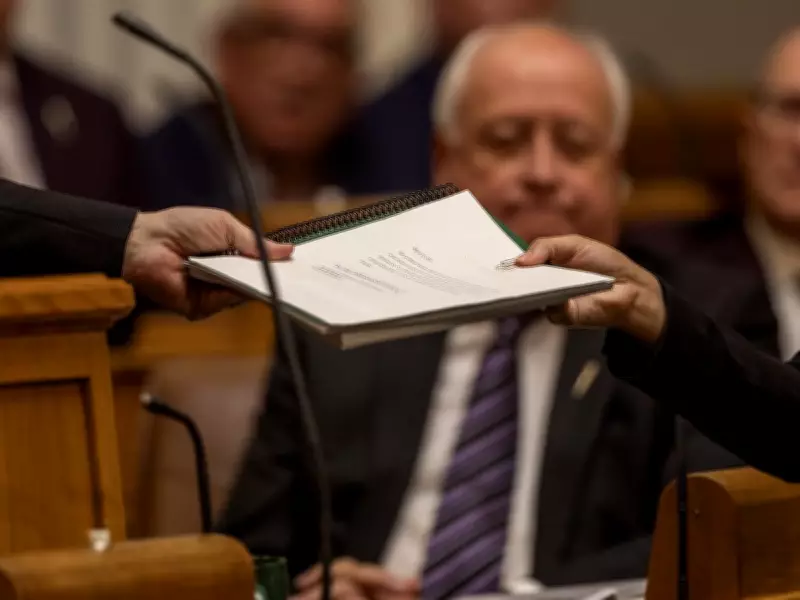
The budget's passage followed traditional legislative procedures, with Deputy Premier and Minister of Finance Jim Reiter formally presenting the document to the speaker on March 18. Both Premier Moe and Opposition Leader Beck delivered lengthy addresses that included acknowledgments of their respective staff and party members before the decisive vote.
As Saskatchewan moves forward with this deficit budget, the government maintains that strategic investments in health care and infrastructure will position the province for future stability despite current economic challenges. The opposition continues to question the fiscal responsibility of the approach, setting the stage for ongoing political debate about Saskatchewan's economic direction and public service priorities.