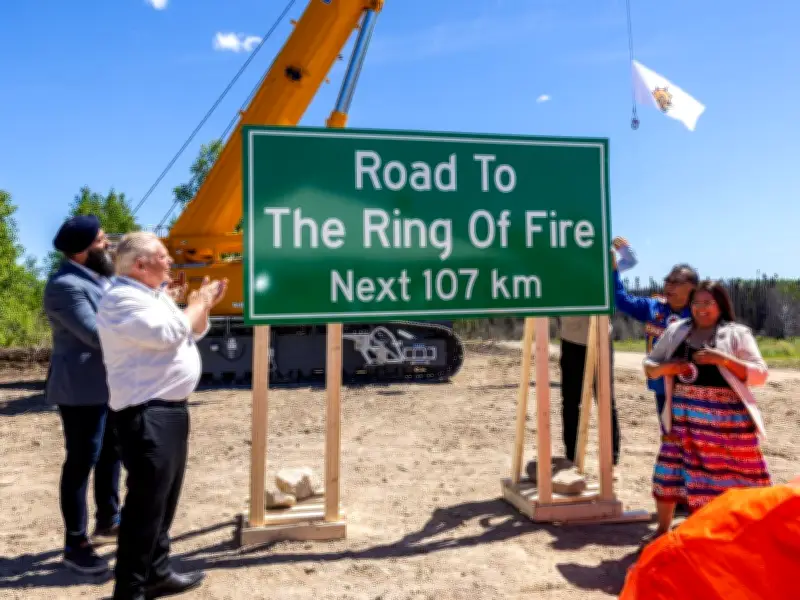
Ontario Premier Doug Ford and Webequie First Nation broke ground on the Webequie Supply Road on June 25, 2026, marking a major milestone for the Ring of Fire mineral development project. The 107-kilometre road, scheduled to open by November 2030—five years ahead of schedule—will connect the fly-in community of Webequie to jobs, services, and economic opportunities.
Decades of delays overcome
Ford’s determination pushed the project past years of federal obstruction and bureaucratic paralysis. The Liberal government in Ottawa, particularly former environment minister Steven Guilbeault, had repeatedly erected roadblocks. In 2023, during negotiations over Stellantis’ Windsor EV battery plant, Ford secured a deal: Ontario would contribute more to the plant if Ottawa dropped its opposition to the Ring of Fire. Shortly after, then-Natural Resources Minister Jonathan Wilkinson expressed support and committed $40 million. Prime Minister Mark Carney has since been more supportive than his predecessor Justin Trudeau.
Indigenous partnerships key
“For us, this road has always been about more than access. It is about creating opportunity and making sure our people benefit from all activity taking place in our traditional territory,” said Chief Lorraine Whitehead of Webequie First Nation. Ford and Indigenous Affairs Minister Greg Rickford worked for years to build trust with First Nations leaders, ensuring the project had community support.

Powering the Ring of Fire
Ford also pushed for small modular nuclear reactors (SMRs) starting in 2019, with the first SMR now under construction in southern Ontario. These reactors could supply energy to both First Nations communities and mining operations in the Ring of Fire, which holds critical minerals like cobalt, chromite, nickel, platinum, and titanium. Energy Minister Stephen Lecce is promoting this technology globally.
The Ring of Fire is no longer just a line on a map—it’s a job site. With the groundbreaking, Ford has turned a decades-old vision into reality.