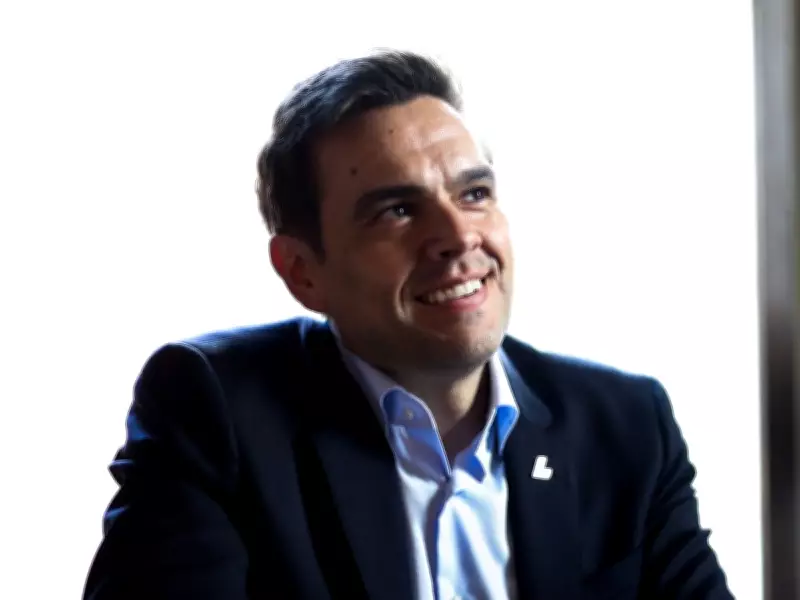
Charles Milliard: The Man Who Could Shield Canada from Another Quebec Referendum
The newly appointed leader of the Quebec Liberal Party, Charles Milliard, represents a potentially pivotal figure in Canadian politics. With his relatively low public profile, business-oriented background, and recruitment by Justin Trudeau, Milliard's emergence carries echoes of familiar political narratives. Yet this leader faces unique challenges that could determine Quebec's constitutional future.
A Political Newcomer Drawing Immediate Attention
During a recent visit to Café Hubert Saint-Jean in Quebec's Eastern Townships, Milliard immediately captured the attention of patrons. Normand Duval, a former RCMP officer turned spiritual healer, quipped about the novelty of political leadership, comparing it to marriage. "It's always fun at the beginning," Duval remarked, prompting Milliard's response that "It's easier at the beginning than near the end." This exchange highlights Milliard's early days in a role that carries immense responsibility.
With merely seven months remaining before Quebec's next provincial election and just over a month in his leadership position, Milliard confronts substantial obstacles. He must simultaneously rehabilitate a party damaged by vote-buying allegations that forced his predecessor's resignation while bearing the weight of potential referendum responsibilities.

The Referendum Shadow and Historical Parallels
Milliard has explicitly stated his readiness to spearhead the "No" campaign should Parti Québécois Leader St-Pierre Plamondon initiate a third referendum on Quebec sovereignty. The PQ has maintained dominance in public opinion polls for two consecutive years, making this scenario increasingly plausible. Historically, Quebec Liberal leaders have assumed this federalist mantle as the primary opposition to separatist movements.
During a meal at Alessa Trattoria, an Italian restaurant he frequents with former Quebec Premier Daniel Johnson—the last leader of the "No" campaign—Milliard framed the political landscape in sports terms. "We're in the first period of the first game. There might be seven games," he observed, suggesting a lengthy political battle ahead while maintaining cautious optimism with "But so far, so good."
Rebuilding Amid Political Comparisons
Some Liberal insiders speculate whether federal political patterns might replicate in Quebec's provincial arena. They reference Conservative Leader Pierre Poilievre's substantial lead evaporating after Prime Minister Mark Carney replaced the unpopular Justin Trudeau. Milliard acknowledges these comparisons but emphasizes distinctions between his trajectory and Carney's.
"I come from the health sector. I have also been active in this party for 28 years," Milliard clarified. "So, our stories are not exactly the same." He further noted Quebec's distinct political climate, where voters seek change after eight years of Coalition Avenir Québec governance.
On a personal level, Milliard's identity as a gay man living with partner Simon Dessureault Dallaire contrasts with Carney's traditional family structure, though both leaders share the challenge of navigating Quebec's complex political landscape.
Milliard's leadership emerges at a critical juncture for Canadian unity. His ability to rebuild the Quebec Liberal Party while positioning it as a credible federalist alternative could determine whether Canada faces another divisive sovereignty referendum. The coming months will reveal whether this political newcomer can translate his business background and party experience into effective leadership during one of Quebec's most consequential political periods.