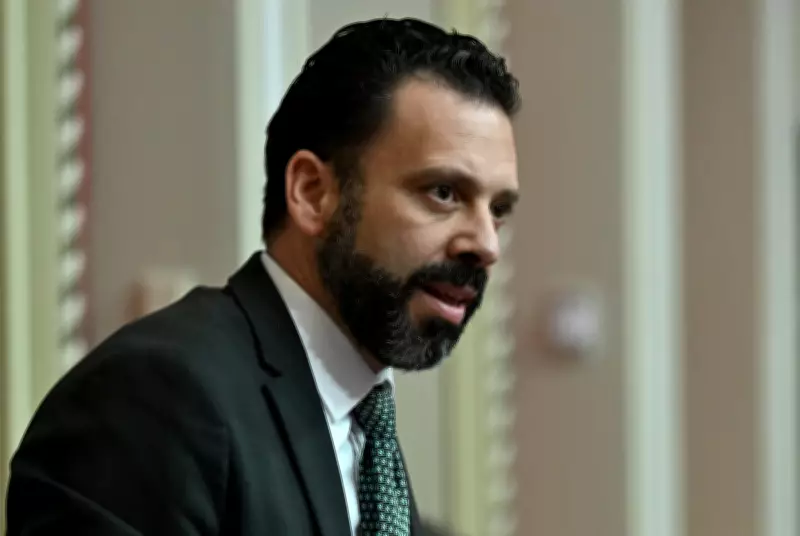
In a recent statement that has resonated across the political spectrum, Québec solidaire Member of the National Assembly (MNA) Haroun Bouazzi has openly condemned what he describes as a 'toxic' political climate in Quebec. His comments, made during a period of heightened legislative activity, highlight growing concerns about the tone and conduct within the province's governing bodies.
Bouazzi's Critique Gains Traction
Bouazzi, who represents the riding of Maurice-Richard, articulated his views during question period at the National Assembly, pointing to a pattern of divisive rhetoric and adversarial politics that he believes undermines constructive dialogue. "The current environment is not conducive to the kind of collaborative work that Quebecers expect from their elected officials," Bouazzi stated, emphasizing the need for a more respectful and issue-focused approach.
His perspective is reportedly shared by a number of colleagues and observers, who note that political discourse in Quebec has become increasingly polarized in recent years. This sentiment is echoed in public opinion polls and media analyses, which often cite instances of personal attacks and partisan gridlock as evidence of a deteriorating political culture.

Context and Implications
The timing of Bouazzi's remarks is significant, as they come amidst debates on key issues such as environmental regulations, social programs, and economic policy. Experts suggest that a 'toxic' climate can hinder legislative progress and erode public trust in democratic institutions. For instance, prolonged disputes over constitutional matters or healthcare reforms may be exacerbated by a lack of collegiality among MNAs.
Furthermore, Bouazzi's critique touches on broader themes in Canadian politics, where similar concerns have been raised at the federal and municipal levels. The emphasis on respectful engagement is seen as crucial for addressing complex challenges like climate change, immigration policy, and indigenous affairs.
Reactions and Moving Forward
Responses to Bouazzi's comments have been mixed. Some political figures have acknowledged the validity of his concerns, calling for renewed efforts to foster bipartisanship. Others, however, have defended the vigor of political debate as a necessary aspect of democracy. "While disagreements are inevitable, we must ensure they do not devolve into toxicity," remarked one analyst, underscoring the balance between robust discussion and mutual respect.
Looking ahead, Bouazzi and his supporters are advocating for specific measures to improve the political atmosphere, such as:
- Implementing codes of conduct for MNAs to promote civility during debates.
- Encouraging more cross-party collaboration on non-partisan issues like public health or education.
- Increasing transparency in legislative processes to build public confidence.
As Quebec continues to navigate its political landscape, Bouazzi's call for a less toxic environment serves as a reminder of the importance of ethical governance and constructive engagement in shaping the province's future.