Ontario Premier Doug Ford's provincial government is demonstrating what critics call a peak level of inconsistency in its "Buy Canadian" economic stance. Within days, the Premier simultaneously threatened to ban a iconic Canadian whisky while proudly unveiling passenger trains built through a German-Californian partnership.
A Dramatic Boycott of Canadian Whisky
The controversy began in earnest on January 10, 2026, but its roots trace back to September of the previous year. At a memorable press conference, Premier Doug Ford, who does not drink alcohol, poured a bottle of Crown Royal whisky onto the ground. His theatrical protest targeted global spirits giant Diageo, which plans to move bottling operations for the American market from southwestern Ontario to the United States.
On Monday, January 9, 2026, Ford told reporters he "can't wait" to remove Crown Royal from Ontario's LCBO shelves and bars once the local bottling facility closes. In a confusing twist, he then advised Ontarians to "stock up" on the very product he intends to boycott.

The move has drawn sharp criticism from Manitoba Progressive Conservative MLA Derek Johnson, who represents the Interlake—Gimli riding where Crown Royal is distilled from Prairie grains. Johnson and the union representing Diageo workers in Gimli warned Ford that his campaign is "jeopardizing livelihoods" in Manitoba. Ford, however, appears unmoved, arguing his primary duty is to Ontario, not national unity.
Contrasting Approach to Transportation Procurement
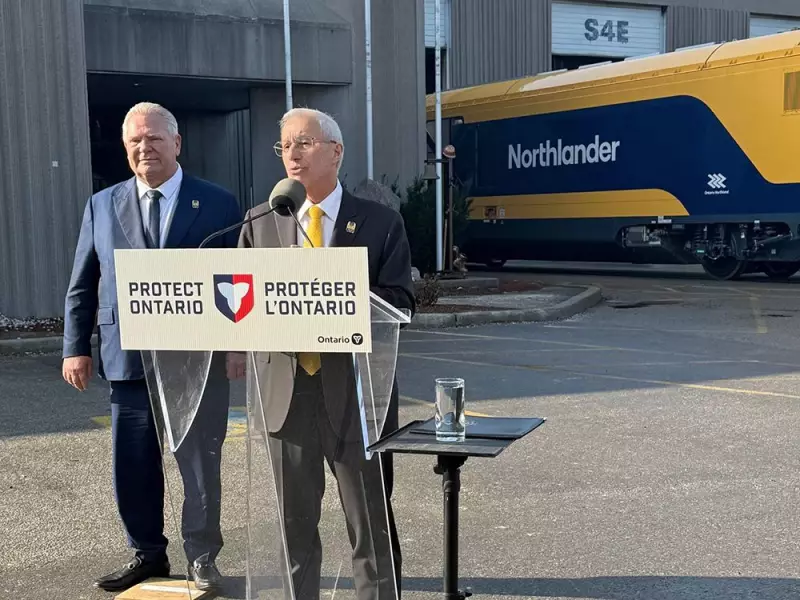
Just days later, on Thursday, January 12, 2026, Ford presented a starkly different approach to procurement. He stood proudly in Toronto beside MPP Vic Fedeli to unveil the province's new Northlander passenger trains. These vehicles, key to reviving rail service between Toronto, Timmins, and Cochrane via Muskoka and North Bay, were built by a consortium of German and Californian companies.
The Ford government is following through on a promise to resurrect the Northlander, which was cancelled by the previous Liberal administration in 2012 due to substantial financial losses. The revived service, operated by the provincial Crown corporation Ontario Northland, is scheduled to begin later in 2026.
However, the revival comes with notable caveats. The published schedule shows a trip lasting nearly 11 hours, comparable to bus travel. Trains will run overnight, with a departure from Timmins to Toronto at 12:15 a.m. and an arrival in Timmins from Toronto at 5:15 a.m.. Unlike older versions, the new trains will lack sleeping accommodations, forcing all passengers, including seniors traveling for medical appointments, to sit upright throughout the journey.
Political Hypocrisy and Economic Consequences
This dual approach highlights a significant policy contradiction. Ford recently earned the media nickname "Captain Canada" for his patriotic posturing during interprovincial disputes, while Alberta Premier Danielle Smith was labeled a traitor for similar province-first advocacy. Yet his actions toward Manitoba's whisky industry undermine any consistent national economic strategy.
Analysts argue that banishing Crown Royal is not in Ontario's long-term interest. Free trade and open markets across the 49th parallel benefit the Canadian economy broadly. Opposing free trade in one sector while embracing international supply chains in another represents a "quintessential piece of utter Ford-brand nonsense," as one commentator described the Premier's advice to stock up on a soon-to-be-boycotted product.
The inconsistency extends to the federal level, where Prime Minister Mark Carney has also been criticized for similar protectionist leanings that contradict broader free trade principles. The episode raises questions about whether Ontario's policies are guided by coherent economic strategy or by the "inscrutable whims" of its premier.

As Ontario prepares to launch its foreign-built trains and potentially shelve a Canadian whisky icon, the Ford government's "Buy Canadian" rhetoric faces a severe credibility test. The coming months will reveal the practical and political costs of this maximum incoherence in economic patriotism.