Municipal Leaders Confront Provincial Ministers at SUMA Convention Over Pressing Issues
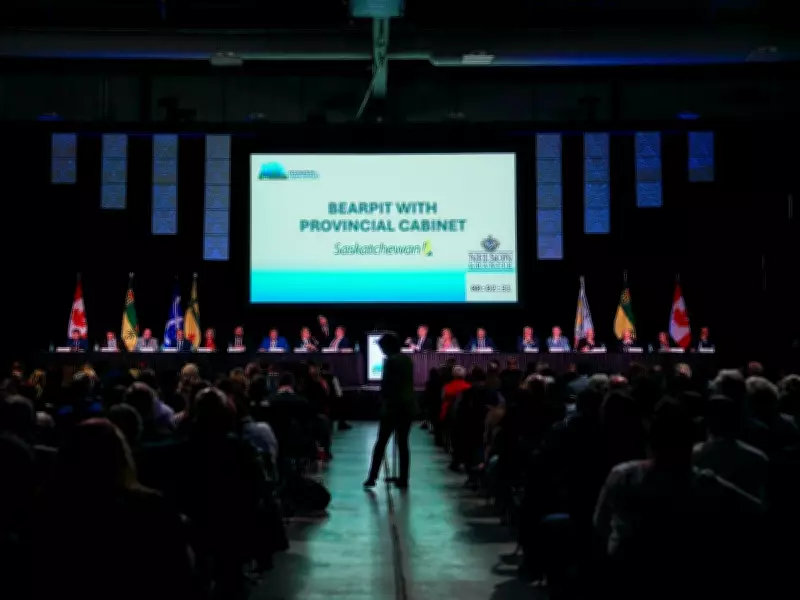
Health care and infrastructure funding dominated discussions as municipal leaders from across Saskatchewan engaged provincial cabinet ministers in a direct question-and-answer session at the annual Saskatchewan Urban Municipalities Association (SUMA) convention in Regina. The event, held on Wednesday, April 15, 2026, saw Premier Scott Moe and his ministers fielding pointed questions from their municipal counterparts during what's traditionally known as a "bear pit" session.
Healthcare Concerns Take Center Stage
Municipal representatives expressed deep concerns about healthcare pressures affecting communities throughout Saskatchewan. The most pressing issues raised included persistent doctor shortages, limited access to mental health supports outside major urban centers, and escalating homelessness counts across the province.
Prince Albert councillor Tony Head delivered particularly strong remarks, stating, "People in desperate need of support and care are being left behind." He warned provincial leaders that "if you leave this for municipalities to sort out, it will continue to get worse."

Council members from Eastend, Broadview, West End, and Maple Creek pressed ministers on specific strategies for retaining doctors in smaller communities, improving mental health service delivery in rural areas, and progressing contract negotiations with health unions currently in bargaining.
Provincial Response and Proposed Solutions
Following the session, Premier Moe acknowledged that the province had heard these concerns "loud and clear" and pointed to Saskatchewan's Patients' First action plan as the framework for addressing them. His comments echoed responses from Health Minister Jeremy Cockrill and Social Services Minister Terry Jensen, who had outlined provincial investments in homelessness supports, healthcare training initiatives, and remote care options designed to serve rural Saskatchewan.
Moe specifically highlighted virtual care as an innovation that "wasn't available 10 years ago" but now represents a viable solution for towns and villages struggling to maintain healthcare staffing. He emphasized that virtual care should not replace emergency services in rural communities but could serve as "an addition and a supplement" to existing healthcare infrastructure.
Infrastructure Funding Pressures
Beyond healthcare, municipal leaders raised significant concerns about the growing financial pressures of infrastructure maintenance and development. SUMA members questioned the province's willingness to increase funding for towns, villages, and cities facing rising construction and maintenance costs.
Regina city councillor David Froh specifically asked whether the province would consider reinstating a provincial sales tax on construction for municipalities, a measure that had been rescinded in 2017. This inquiry followed a resolution from Regina's city council advocating for such financial support.
On Monday preceding the bear pit session, SUMA members had voted overwhelmingly (266-31) in favor of adopting this resolution, which also called for lobbying the province to provide municipalities with additional tax tools to help alleviate cost-of-living pressures on residents.
Provincial Commitment to Collaboration
In response to infrastructure funding concerns, Premier Moe referenced the $392.4 million delivered through the municipal revenue sharing program this year. He expressed openness to "work with municipalities" on exploring additional options while emphasizing the need for prudent financial management.
"The heart of what we've been discussing is the inflationary pressure is very real in communities," Moe stated. "So we have to work together, but we also need to be very, very prudent with the investments."
The bear pit session concluded the annual SUMA convention, providing municipal leaders with a direct platform to voice their communities' most urgent needs to provincial decision-makers. The exchange highlighted the ongoing tension between municipal responsibilities and provincial resources as Saskatchewan communities grapple with healthcare accessibility and infrastructure sustainability challenges.