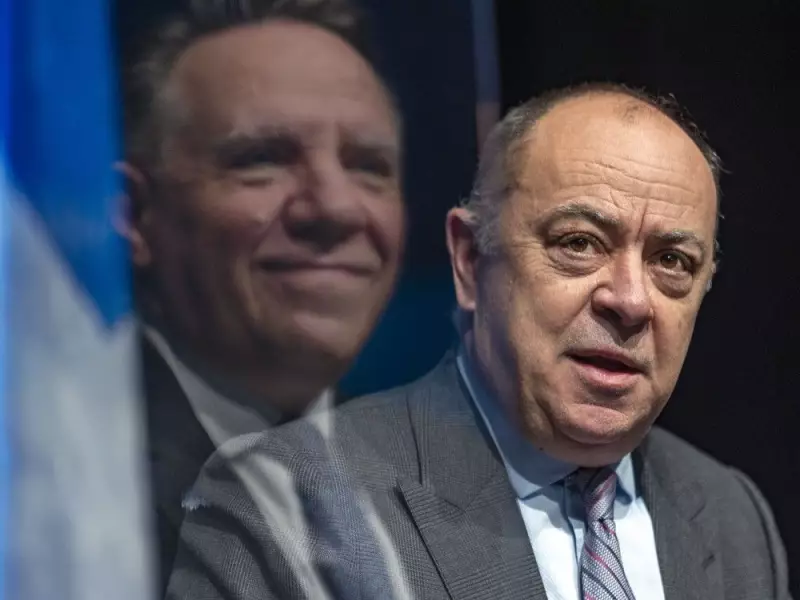
The perennial challenge of managing a provincial health care system has proven to be the decisive weakness for another leader, culminating in the resignation of Quebec Premier François Legault this week. After a protracted and bitter conflict with the province's physicians over compensation and performance metrics, Legault announced he would be stepping down, with a legacy on health that critics describe as deeply flawed.
A Cascade of Resignations and Broken Promises
The unraveling of Legault's health team began in late October with the departure of Social Services Minister Lionel Carmant. A pediatric neurologist and close ally of the premier, Carmant resigned following the passage of Bill 2, the contentious doctors' pay legislation. The situation deteriorated further when Health Minister Christian Dubé, after Legault personally took over the fraught negotiations with doctors, stunned observers by announcing he had "had enough." Dubé will now sit as an independent for the remainder of the government's term.
In his 1,300-word public resignation letter, Legault mounted a defense of his government's health record, pointing to specific achievements. He highlighted salary revisions for health workers and the initiative to replace outdated long-term care centres (CHSLDs) with new Maisons des aînés, designed to offer seniors more space and natural light. He also claimed a victory in establishing a new compensation model for family doctors, which he argued would "revolutionize patient care." Legault, who served as health minister under former PQ Premier Bernard Landry in 2002, also reflected on the immense pressure of the COVID-19 pandemic, citing the hiring and training of 10,000 personal support workers as a point of pride.

A Record of Escalating Crises and Soaring Costs
However, for patient advocates and the data itself, the CAQ's tenure has been marked by systemic failure. Paul Brunet, a veteran patient-rights advocate, offered a stark assessment: "We've never had as many people in the emergency wards than now. And we have not seen the waiting lists diminish in many different (types of health services)."
The government's central 2018 campaign pledge—that no Quebecer would wait more than 36 hours to see a doctor or nurse—was never realized. Currently, nearly 585,000 Quebecers remain on a waiting list for a first appointment with a family doctor after registering through the online access portal. The crisis in surgical delays has turned lethal, with cardiac surgeons warning of a rise in patients dying suddenly while awaiting heart operations. The proportion of patients waiting beyond medically acceptable times for cardiac surgery jumped from 35.5% five years ago to over 64% by November 15 of last year.
Financially, the health portfolio ballooned under the CAQ, with spending on health and social services soaring from $40.8 billion in 2019-2020 to $65.5 billion in the latest budget, with few tangible improvements to show for the investment. The cost of Legault's signature Maisons des aînés project has also spiraled; reports in May revealed that the average cost per room for a planned facility in Sainte-Élisabeth approached a staggering $1.8 million.
The Political Reckoning
The accumulation of health care failures, combined with controversial fiscal decisions like the $270 million in subsidies for the failed Northvolt battery plant and a $500-million overrun on the SAAQclic website project, eviscerated the government's standing in the polls. Legault's personal popularity plummeted in tandem with the system's decline. The premier's initial strong public support during the pandemic's early days eroded following the tragedy at the Herron CHSLD in Dorval, where 47 residents died within a month from COVID-19, dehydration, and malnutrition.
In the end, the accountant-premier who prided himself on economic management could not remedy the province's most vital public service. As Legault himself conceded, the public's desire for change became undeniable, sealing his political fate and underscoring that in Quebec politics, health care remains the ultimate test of leadership.