It is a well-known strategy for developers to try and grab as much density as they can when applying for rezoning a site they want to build on. The developer knows they may not get all the density asked for, but this gives them the ability to reduce the density if and when the community complains the proposed density is too much, and still get more density than the site should probably have. This strategy always puts the community in a defensive position, forcing them to lobby against the development and being labelled NIMBYs.
For example, a developer can remove 10 per cent of the density they originally asked for and say to the city they have listened to the community, while still getting 50 per cent or more than the site was originally zoned for. Alternatively, they will say, “Don’t worry; this is the maximum density, but the market will ultimately decide how much density we can build.”
The issue is that the developer gets a very specific density up front without having to commit to what they are going to actually build — and what amenities they will ultimately provide the community to compensate them for the additional density. This is especially true for large projects that will take more than 15 years to build, as the housing market will change, as will the political and community leaders.

Glenmore Landing Density Grab
In most cases, the city will side with the developer on any increased density application as the city wants more density in established neighbourhoods to slow urban sprawl. Ideally, the city would like to see 50 per cent of all new residential development happening in established communities, which means “upzoning” the land (adding more density).
One of the first mega infill projects the city rejected was the Glenmore Landing proposal to redevelop the existing shopping centre to accommodate six 20- to 35-storey residential towers, adding 1,200 residents next to a BRT station. In this case, developers argued that given the immediate proximity to the BRT station, new residents could use transit and thereby put less strain on the existing road network. However, strong arguments from the community regarding poor site access for the proposed density resulted in council rejecting the proposal.
Grace Hospital Density Grab
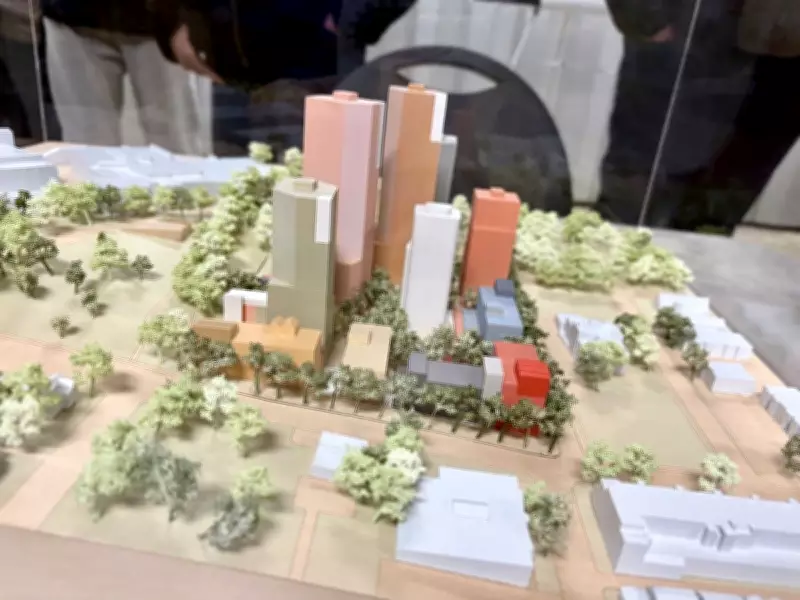
Recently, another density grab is happening at the former Grace Hospital site along 14th Street S.W. and 8th Street N.W., just below the Jubilee Auditorium. In this case, the developer is proposing to build 15 buildings on a 1.5-block site (the size of four football fields) called Kensington Yards. (A confusing name as it isn’t near Kensington Road and is in the community of Hillhurst.)
These aren’t just low-rise buildings. One could be 38 storeys, another 35, despite the fact the Riley Communities Local Area Plan (approved in March 2025) limits building heights to 26 storeys on the Grace site. Another four buildings are more than 20 storeys. In total, there is a whopping 213 storeys of buildings, which is downtown core density.