Quebec's CAQ Government Stands Firm on Constitution Proposal Amid Opposition Calls for Delay
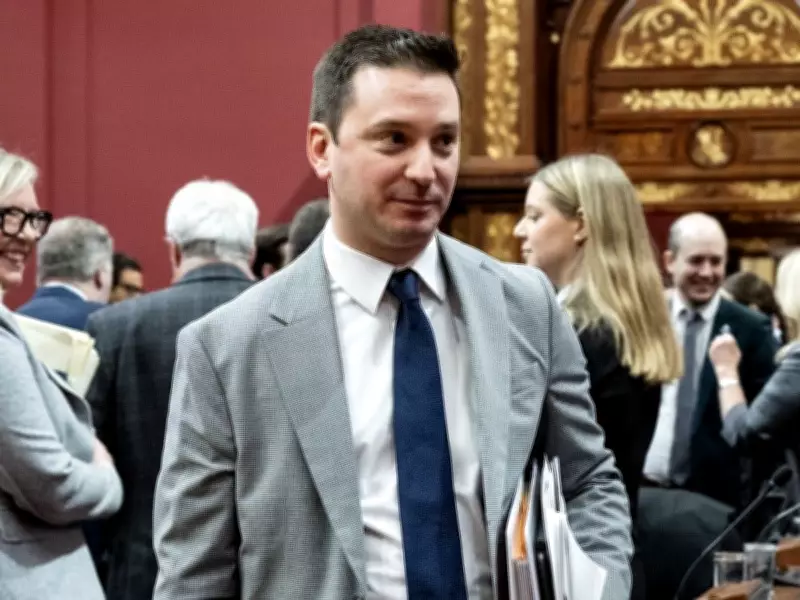
Justice Minister Simon Jolin-Barrette has firmly rejected a proposal from the Conservative Party of Quebec to postpone the adoption of a proposed written constitution for Quebec until after the next provincial election. The minister asserted that the plan is in the collective interest and should proceed without a direct voter mandate.
Opposition Leader Éric Duhaime Challenges Legitimacy of CAQ's Constitutional Plan
Speaking before a National Assembly committee studying the bill, Conservative Party of Quebec Leader Éric Duhaime argued that the constitutional project lacks legitimacy. He pointed out that the Coalition Avenir Québec did not include the constitution in its last election platform and failed to conduct adequate public consultations before drafting it. Although he supports much of the proposal, Duhaime criticized the timing as overly partisan, coinciding with the ruling party's leadership transition and an upcoming general election.
Duhaime emphasized that a constitution must be legitimate, unifying, and durable, rather than a symbolic or partisan exercise. He called for the government to present the bill during the next election campaign, seeking a clear mandate from Quebecers before adoption. His concerns included insufficient consultation with Indigenous communities and anglophone Quebecers, describing the process as rushed.

Jolin-Barrette Defends Government's Right to Proceed Without Electoral Mandate
In response, Jolin-Barrette defended the CAQ's authority to advance the constitution, stating that all governments enact laws not explicitly outlined in their electoral programs. He warned that refraining from such actions would freeze the Quebec state and hinder necessary reforms. The minister cited previous CAQ legislation on conversion therapy and the Charter of the French Language as examples of successful initiatives implemented without prior electoral promises.
Jolin-Barrette described the constitutional plan, known as Bill 1, as a measure in defence of the interests of Quebecers, aimed at providing more tools for the state. He clarified, This is not a CAQ constitution, it's a Quebec constitution, urging against missing this opportunity to empower the provincial government.
Broader Criticism and Internal Divisions Within the CAQ
The proposed constitution has faced widespread criticism beyond the opposition. Indigenous leaders have labeled it assimilationist and colonialist, while anglophone organizations argue it erases their history and threatens their rights. Critics also contend that the bill was drafted behind closed doors without public input and could concentrate excessive power in the provincial government's hands.
Signs of division have emerged within the CAQ itself. Christine Fréchette, a CAQ member of the National Assembly and front-runner to replace François Legault as leader and premier, suggested that elements of the proposed constitution could be reoriented or redirected. She declined to comment on a clause related to abortion rights, which has raised concerns among groups fearing it could be used to challenge women's freedom of choice. Jolin-Barrette responded by asserting his sovereignty over the bill's adjustments, stating, I will decide what will and won't be adjusted in the bill.
Political Context and Support for the Constitution
Despite the controversy, the Conservative Party of Quebec supports the principle of a codified constitution for Quebec, arguing it could clarify the province's political identity, strengthen institutions, and provide a coherent framework for government action. The party, which won 13 percent of the vote in the last election but no seats, aligns with nationalist and French-language groups in backing the concept.
The debate highlights ongoing tensions in Quebec politics over governance, identity, and democratic processes. As the CAQ moves forward with its constitutional proposal, the lack of voter consultation and internal party disagreements continue to fuel political discourse and public scrutiny.