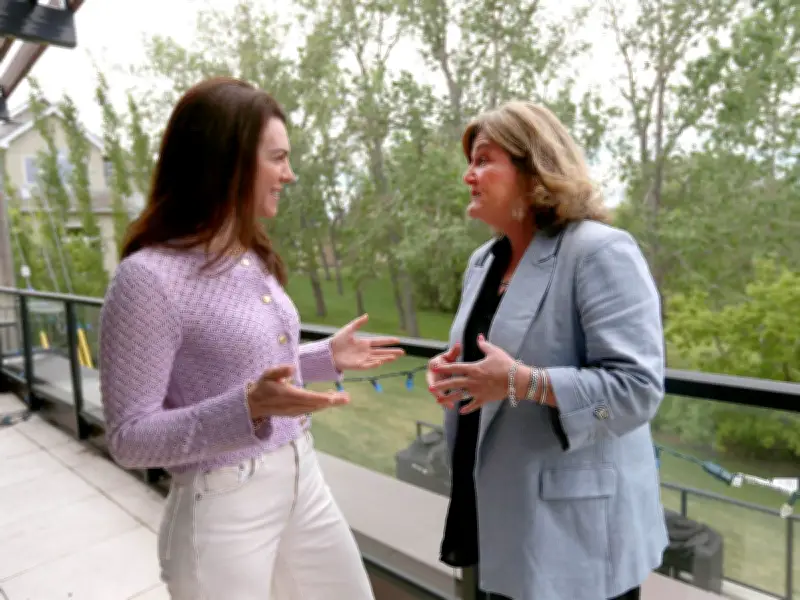
For many Calgarians, an accessible house is something that’s easy to overlook. It’s not until a parent struggles to get down the stairs or a devastating health diagnosis that a familiar home can suddenly turn into a series of obstacles.
At Accessible Housing’s engaging in accessibility event Thursday, held during National Accessibility Week, the message was clear — this is an issue that can affect anyone at any time.
Accessibility as a Community Issue
“Accessibility is not a niche issue, it is a community issue,” CEO of Accessible Housing Krista Davidson Flint said. “We’re often fond of saying we will all become disabled or die trying. Every Canadian will experience this either personally or through someone that they love.”

Yet accessible housing remains in short supply in Calgary. According to Accessible Housing, only an estimated two to three per cent of affordable housing units are fully accessible. Across Calgary’s broader residential market, only 10 per cent of residential units are fully accessible.
Rethinking Accessible Housing
The event brought together Calgarians working to make the city more accessible, from advocates to industry professionals, to discuss what can be done to make Calgary’s housing inclusive for all. At the centre of that discussion was a push to rethink what accessible housing actually means and who it is for.
“We’re not building accessible homes and residences for people with disabilities that we all benefit from,” Board Chair Kevin Haughton said. “It’s for all of us, including people with disabilities.”
Davidson Flint said that accessibility features can benefit everyone, not only those with disabilities. It means parents can care for their special needs child or support aging parents, that seniors can age-in-place in a community they love and Calgarians can live a life not defined by their disability.
Bridging the Gap Between Real Estate and Accessibility
For Marti Bogue, a Calgary realtor and founder of Adaptable Living, the conversation extends beyond disability and into how homes are designed for life’s inevitable changes.
“Everybody at some point probably will have a mobility need that requires their house to work with them through that, or adapt through that,” she said. “I think at the end of the day, what Adaptable Living is doing is bridging the gap between real estate and accessibility.”
Bogue has been running Adaptable Living for the past five years, which services include help finding accessible homes, building and designing custom homes and renovating homes to be accessible.
Advocates urge that improvements in new home construction and renovations can help solve accessibility challenges, making Calgary a more inclusive city for all residents.