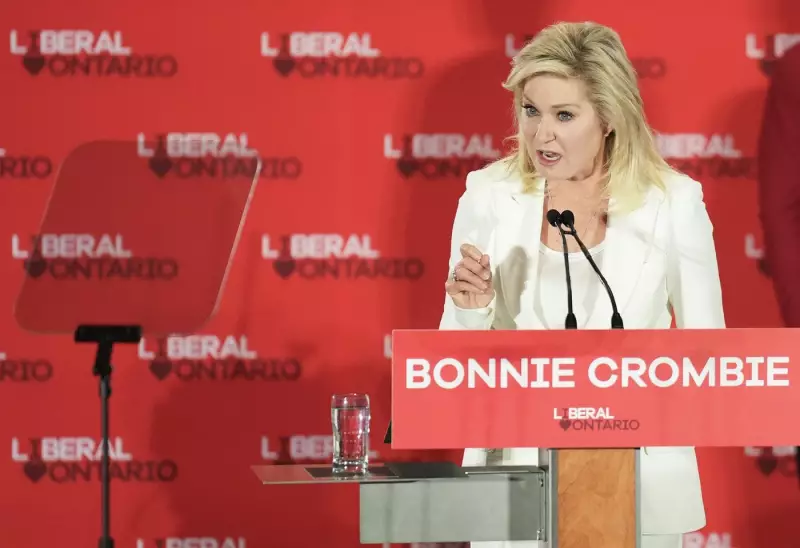
In a significant development for Ontario's political landscape, Bonnie Crombie has formally stepped down from her role as leader of the Ontario Liberal Party. The announcement was made public on January 14, 2026.
The Announcement and Immediate Context
Crombie's resignation marks the end of a challenging period for the party. Her leadership followed the provincial election held on February 27, 2025, an event where she notably did not win her own seat in the legislature. Despite that electoral setback, Crombie had initially committed to remaining at the party's helm to guide its rebuilding efforts.
The decision to resign comes just under a year after that election, signaling a new phase of transition for the Liberals as they seek to regain footing against the governing Progressive Conservatives and the official opposition New Democrats.

A Leadership Tenure Defined by Challenge
Bonnie Crombie's time as leader was largely defined by the difficult task of revitalizing a party that failed to secure official party status in the legislature. Her campaign, headquartered in Mississauga, Ontario, was unable to translate her municipal popularity as the city's former mayor into broader provincial success.
Her tenure involved navigating internal party dynamics and public opinion while crafting a policy platform aimed at appealing to a wide range of Ontarians. The resignation now triggers a formal leadership contest within the Ontario Liberal Party, a process that will be closely watched for its implications on the province's political future.
What Comes Next for the Ontario Liberals
The immediate consequence of Crombie's departure is the launch of a leadership race. The party's executive will need to establish rules, timelines, and procedures for selecting a new leader. This process will be critical for determining the party's strategic direction and policy focus ahead of the next provincial election.
Political observers will be analyzing potential candidates and the ideological shifts this contest may bring. The outcome will shape not only the Liberal Party's identity but also the dynamics of opposition politics at Queen's Park. The party faces the dual challenge of uniting its membership and presenting a compelling alternative to voters across Ontario.
The search for a new leader who can rebuild the party's presence in the legislature and connect with voters in key regions, including urban centres and rural communities, begins now.