The group advocating for longer ballots, a notable fixture in past electoral protests, has made a comeback, setting its sights on the forthcoming byelection in the Quebec riding of Terrebonne. This resurgence underscores ongoing debates about electoral processes and voter engagement in the province.
Background and Context
This protest group first gained attention by promoting the inclusion of more candidates on ballots, arguing that it enhances democratic choice and representation. Their return to the political scene comes at a time when byelections are drawing increased scrutiny, particularly in Quebec, where local issues often intersect with broader national discussions.
Focus on Terrebonne Byelection
The group's decision to target the Terrebonne byelection is strategic, as this riding has historically been a battleground for various political factions. By concentrating their efforts here, they aim to amplify their message about the need for electoral reforms that could lead to more diverse candidate lists and potentially higher voter turnout.

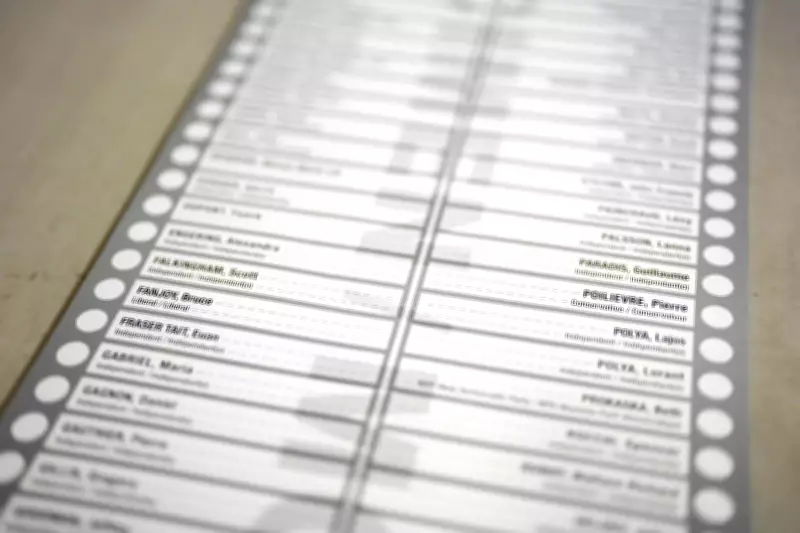
In related news, an example ballot from the Carleton riding, featuring Conservative Leader Pierre Poilievre and Liberal candidate Bruce Fanjoy, was displayed at the Elections Canada Distribution Centre during the federal election in Ottawa on April 28, 2025. This visual serves as a reminder of the standard ballot format that the protest group seeks to challenge.
Broader Implications
The revival of this protest movement highlights persistent concerns about the electoral system in Canada. Critics argue that shorter ballots may limit voter options and stifle political diversity, while proponents of current practices cite simplicity and efficiency. The group's activities in Terrebonne could spark wider conversations about potential changes to ballot design and candidate nomination processes.
As the byelection approaches, observers will be watching to see how this protest influences campaign dynamics and voter behavior. Whether it leads to tangible policy shifts remains uncertain, but it undoubtedly adds a layer of complexity to the political landscape in Quebec and beyond.