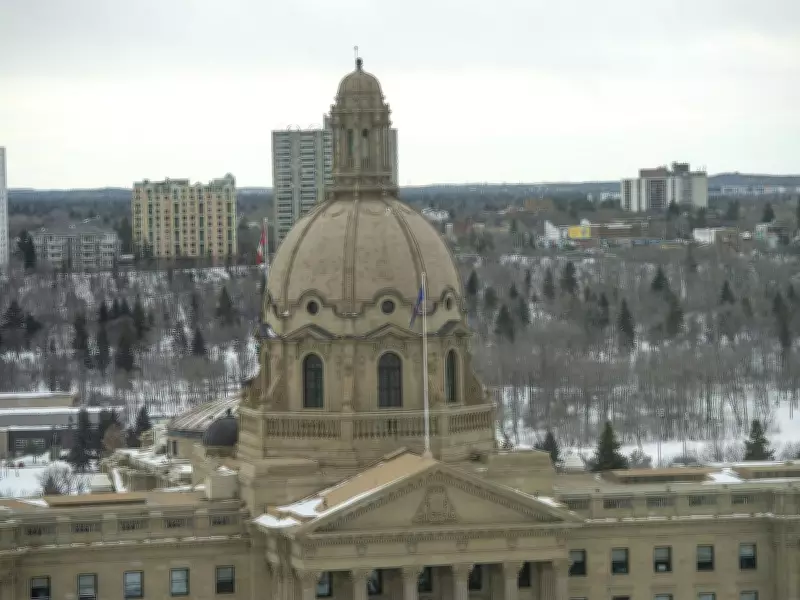
Alberta's approach to referendum questions is intentionally complex, designed to shape public discourse on critical provincial matters. Premier Danielle Smith is employing a "flood the zone" strategy, similar to football tactics, by introducing multiple questions that overshadow more extreme proposals.
The Separatist Question's Unprecedented Inclusion
In a significant development, the government has confirmed that separatist Mitch Sylvestre's question—"Do you agree that the province of Alberta should cease to be a province of Canada to become an independent state?"—will be part of the official referendum package. This marks a Canadian first outside Quebec, as no government other than Quebec's has ever sponsored a separation referendum.
The separatist question requires 177,000 signatures to proceed, with the potential voting date set for October 19. Meanwhile, Thomas Lukaszuk's "Forever Canadian" petition advocating for continued Confederation has been excluded from the government's formal process.

Strategic Calculation Behind the Referendum Design
Smith's administration is strategically bundling nine separate questions covering immigration, health benefits, and constitutional issues like abolishing the unelected Senate. By placing the separatist question among these, the government aims to dilute its impact. Voters will first consider Smith's proposals for greater sovereignty within Canada before encountering the separation question, potentially softening their stance through prior endorsement of provincial autonomy.
Recent Leger polling indicates 70 percent of Albertans firmly support Confederation, with separatist sentiment remaining stagnant. Andrew Enns of Leger notes, "The separatists have been very good at getting attention, but not so effective at building support." Smith's team attributes this stability to her leadership and strategic positioning.
Federal Concessions and Environmental Policy Shifts
The premier recently secured a major concession from Ottawa regarding environmental assessments. The federal government agreed that only Alberta will evaluate projects within its borders, addressing long-standing grievances about the Impact Assessment Act. This act previously claimed authority over even minor local projects, creating tension between provincial and federal jurisdictions.
While Prime Minister Mark Carney has not repealed contentious legislation like Bill C-69, his administration has effectively neutralized its most problematic aspects through Bill 5. This allows expedited federal approvals for transborder projects of national importance while granting Alberta greater control over internal developments, including oilsands projects.
Broader Political Context and Public Response
The referendum strategy unfolds amid broader political debates, including First Nations leaders pressuring the United Conservative Party to denounce separatism and justice system groups protesting perceived attacks on judicial independence. Smith's approach reflects careful political maneuvering, balancing separatist voices with pragmatic governance while advancing provincial interests within the Canadian federation.
As Alberta navigates these complex constitutional and political waters, the referendum package represents both a tactical response to separatist movements and a broader assertion of provincial authority. The outcome will significantly influence Alberta's relationship with Ottawa and its place within Confederation.