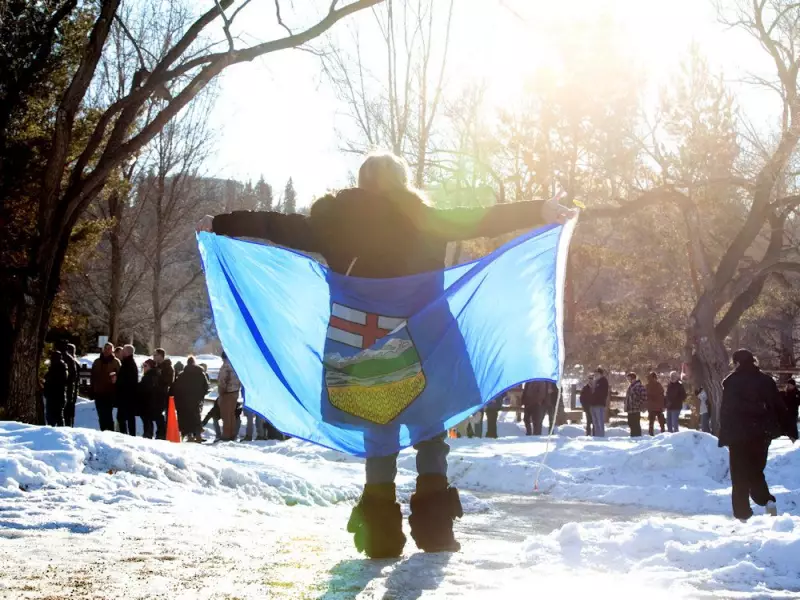
Communities across Alberta have seen significant public turnout this week, with residents waiting in lengthy queues to add their names to a petition advocating for the province's separation from Canada.
Petition Drive Gains Momentum
The signature campaign, organized by the group Stay Free Alberta, requires 170,000 valid signatures to be accepted by Elections Alberta for a potential referendum. The proposed referendum would ask Albertans: “Do you agree that the Province of Alberta should cease to be a part of Canada to become an independent state?”
Events have drawn large crowds, notably in Red Deer on Wednesday, January 18, 2026, where supporters reportedly waited up to three hours to sign. Aerial footage from Edmonton also showed substantial participation, indicating growing momentum for the cause.

A Strategy to "Balkanize" Canada
Unlike the historical Quebec sovereignty movement, which often framed separation as a singular pursuit for one nation, Alberta separatists explicitly aim to dismantle the Canadian federation. The leading organization, the Alberta Prosperity Project (APP), is closely aligned with secessionist groups in Saskatchewan and has actively forged links with the Parti Québécois.
Parti Québécois Leader Paul St-Pierre Plamondon, who is favoured to become Quebec's next premier, met with APP leaders last year. He pledged that if Alberta's referendum succeeded, he would be the first to recognize its independence.
At the Red Deer event, movement leader Kathy Flett expressed the hope that Alberta's departure would create a domino effect. “We’ll pave the way for other provinces to follow our lead,” she told the Edmonton Journal's Steven Sandor.
The Promise of Prosperity
The core argument of the Alberta independence movement is economic. Proponents claim secession would unlock greater wealth for Albertans through two primary means: significantly lower taxes and the removal of federal constraints on oil and gas development.
An APP backgrounder states, “Independence isn’t a risk. Independence is the reward.” The argument hinges on Alberta no longer being a net contributor to federal equalization payments and gaining full control over its natural resource revenue and regulatory environment.
However, this premise is debated. Critics point out that an independent Alberta would be a landlocked nation, dependent on negotiating transit agreements with neighbouring countries to export its resources by pipeline, rail, or road.
The petition drive continues to tour the province, setting the stage for a potentially transformative political battle over Alberta's future in Confederation.