Alberta Government Rejects Calgary Police Plea to Restore Photo Radar on Major Highways
The United Conservative Party government of Alberta has firmly declined a request from the Calgary Police Commission to reinstate photo radar enforcement on Stoney Trail and Deerfoot Trail. This decision comes despite urgent safety concerns raised by law enforcement officials, who argue that the absence of automated speed monitoring has led to dangerous conditions on these provincially managed freeways.
Provincial Stance on Photo Radar Enforcement
At a recent news conference detailing highway improvement plans, Transportation and Economic Corridors Minister Devin Dreeshen confirmed the province would not reverse its late 2024 removal of photo radar devices from these critical transportation corridors. The government maintains that photo radar primarily functions as a revenue-generating tool rather than an effective safety measure.
"When it comes to daily commutes, that physical enforcement is the best way to impact driver behavior," stated Minister Dreeshen. He pointed to Edmonton police as an example of successful manual enforcement on provincial freeways, emphasizing that visible officer presence creates more substantial behavioral changes among motorists.

The provincial policy explicitly limits photo radar usage to construction zones, playground zones, and school zones. However, Dreeshen acknowledged that municipalities can request exceptions for high-risk locations outside these designated areas. Calgary officials have previously utilized this provision, installing cameras at several dangerous intersections last year.
"There'll be audit processes coming from the province to see if those exceptions to the rule are actually making improvements to traffic safety," Dreeshen added, indicating ongoing evaluation of municipal requests.
Calgary Police Commission's Safety Concerns
The police commission's formal request followed a January 28 meeting where members received alarming data about speeding violations and fatalities on Stoney and Deerfoot Trails. Commission members unanimously agreed to pressure the provincial government after hearing detailed reports from police leadership about deteriorating safety conditions.
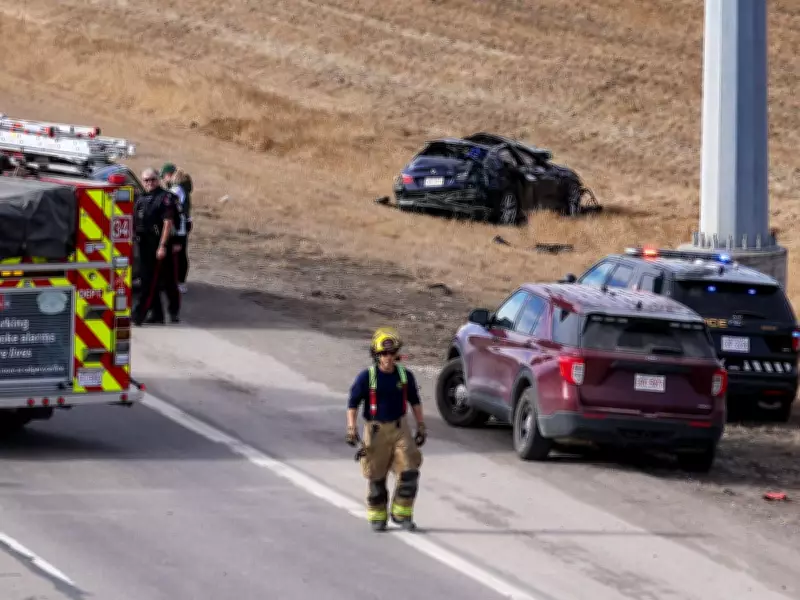
Calgary police have expressed strong criticism of the enforcement restrictions, arguing that requiring officers to conduct manual speed monitoring diverts resources from other essential duties while compromising highway safety. Deputy Chief Cliff O'Brien highlighted concerning statistics, noting that seven fatalities occurred on Stoney Trail and four on Deerfoot Trail in recent collisions.
"It'd be crazy not to think there's a correlation with the absence of photo radar," O'Brien stated, directly linking the removal of automated enforcement to increased dangerous driving incidents.
Enforcement Statistics Reveal Alarming Trends
During the previous year, Calgary police officers conducting manual enforcement on Stoney and Deerfoot Trails issued 493 tickets to motorists traveling 51 km/h or more above posted speed limits. This substantial number of extreme speeding violations underscores the challenges of maintaining safety through traditional policing methods alone.
Police commission members expressed frustration with the provincial government's position. "I'm just dumbfounded," said commission member Kelly Ogle, reflecting widespread concern among public safety officials.
Commission member Cheri Nijssen-Jordan emphasized the disparity in resource allocation, noting that collision fatalities receive less attention than other public safety issues. "We put tons and tons of resources into murders, yet we have just as many people dying from collisions, so it's beyond me," she stated during the January meeting.
Nijssen-Jordan further argued that passive acceptance of provincial restrictions was unacceptable, pushing for continued pressure on the government to reconsider its photo radar policy based on demonstrated safety needs.

Broader Implications for Traffic Safety
The ongoing debate highlights fundamental disagreements about effective traffic enforcement strategies between municipal police agencies and provincial transportation authorities. While the Alberta government advocates for visible officer presence as the optimal deterrent, Calgary police maintain that automated enforcement provides consistent monitoring that manual methods cannot match, particularly on high-volume freeways.
This conflict raises important questions about resource allocation, as police departments must balance traffic enforcement with other pressing public safety responsibilities. The Calgary Police Commission's advocacy reflects growing concern that current provincial policies may inadvertently compromise roadway safety despite intentions to prioritize effective enforcement methods.
As both sides maintain their positions, the safety of thousands of daily commuters on Stoney and Deerfoot Trails remains at the center of this ongoing policy dispute between municipal law enforcement and provincial transportation authorities.