Prediction Market Places Bets on Alberta's Potential Secession from Canada
The western Canadian province of Alberta could potentially become the 51st state of the United States if a projected referendum on independence proceeds as planned. According to data from prediction market platform Polymarket, there is currently a 55% chance that Alberta will schedule a referendum to leave Canada before the year 2027.
Growing Momentum for Independence
Alberta has not been subtle about its desire for greater autonomy from the Canadian federation. The prediction market's live page indicates that the probability of a secession referendum being scheduled has increased significantly, with bettors now placing it at 55%, up from just 20% last year. This surge reflects growing speculation and discussion around the province's political future.
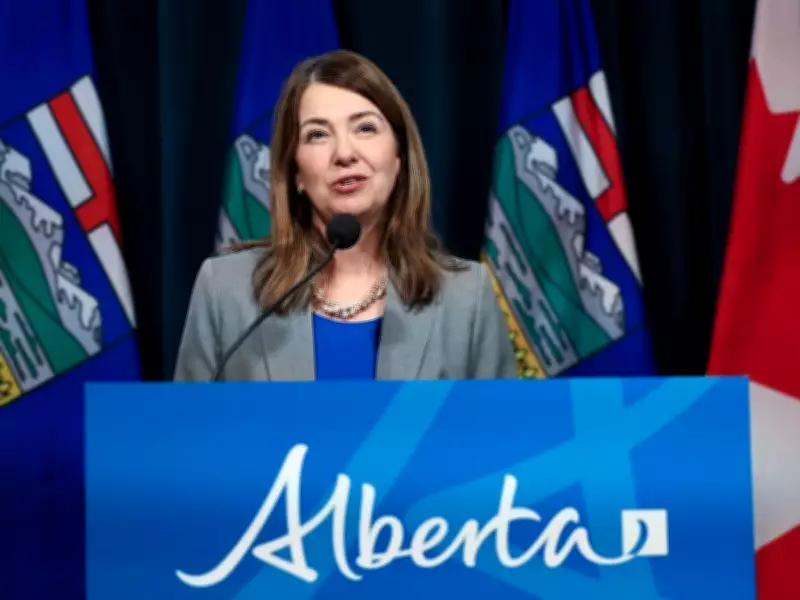
Premier Danielle Smith has already announced a referendum for October 19, 2026. She has publicly committed to including an independence question on that ballot if a petition for secession succeeds. Once signatures are verified, the referendum would effectively be scheduled, meeting the market's resolution criteria for a secession vote, whether binding or non-binding.

Public Sentiment and Legal Framework
The proposed referendum question is straightforward: 'Do you agree that the Province of Alberta should cease to be a part of Canada to become an independent state?' This unambiguous wording satisfies the conditions for a legitimate secession referendum.
Public comments on social media reveal mixed feelings. One user remarked, 'Alberta is so done with Canada,' while another Albertan expressed a different perspective: 'As much as Albertans love America and Americans, we're not trying to become the 51st state. We want to chart our own course, do our own thing, not be a small voiceless part of a large confederation.' They added that Alberta would be a great friend and ally to the United States.
Legal and Political Implications
If a clear majority of Albertans vote in favor of separation, Canadian federal law and the Supreme Court mandate that the federal government and other provinces must negotiate in good faith with an independent Alberta. The Supreme Court has stated that a clear majority vote on a clear question confers democratic legitimacy that must be recognized by all participants in Confederation.
Alienation in western provinces, particularly Alberta and Saskatchewan, is fueling support for separation. Columnist Brian Lilley noted that people in these provinces have either reached or passed the tipping point of wanting to go it alone. Additionally, tensions with British Columbia over pipeline routes are exacerbating national unity issues. Lilley suggested that if Alberta's pipeline needs are better served through the United States rather than British Columbia, it could reinforce the perception that Alberta's prosperity is more aligned with American cooperation than with other Canadian provinces.
Broader Context and Future Outlook
Despite the rising probabilities in prediction markets, some analysts remain skeptical. In December, a pollster indicated that separatist movements in Alberta and Quebec are unlikely to succeed as long as Canadians feel ongoing insecurity and anxiety about the future. However, the current political climate and Premier Smith's actions keep the possibility alive.
The situation continues to evolve, with Polymarket and other observers closely monitoring developments. As the 2026 referendum date approaches, the debate over Alberta's place in Canada—or potentially as a new U.S. state—will undoubtedly intensify, shaping the political landscape of North America.