Recall petitions in Alberta are putting pressure on two dozen politicians, forcing them to explain their actions to constituents, even as the campaigns face a nearly insurmountable hurdle to succeed.
The First Target: Education Minister Nicolaides
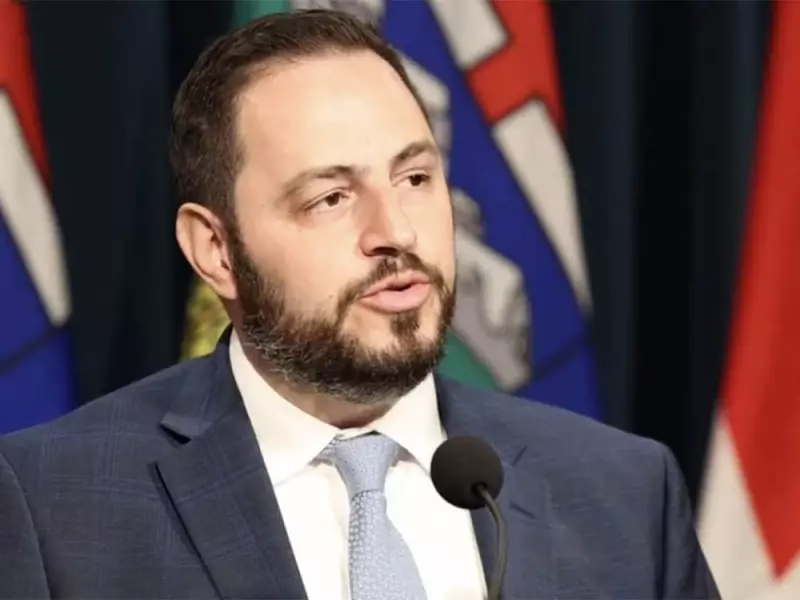
Demetrios Nicolaides, Alberta's Minister of Education and Childcare, became the first MLA to face a formal recall campaign. Organizers in his Calgary-Bow constituency were permitted to start gathering signatures on October 24, 2025. Of the 26 MLAs currently subject to recall efforts—24 from the governing United Conservative Party (UCP) and two from the opposition New Democrats—Nicolaides was the initial focus.
The provincial recall legislation sets an exceptionally high bar for success. Petitioners must collect valid signatures from constituents equal to 60% of the total votes cast in that riding during the last general election. For Calgary-Bow, this translates to a daunting 16,006 signatures. The campaign's 90-day window closes on January 21, 2026.

A Steep Climb to the Signature Threshold
As of early January, the campaign against Minister Nicolaides had secured only about 6,000 signatures. This leaves organizers needing an additional 10,000 names in roughly two weeks—a goal widely viewed as unattainable.
The challenge is underscored by the riding's electoral history. Nicolaides narrowly won Calgary-Bow in the 2023 provincial election, defeating NDP candidate Druh Farrell by just 623 votes (13,175 to 12,552). To reach the 16,006-signature threshold, organizers would need to secure the support of every single person who voted for the NDP, plus convince approximately 3,500 UCP supporters to turn against their own MLA.
While there were over 37,000 eligible voters in the riding in 2023, making the target mathematically possible without flipping UCP votes, it relies on mobilizing thousands of non-voters—a demographic historically reluctant to engage in petition drives.
This pattern is repeated in other constituencies. In Airdrie East, represented by UCP MLA Angela Pitt, 14,813 signatures are required. Pitt won the seat in 2023 with 15,229 votes, compared to the NDP's 8,701, making a massive voter shift equally unlikely.
Political Motivations and the High Bar for Success
The wave of recall petitions is largely seen as a political response from teachers' unions and other groups angered by the Danielle Smith government's use of the notwithstanding clause in legislation to end the 2025 teachers' strike. However, the anticipated widespread public discontent has not materialized at the constituency level in the numbers needed to trigger recall votes.
The UCP, which passed the recall law in 2021, has expressed frustration at its use. Caucus members have argued the mechanism was intended to address cases of individual MLA corruption or gross incompetence, not as a tool for political opposition to government policy.
Given the stringent signature requirements and the current lack of evidence showing the necessary voter revolt, all 26 recall campaigns are predicted to fail. Nevertheless, the process compels targeted politicians to engage directly with constituent concerns, serving as a potent, if symbolic, accountability measure.