

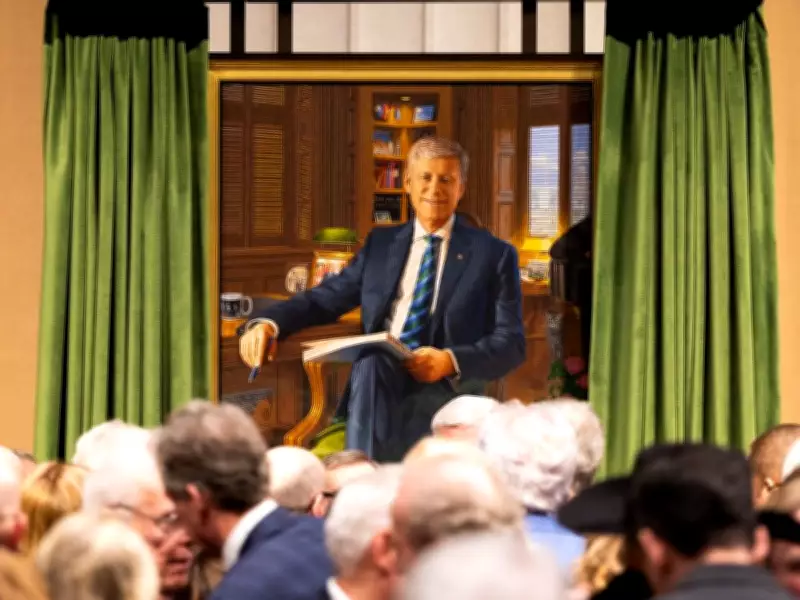
The Complex Tapestry of Canada's Conservative Party: Why Leadership Proves Challenging
Understanding the intricate composition of Canada's Conservative Party provides crucial insight into its internal dynamics and persistent electoral obstacles. Recent commentary from political specialists reveals that this political coalition represents one of the most complicated recipes in Canadian politics, with more distinct major elements than either the Liberal Party or New Democratic Party.
The Symbolic Tie That Doesn't Tell the Whole Story
During a ceremony unveiling his official portrait in Ottawa, former prime minister Stephen Harper highlighted the symbolic significance of his tie's colors. He explained that dark blue represented the traditional Tories, green symbolized the western populist tradition including Preston Manning's Reform Party, and sky blue stood for Quebec nationalist and francophone conservative traditions.
However, according to political analysts and academics, this fictional tie was missing several crucial colors that represent the party's true complexity. The Conservative Party of Canada encompasses numerous distinct streams that extend far beyond these three basic elements.

The Many Faces of Canadian Conservatism
The Conservative coalition includes multiple significant factions that often operate with different priorities and values. Beyond the streams represented on Harper's tie, other essential components include:
- Libertarians who emphasize individual freedom and limited government intervention
- Social conservatives focused on traditional values and moral issues
- Fiscal conservatives prioritizing economic responsibility and reduced spending
- National sovereigntists who concentrate on immigration and cultural preservation
- Cultural populists dedicated to opposing what they perceive as woke agendas
This diverse composition creates what one Conservative source described as a fundamentally values-based party where each stream maintains its own set of principles, even when overlaps occur. The source emphasized that this diversity makes the Conservative Party incredibly challenging to lead effectively.
Leadership Challenges in a Divided Coalition
The complexity of the Conservative brew explains not only the party's internal makeup but also its significant leadership difficulties. With Pierre Poilievre recently receiving resounding endorsement to continue as party leader, this structural reality illustrates why many academics, political analysts, and Conservatives themselves consider theirs the country's most difficult party to unify or lead successfully.
André Lecours, a political science professor at the University of Ottawa, noted that the Conservative Party requires what he called a perfect storm to form a majority government. This challenge stems from both philosophical diversity and geographical distribution, as the party's natural base resides primarily in less populous regions of the country.
Comparative Political Landscapes
While all political parties can be viewed as Venn diagrams of interests where groups agree on certain issues but not others, analysts suggest the Conservative Party faces particular challenges. The New Democratic Party, for instance, includes trade unionists, environmentalists, and socialists with regional variations, but these groups generally share support for more aggressive government involvement in the economy.
The Liberal Party encompasses both left-of-centre and business-oriented supporters with significant gulfs between them, but analysts observe that these differences are often bridged by the common desire to govern. In contrast, the Conservative Party's disparate root system creates fundamental challenges that extend beyond philosophical debates in Parliament Hill cafeterias.
The party's composition makes electoral success more difficult compared to the Liberals, particularly in forming majority governments. This structural reality continues to shape Conservative politics as the party navigates leadership under Pierre Poilievre and prepares for potential electoral contests.






