

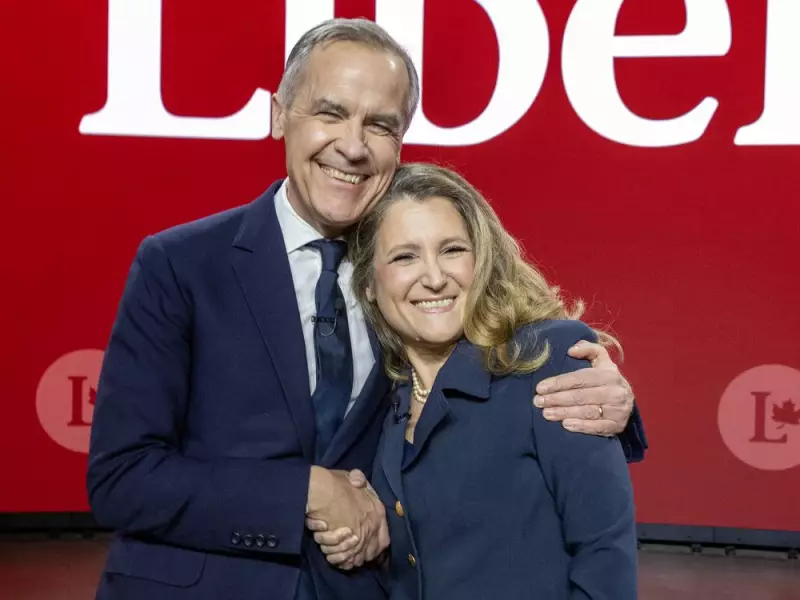
The political landscape in Ottawa is embroiled in a fresh controversy following former deputy prime minister Chrystia Freeland's decision to accept a high-level advisory position with a foreign government while remaining a sitting Member of Parliament. The move has ignited a fierce debate over ethics, conflicts of interest, and the proper protocols for public servants transitioning to international roles.
Carney Backs Freeland Amid Mounting Scrutiny
Prime Minister Mark Carney addressed the situation publicly on Tuesday, January 6, 2026, during a press conference at the Canadian Embassy in Paris. Carney stated he did not request that Freeland retain her seat in the House of Commons and that he "welcomed" her decision to eventually resign from Parliament. The Prime Minister was in France discussing security guarantees for Ukraine as the country considers a potential peace deal with Russia.
"My judgment was that taking that role would be consistent with resigning as an MP and I welcomed her doing that," Carney told reporters, as reported by The Canadian Press. Freeland, who served as Canada's first female finance minister under Justin Trudeau, announced her immediate resignation on Monday as Carney's special representative for Ukraine's reconstruction. However, her plan to step down as the MP for University—Rosedale at a later, unspecified date is the core of the dispute.

Opposition and Watchdogs Voice "Deep Concerns"
The delay in Freeland's parliamentary resignation has drawn immediate and sharp criticism from opposition parties and ethics observers. Conservative MP Michael Barrett labeled the situation "deeply concerning," highlighting that Freeland would continue to collect her MP salary while advising Ukrainian President Volodymyr Zelenskyy on economic development.
In a social media post, Barrett, the MP for Leeds—Grenville—Thousand Islands—Rideau Lakes, raised critical questions. "Beyond the fact that serving Canadians is not a part-time job, the position she has accepted with a foreign government, paid or unpaid, raises the question of whose interests will be prioritized," he stated. He further expressed security concerns, noting Freeland's past cabinet role and high-level security clearance.
This sentiment was echoed by other opposition figures. Conservative foreign affairs critic Michael Chong and interim NDP leader Don Davies both asserted that Freeland should have resigned her seat before accepting the foreign advisory role. Their concerns were amplified by Duff Conacher, co-founder of Democracy Watch, who argued that the delayed resignation "clearly violates the federal government ethics law."
Broader Implications and Freeland's Future
The controversy extends beyond domestic ethics rules. Henley Strategies CEO Laryssa Waler suggested that Freeland's new role could provide ammunition for critics of the Ukrainian government, potentially complicating international perceptions. Freeland, who had already declared she would not run in the next federal election, has not publicly responded to the specific ethics concerns raised this week.
The former journalist is slated to begin a new chapter on July 1, 2026, as the CEO of the Rhodes Trust, the global educational charity based in Oxford, England. A federal byelection will be called in her Toronto riding once she formally submits her resignation from Parliament. The ongoing debate underscores the complex intersection of domestic duty, international service, and the stringent ethical standards expected of Canada's highest-ranking public officials.






