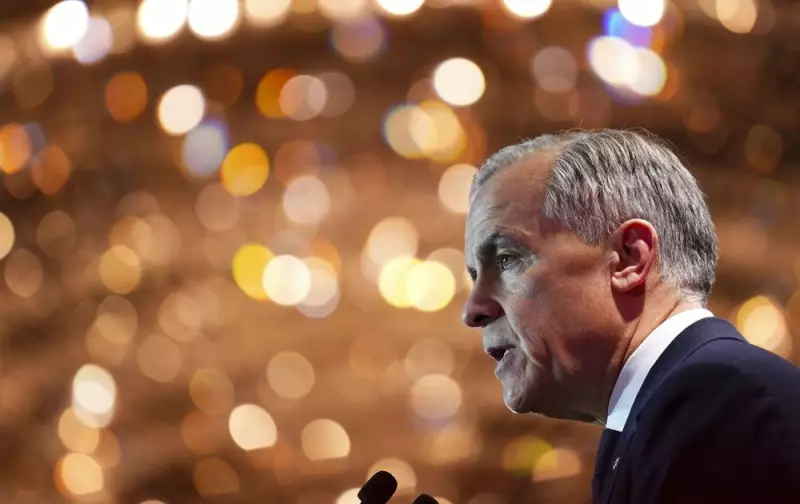
Prime Minister Mark Carney is facing intense criticism for what one prominent columnist is calling a "lame capitulation" to China, signed without public debate or parliamentary scrutiny.
A Deal Signed in Silence
Stephen LeDrew, in a sharply worded column published on January 18, 2026, accuses Carney of surrendering Canadian freedoms to a "totalitarian regime" without a fight. The deal, which LeDrew labels the "Carney Capitulation," was finalized during the Prime Minister's trip to Beijing, where he delivered remarks at a Canada-China Business Council dinner on Friday, January 16, 2026.
LeDrew's central accusation is the complete lack of transparency surrounding the agreement. "Where was the debate? Discussion? White Paper?" he asks, arguing that an agreement of this magnitude was pushed through by an "inexperienced leader" and a few cabinet ministers without warning to the Canadian public.

Historical Parallels and Grave Accusations
The columnist draws a stark historical parallel, suggesting the Carney government showed "less courage" than the French government that capitulated to Nazi Germany in 1940. He lays out a series of allegations against China to contextualize his outrage, including:
- Establishing government offices on Canadian soil to monitor its diaspora.
- Engaging in widespread intellectual property theft from advanced nations.
- Using foreign aid as leverage to gain control over assets in developing countries.
- Already making moves to secure resources in the Canadian Arctic.
LeDrew argues that while Canada had disputes with former U.S. President Donald Trump—a "75% trading partner"—it is foolish to antagonize that relationship to appease China, which represents only about 3% of Canada's trade. He contends that the failures of the pre-Trump international order have led to populist reactions, but that "totalitarian China will still be here" long after Trump is gone.
A Call for Democratic Scrutiny
The core of LeDrew's argument is a democratic one: "We do not elect dictators." He asserts that the bare minimum Prime Minister Carney must now do is allow a detailed debate in the House of Commons on the deal. In LeDrew's view, the agreement represents such a "disastrous mistake" that it must be reversed immediately.
"Canadians demand a national debate — this is more than just a trade deal," LeDrew concludes, framing the issue as one of fundamental sovereignty being handed to the Communist Party of China without the consent of the governed.