Toronto Police Implement Ban on Anti-Israel Protests in Jewish Residential Areas
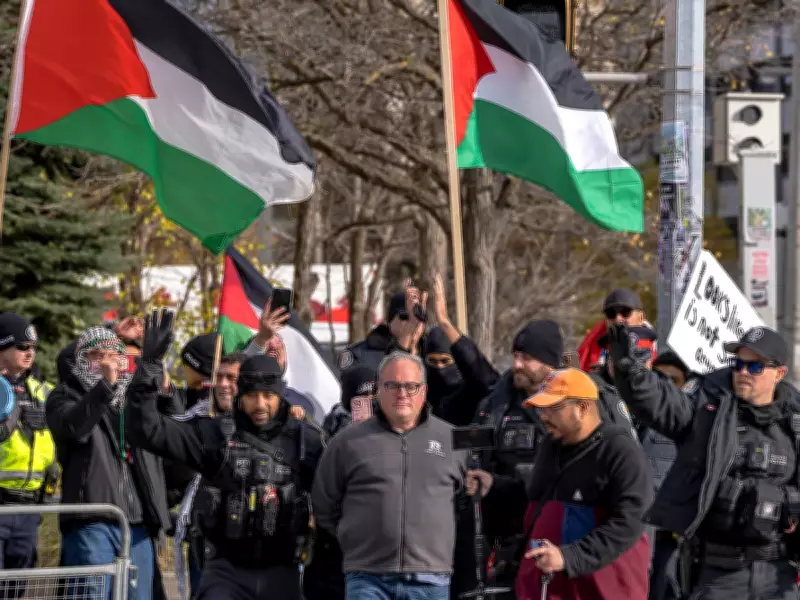
In response to months of escalating antisemitic violence and persistent lobbying from the Jewish community, Toronto police have announced a significant policy shift. Authorities are now restricting anti-Israel demonstrators from entering residential areas near Bathurst Street and Sheppard Avenue West, which form the heart of Toronto's Jewish community.
A Measured Response to Heightened Security Concerns
Police spokesperson Stephanie Sayer explained the decision in a statement, citing the changing security landscape in Toronto. "Due to the increased volatility and heightened fear in our communities in recent weeks, demonstrations moving into residential neighborhoods in the Bathurst and Sheppard area present an unacceptable risk to public safety," Sayer stated.
She characterized the move as "a measured step to reduce the risk of escalation and maintain public safety." While legal protests on main streets in the area will continue to be permitted, demonstrators will no longer be allowed to enter residential streets. Officers will provide clear direction to protesters, and anyone who fails to comply faces possible arrest for obstructing police.

Community Pressure and Escalating Incidents
The police action comes after three prominent Toronto-based Jewish organizations had called for intervention. Their concerns followed several disturbing incidents, including three synagogues being targeted by gunfire and a March 14 demonstration at Bathurst and Sheppard where anti-Israel protesters displayed signs that dehumanized Jews and promoted hate-inciting antisemitic rhetoric.
B'nai Brith Canada praised the police policy change in a social media statement, noting that "our community has consistently refused to accept the normalization of intimidation on residential streets in the heart of a heavily Jewish neighborhood." The organization emphasized that residents, families, seniors, students, and community institutions in the area "have been forced to contend with repeated demonstrations in spaces where people should be able to live, walk, pray, and gather in peace."
Recent Violence Against Jewish Institutions
The security concerns are grounded in specific violent incidents that have shaken the community. In early March, Temple Emanu-El in North York was struck by gunfire in what police described as a "targeted incident." Within less than a week, two additional Greater Toronto-area synagogues—Beth Avraham Yoseph in Thornhill and Shaarei Shomayim in North York—also experienced gunfire attacks. Several Jewish-owned businesses were similarly targeted around the same period, followed by an attack on the U.S. consulate.
Ongoing Protests and Community Response
Anti-Israel protests have occurred regularly in the area since shortly after the October 7, 2023, attacks on Israel by Hamas. The Centre for Israel and Jewish Affairs (CIJA), another organization that had advocated for change, acknowledged the police action as "a meaningful step" but emphasized that "it must be matched with consistent enforcement and protection for our community."
CIJA has highlighted an internal Integrated Threat Assessment Centre report indicating that Jewish Canadians are facing a "heightened violent extremism threat environment" due to the ongoing Middle East conflict. This assessment underscores the broader context of the police decision, which aims to balance the rights of demonstrators with the safety concerns of residents in vulnerable communities.
The Toronto Police Service maintains that it "facilitates lawful demonstrations while balancing the rights of participants with the safety of the broader public." This new restriction represents a significant development in how authorities manage protest activities in residential neighborhoods amid growing tensions and security threats.