The City of Ottawa is exploring ways to bolster protections against property encroachments during construction, following numerous complaints from residents about damaged fences, blocked driveways, and safety hazards. Members of Ottawa's emergency preparedness and protective services committee convened to discuss what tools the city could use to strengthen enforcement and prevent such issues.
Residents Share Harrowing Experiences
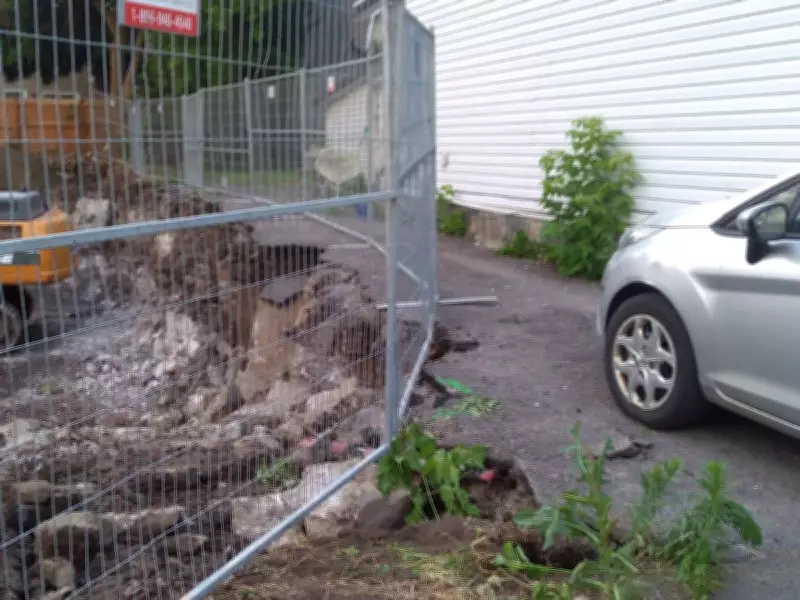
Cheryl Parrot, chair of the Hintonburg Community Association's security committee, described multiple incidents in her neighborhood where construction encroached onto private property. In one 2020 case, a foundation was undercut below a neighbor's house, while in another, a porch was left dangling after being undercut. A third incident saw a driveway disappear without notice, forcing the resident to park with their bumper over the sidewalk for months.
“We’ve had to have police involved in at least three construction projects in Hintonburg where neighbors have been threatened because they’ve asked for builders not to block their own driveways or encroach on their property,” Parrot told the committee.

Systemic Enforcement Gaps
Rideau-Vanier Coun. Stephanie Plante, who presented the motion, highlighted a demolition project on Goulbourn Avenue in Sandy Hill where debris repeatedly entered a neighboring property, severing a visible gas line and damaging electrical infrastructure. Residents were forced to leave their home for weeks and reported over $20,000 in damages.
“What we are seeing more and more often are situations where neighbouring residents are left carrying the risk and the burden when construction goes wrong,” Plante said. She noted that the current system feels “circular and reactive,” with residents being shuffled between bylaw, police, and other agencies while damage accumulates.
Need for Infill Housing vs. Resident Protection
Plante acknowledged the need for infill housing in neighborhoods with existing infrastructure and transit access but emphasized that residents should not have to sacrifice safety, property, or peace of mind for growth. “Residents participate in consultations in good faith and conditions such as landscaping, setbacks and privacy measures are approved. But there is often a lack of meaningful enforcement for conditions set by the committee of adjustment,” she said.
Parrot added that many lots in Hintonburg are only 25 feet wide and 90 feet deep, with minimum side-yard setbacks of less than one meter. When properties are damaged during construction, the only recourse is civil legal action, which she called insufficient. “It seems that encroachment is just expected, and that builders feel they have a right to go onto other people’s property,” she said.
Committee Explores Solutions
The committee discussed potential tools to strengthen protections, including better enforcement of existing bylaws, clearer communication channels for residents, and possibly new regulations. Plante’s motion calls for a report on how to address these enforcement gaps and ensure that residents have timely support when construction goes wrong.
“They call bylaw. They’re referred elsewhere. They call police. They’re told it’s a civil matter. Meanwhile, damage is already done. The report is about addressing these enforcement gaps,” Plante said.