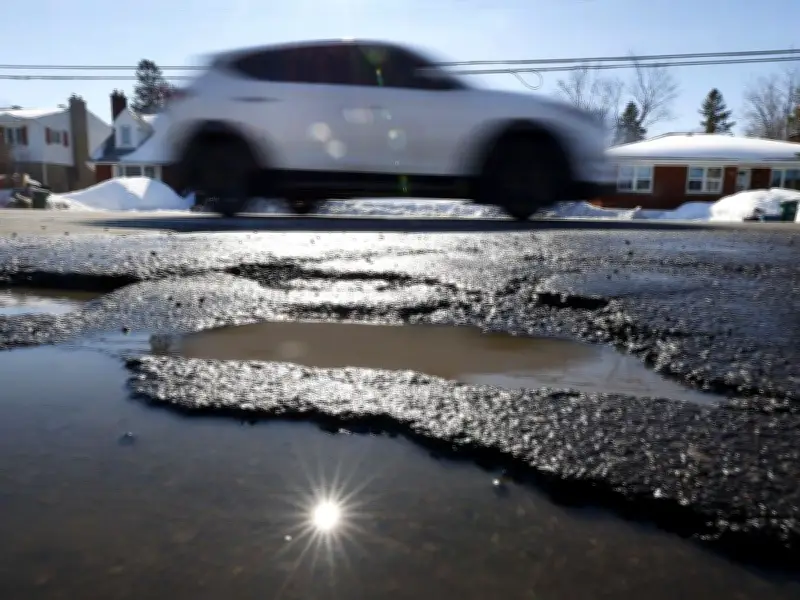
The City of Ottawa must introduce a new property tax levy to address its massive $10.8 billion infrastructure shortfall, argues columnist Mohammed Adam. Without such a measure, the city cannot credibly fix crumbling roads, bridges, and buildings.
Current plan inadequate
At its June 10 meeting, city council adopted measures in the long-term financial plan (LTFP) that Adam calls woefully insufficient. These include doubling the existing contribution from property tax increases from $6 million to $12 million in 2027 and 2028, allocating 0.15 per cent of property tax increases to the capital budget, taking on $60 million in debt over two years, and raiding reserves for $32 million.
“We are where we are,” said Cyril Rogers, general manager of the Finance and Corporate Services Department. “And now we have a good plan to get out of where we’re at.”

Scale of the problem
Adam counters that the plan does not match the urgency. The deficit includes $3.8 billion urgently needed for roads, aging buildings, and parks. He argues that council should have adopted a proposed infrastructure levy that staff considered but did not recommend. “An infrastructure levy — which is a tax by another name — would be controversial, but if we are serious about fixing infrastructure, that’s what we must do. There is no credible alternative,” he writes.
Levy details
A one per cent levy on property taxes would raise about $17 million annually, providing a steady revenue stream to bridge the funding gap and potentially eliminate the deficit over time. Adam suggests the levy should be temporary, limited to five years, after which it would discontinue.
The big question is whether Ottawa residents would accept it, given affordability concerns. However, Adam notes that Ottawa property taxes are among the lowest in Ontario — a point politicians often boast about. “Over the years, our property tax increases have never matched what we need to pay for vital infrastructure such as roads, especially in a city that is growing exponentially. This is actually one of the reasons why our infrastructure deficit keeps rising,” he writes.
Consequences of inaction
Adam, a property taxpayer himself, acknowledges the desire for lower taxes but questions the wisdom of preserving personal savings while infrastructure crumbles. He points out that the shortfall is not new; successive councils have lacked the courage to implement necessary solutions, opting instead for half-measures that have little impact.