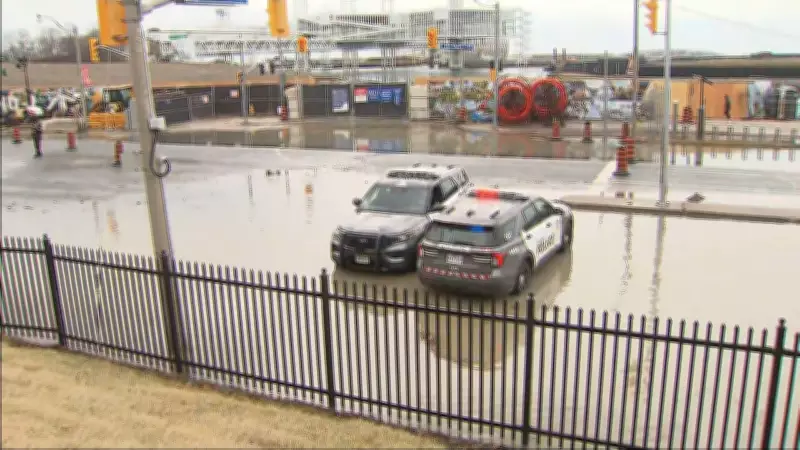
Major Watermain Break Forces Closure of Key Toronto Thoroughfare
A substantial watermain break in Toronto led to the complete shutdown of all lanes along Lake Shore Boulevard between Ontario Drive and British Columbia Road, creating significant traffic disruptions and infrastructure concerns. The incident, which occurred on March 21, 2026, prompted emergency response teams to work diligently to address the situation and restore normal traffic flow as quickly as possible.
Emergency Response and Infrastructure Impact
City crews and emergency personnel were dispatched to the scene following reports of the watermain failure. The break resulted in flooding and potential damage to the roadway, necessitating immediate closure for public safety and repair operations. This disruption affected one of Toronto's busiest arterial roads, which serves as a critical route for commuters, commercial traffic, and access to waterfront areas.
The timing of the incident during a weekday exacerbated congestion issues, highlighting the vulnerability of urban infrastructure to sudden failures. Residents and businesses in the vicinity experienced inconvenience, with alternative routes becoming congested as drivers sought detours around the closed section.

Restoration of Traffic and Ongoing Assessments
After several hours of intensive repair work, authorities announced the reopening of Lake Shore Boulevard, allowing traffic to resume normal operations. The successful resolution of the break demonstrates the effectiveness of Toronto's emergency response protocols for infrastructure emergencies. However, the incident raises questions about the aging water system in the city and the need for proactive maintenance to prevent similar occurrences in the future.
City officials have indicated that a thorough investigation will be conducted to determine the cause of the watermain break, which could include factors such as pipe corrosion, ground shifting, or extreme weather conditions. This analysis will help inform future infrastructure investments and maintenance schedules to enhance resilience against such failures.
Broader Context of Urban Infrastructure Challenges
This watermain break occurs against a backdrop of ongoing discussions about Toronto's infrastructure needs, including recent reports on tackling gridlock and congestion. The incident underscores the interconnected nature of transportation and utility systems in a major metropolitan area, where a single point of failure can have widespread repercussions.
As Toronto continues to grow and its infrastructure ages, events like this highlight the importance of sustainable urban planning and investment in reliable public utilities. The city's ability to respond swiftly to such emergencies is crucial for minimizing disruption and maintaining public confidence in municipal services.