Edmonton Councillor Speaks Out Against Alleged Harassment from Former Election Rival
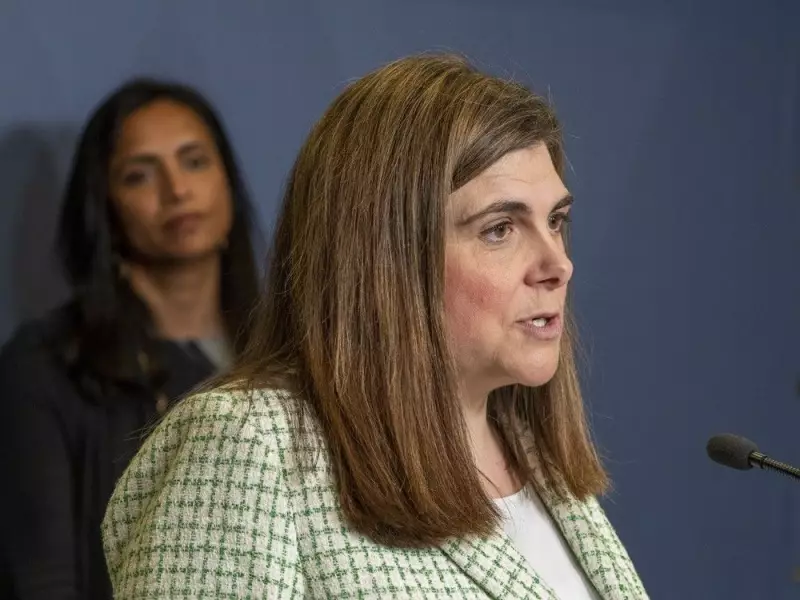
An Edmonton city councillor is speaking out against what she describes as harassment from a former election opponent, calling the behavior "thug politics" in an era of increasing political aggression. Ward Aniriq Coun. Erin Rutherford alleges that former council candidate Jesse Watson has crossed a dangerous line by sharing content online that identifies her home address and her partner's vehicle.
The Controversial Social Media Post
The conflict centers around an Instagram story that Watson posted showing a white pickup truck parked near a temporary no-parking sign during a snow removal operation. The post included layered text showing the city's parking ban notice and was set to the music of Yes's 1983 hit "Owner of a Lonely Heart." Watson captioned the post: "What, not enough off-street parking there, councillor?"
Rutherford asserts that by identifying her partner's vehicle and the location of her residence, Watson has created a serious safety concern for her family. "What sets this apart was the risk to my family, the reckless risk to my family's safety and privacy," Rutherford stated. She described the post as dishonest and created for the purpose of "rage farming" rather than legitimate political discourse.

Disputed Facts and Political Context
Rutherford clarified that the truck in question does not belong to her but to someone she is affiliated with, and she claims it was legally parked since the road had already been cleared as a major transit route. She characterized the post as another example of misinformation casually spread through social media platforms.
The political tension between Rutherford and Watson dates back to the 2025 municipal election, where Rutherford, the incumbent, secured victory with 6,194 votes compared to Watson's 4,722 votes. Watson co-owns Boxcar Coffeeshop in Calder and has been an active critic of city hall on various issues including snow removal, infill development, and progress on the Blatchford lands.
Diverging Perspectives on Civic Accountability
Watson defended his actions in an email to Postmedia, stating that he did not take the photograph himself but received it from a follower. He noted that Rutherford had blocked him on social media long before this incident. "I've received dozens of photos and videos from residents about current events across the city," Watson wrote. "Some of these are shared when they raise legitimate public-interest questions."
Watson emphasized that he never identified individuals, home addresses, or specific locations in his post. "The images depicted a vehicle and a sign on a public street," he explained. "Public discussion of observations made in shared spaces without naming individuals or disclosing private information is part of civic accountability."
Broader Implications for Political Discourse
Rutherford revealed that during the election campaign, she intentionally avoided addressing Watson's social media posts in her own campaign strategy. However, she now feels compelled to speak out against what she perceives as dangerous behavior that normalizes harassment in political life.
"It's concerning that this behaviour is allowed to stand — so I could not let it stand," Rutherford declared. The incident raises important questions about the boundaries between legitimate political criticism and harassment, particularly in the digital age where personal information can be easily disseminated to large audiences.
This controversy highlights the growing tension between public officials' right to privacy and safety versus the public's interest in holding elected representatives accountable. As social media continues to reshape political communication, such conflicts may become increasingly common in municipal politics across Canada.