Calgary's Corporate Risk Profile Escalates Amid Infrastructure and Technological Pressures
A recent corporate risk report has highlighted a concerning upward trend in the City of Calgary's risk profile, driven primarily by aging infrastructure and mounting technological disruptions. The 2025 year-end assessment, which will be presented to council's audit committee this week, indicates that municipal risks are "trending upwards" due to multiple converging factors.
Infrastructure in Critical Condition
The report reveals that eleven per cent of Calgary's infrastructure is currently classified as being in "poor" or "very poor" condition. This deteriorating state has contributed significantly to the city's elevated risk profile, with the capital infrastructure risk rating increasing from "high" to "extensive" during the second half of last year. This represents the highest possible ranking within the city's corporate risk matrix.
According to the assessment, many of Calgary's assets are aging beyond their expected life spans. The situation is exacerbated by deferred maintenance, limited capital investment, and the additional stresses imposed by climate change and severe weather events. These factors collectively accelerate the deterioration of municipal assets.

Technological Disruptions Pose Extensive Risks
Technological disruptions have also been ranked as "extensive" in the risk assessment. These risks are primarily driven by cybersecurity threats, along with the emerging challenges presented by artificial intelligence and quantum computing. The report emphasizes that these technological factors represent significant vulnerabilities that require immediate attention and strategic planning.
Recent Infrastructure Failures Highlight Urgent Needs
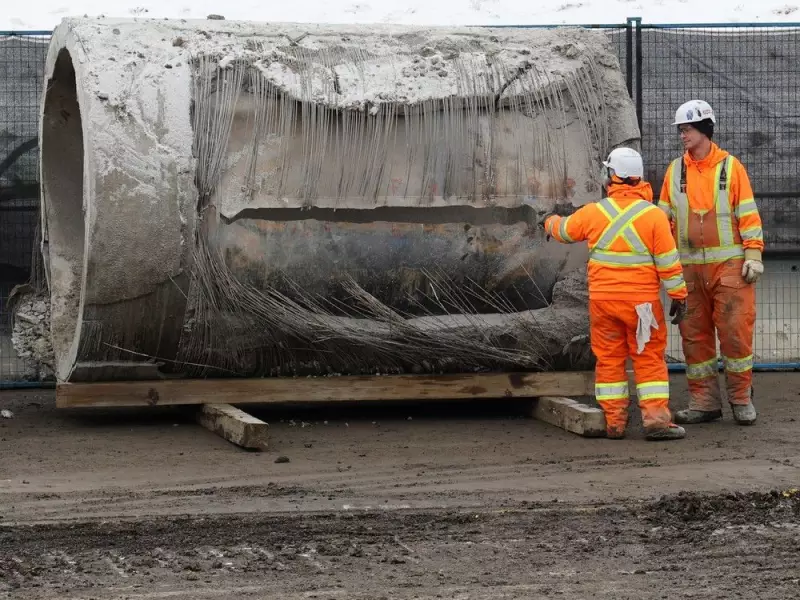
The annual risk profile update comes less than a month after the Bearspaw South feeder main, Calgary's most critical water transmission line, experienced its second rupture on December 30. This incident resulted in more than two weeks of Stage 4 water restrictions while repairs were underway, fundamentally altering the city's understanding of risks associated with critical infrastructure failure and redundancy deficiencies.
The report explicitly states: "The Bearspaw South feeder main break and overall asset condition has identified an urgent need to assess and understand other single points of failure within our critical infrastructure systems. Where single points of failure exist, redundancy must be designed and delivered."
Political Response and Budget Implications
Audit committee chair Jennifer Wyness emphasized that the report continues a consistent message from previous risk assessments: Calgary's infrastructure requires urgent investment. "Infrastructure is a climbing, escalating risk that is underfunded," stated the Ward 2 councillor. "Until council starts paying attention to this report, it will continue to climb. If council is always underfunding your infrastructure, continuing to spend while draining our reserves rather than completing infrastructure projects, this problem will only get worse."
Ward 8 Councillor Nathaniel Schmidt described the risk report as containing "urgent" information for council members, particularly as they lay the groundwork for the city's next four-year budget cycle. Council deliberations on this comprehensive financial plan are scheduled for November, making the timing of this risk assessment particularly significant for budgetary decisions.
Multiple Contributing Factors
Beyond infrastructure and technological concerns, the report identifies several additional factors contributing to Calgary's rising risk profile:
- Rapid population growth creating increased demand on municipal systems
- Geopolitical uncertainty affecting economic stability
- Climate change impacts on city assets and operations
- Limited capital investment in maintenance and upgrades
The comprehensive assessment serves as a critical warning to municipal leaders about the interconnected nature of these risks and the need for coordinated, strategic responses to address Calgary's evolving challenges.