In an unprecedented legal move, deposed Venezuelan President Nicolás Maduro is scheduled for his first appearance in an American courtroom on Monday. He faces serious narco-terrorism charges that were used by the Trump administration to justify a military operation to capture him and bring him to New York for prosecution.
The Court Appearance and Legal Battle Ahead
Maduro and his wife, Cilia Flores, are expected to appear before a judge at noon for a brief but mandatory legal proceeding. This initial hearing is likely to be the opening salvo in a prolonged and complex legal fight. The core issue will be whether Maduro can be put on trial in the United States at all. His legal team is expected to vigorously contest the legality of his arrest, arguing he is immune from prosecution as a sovereign head of state.
The couple will be transported from a Brooklyn jail to a Manhattan courthouse, notably located near the same courthouse where former President Donald Trump was convicted in 2024 on charges of falsifying business records. As a criminal defendant within the U.S. system, Maduro is entitled to the same rights as any other accused person, including a trial by a jury of New Yorkers.

Precedents and Political Complications
The defense of sovereign immunity has been tried before without success. Panamanian leader Manuel Noriega unsuccessfully used the same argument after his capture by U.S. forces in 1990. A significant hurdle for Maduro's defense is that the United States does not recognize him as Venezuela's legitimate head of state, especially following his highly disputed re-election in 2024.
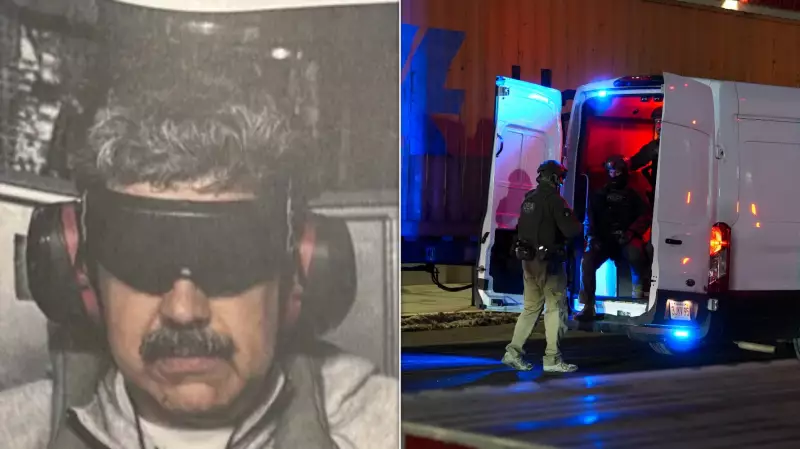
The U.S. military seized Maduro and his wife on Saturday from their home on a military base. In response, Venezuela's new interim president, Delcy Rodríguez, has demanded Maduro's return. She initially struck a defiant tone but later adopted a more conciliatory stance on social media, inviting collaboration with Trump and calling for "respectful relations" with the U.S.
Prior to his capture, Maduro and his allies consistently claimed that U.S. hostility was driven by a desire to control Venezuela's vast oil and mineral resources. Following the operation, Trump stated the U.S. would temporarily "run" Venezuela, though Secretary of State Marco Rubio clarified that day-to-day governance was not the intent, beyond enforcing an existing "oil quarantine."
The Charges and Contradictory Evidence
A detailed 25-page indictment, made public on Saturday, accuses Maduro and several associates of conspiring with drug cartels to facilitate the shipment of thousands of tons of cocaine into the United States. If convicted, they could face life imprisonment. The indictment also alleges that Maduro and his wife ordered kidnappings, beatings, and murders of individuals who owed drug money or interfered with their trafficking operations.
Specifically, the document accuses Flores of accepting hundreds of thousands of dollars in bribes in 2007 to arrange a meeting between a major drug trafficker and the director of Venezuela's National Anti-Drug Office, leading to ongoing monthly bribes. Other individuals charged include Venezuela's current and former interior and justice ministers, as well as an alleged leader of the Tren de Aragua gang, who remains at large.
However, a key contradiction exists. While the indictment states Venezuelan officials worked directly with the Tren de Aragua gang, a U.S. intelligence assessment from April 2025, which incorporated input from 18 intelligence agencies, found no evidence of coordination between the gang and the Venezuelan government.
The case plunges the U.S. into a deep legal and diplomatic conflict. It sets a dramatic precedent for the extraterritorial prosecution of a foreign leader and signals a potentially more aggressive U.S. policy in the hemisphere, as hinted by Trump's harsh comments about Colombia's president during the events.