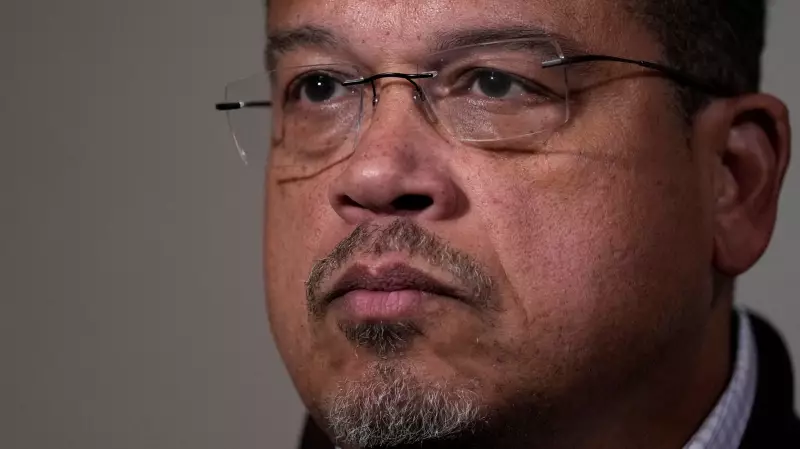
Minnesota's top prosecutor is accusing the Trump administration of obstructing a state investigation into a fatal shooting by a federal immigration agent in Minneapolis. Attorney General Keith Ellison revealed that federal authorities reneged on an agreement to share crucial evidence after the killing of Renee Good.
Federal Reversal Sparks State Investigation
Shortly after an Immigration and Customs Enforcement (ICE) agent shot and killed Renee Good on Wednesday, Minnesota officials were informed of an unusual development. Federal agents decided they would not share their investigative file with state counterparts from the Bureau of Criminal Apprehension (BCA), despite an initial agreement for a joint probe.
"We started hearing they're not going to release it. They're going to exclude state authorities from the bullets, the gun, the crime scene," Ellison told HuffPost. The Attorney General, who said he maintains a good relationship with federal law enforcement in Minnesota, attempted to intervene. He recalled thinking, "Can we call somebody? Can we work it out? Can we come to some understanding?"

His hopes faded when the news became public. Ellison sent a letter pleading with federal officials to reconsider, but received no response.
"Directive Appears to Be Coming from Trump Himself"
It wasn't until Friday afternoon, after Ellison and the Hennepin County District Attorney held a press conference announcing a parallel state investigation, that he received confirmation on the reason for the federal stonewalling.
"This directive appears to be coming from Trump himself," Ellison stated, pointing to the President's comments attacking Minnesota law enforcement that same day. When asked by a reporter if the FBI should share files with Minnesota investigators, Trump replied, "Normally I would, but they're crooked officials."
Ellison scoffed at Vice President J.D. Vance's claim that the ICE agent, identified as Jonathan Ross, had "absolute immunity," calling it a display of "ignorance."
Leaked Video and a Pattern of Smears
The situation grew more perplexing for Ellison when footage from Ross's cell phone was apparently leaked to Alpha News, a right-wing Minnesota outlet, on Friday. Ellison argued this undermined any justification for withholding evidence from official state investigators.
"If you're not giving up the file, then you're not giving up the file. But now you are giving up the file," he said. "It's fundamentally unprofessional from a criminal justice standpoint... if you're not releasing any information to the state, why are you releasing information to a propaganda sheet like Alpha News?"
The leaked video shows the moments leading up to the shooting. Ellison was careful not to characterize everything in the footage but noted, "She's clearly not demonstrating animosity toward him... She's saying: 'Hey man, I'm not mad.'" After the shooting, Ross is heard calling Good a "fucking bitch."
This, Ellison said, connects to a second lesson from prosecuting the murder of George Floyd: "When some units of government are connected to the death of a person, it's very predictable for some elements of the government to smear that person's reputation. That's happening full-on right now."
He emphasized, "It's important for the family of Renee Good to know that we know she's not a domestic terrorist... She was a good person, and we know that when she died, she had love in her heart and was expressing no animosity toward the person who killed her."
Ellison, a former longtime congressman, is no stranger to political tensions with the Trump administration. He referenced a previous case where the administration hyped fraud allegations involving Somalis and surged thousands of federal agents into Minneapolis, outnumbering the city's police force. His office has also sued to stop federal aid cuts.
While vowing to do everything possible to ensure justice for Good, Ellison repeatedly cautioned that more investigation is needed before any decision on charging ICE agent Jonathan Ross. However, the lesson from the George Floyd case is clear: "Get all the evidence you can. Don't over promise and under deliver." The state's parallel investigation continues, seeking evidence from the public.