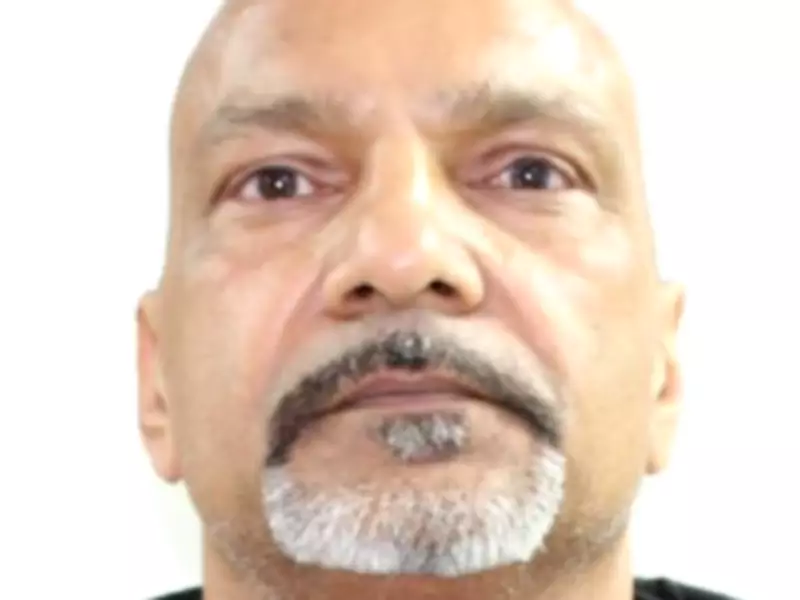
In a significant development for international law enforcement, a prominent Ontario trucking executive has confessed to masterminding a sophisticated cross-border drug smuggling operation that funneled massive quantities of cocaine and methamphetamine from the United States into Canada. Guramrit Sidhu, 62, of Brampton, Ontario, entered a guilty plea in Los Angeles federal court, admitting his role as the orchestrator behind what authorities describe as a hyperactive criminal enterprise.
The Kingpin's Admission
Known by the underworld moniker "King," Sidhu pleaded guilty to engaging in a continuing criminal enterprise, one of seventeen charges he faced following his 2024 arrest in Canada. The arrest culminated a sprawling international investigation that exposed a well-organized network utilizing commercial transport trucks to move narcotics across the border.
In court proceedings, Sidhu—a bald man with a distinctive salt-and-pepper moustache and goatee—acknowledged that beginning around 2020, he directed a vortex of high-value drug shipments. These loads were purchased from suppliers in Los Angeles and transported northward using his trucking company's vehicles and other commercial carriers.

Operation Details and Scale
The smuggling operation employed multiple border crossings to evade detection, including the Detroit-Windsor tunnel, the Peace Bridge in Niagara, and the Blue Water Bridge connecting Michigan to Sarnia, Ontario. Sidhu admitted to overseeing a criminal network involving five or more individuals who collaborated systematically to commit drug offenses.
According to the signed plea agreement, the scale of the operation was staggering. In just one month during 2022, Sidhu orchestrated the distribution of eight separate drug loads, totaling approximately 523 kilograms of methamphetamine and 347 kilograms of cocaine. Law enforcement successfully seized these shipments, which carried an estimated wholesale value between $15 and $17 million USD.
Covert Communication and Betrayal
The network utilized encrypted phone applications and coded language to coordinate logistics. "Water" served as code for methamphetamine, "girls" for cocaine, and "Lisa" referred to Los Angeles. To confirm identities during drug exchanges, participants used the unique serial numbers on banknotes as an underworld form of two-factor authentication. The narcotics originally sourced from Mexico.
Unbeknownst to Sidhu, one of his trusted associates on these encrypted platforms had become an informant for the Federal Bureau of Investigation. This individual, who had previously worked with Sidhu before cooperating with authorities, provided crucial intelligence that enabled investigators to track the drug trade meticulously.
Legal Consequences and Sentencing Agreement
In exchange for Sidhu's guilty plea to the primary charge, U.S. prosecutors agreed not to seek a sentence exceeding the mandatory minimum of 20 years imprisonment. They also promised not to oppose Sidhu's application for transfer to a Canadian prison after he serves at least ten years of his sentence.
While sentencing has not yet been imposed, this agreement effectively prevents the judge from imposing the maximum penalty, which could have included life imprisonment and a $2 million fine. Sidhu admitted to orchestrating at least nine specific large drug loads between 2021 and 2022, confirming he operated the network until February 14, 2023.
The case highlights the ongoing challenges of cross-border drug trafficking and the sophisticated methods employed by criminal organizations to exploit commercial transportation systems for illicit gains.