Toronto Police Chief Takes Historic Action in Corruption Probe
In a groundbreaking move that signals a new era for police accountability in Ontario, Toronto Police Chief Myron Demkiw has suspended four officers without pay following their arrest in what may be the largest corruption scandal in Toronto Police history. The action comes under Ontario's 2024 police reform legislation that finally allows chiefs to cut off salaries for officers facing serious criminal charges.
Project South Investigation Reveals Shocking Allegations
The seven active Toronto officers and one retiree face disturbing charges including trafficking cocaine, accepting bribes, obstructing justice, and allegedly mining confidential information from police computers to leak to criminals. The York Regional Police investigation, dubbed Project South, alleges some of this information was provided to hit men planning to kill a corrections officer living in York Region.
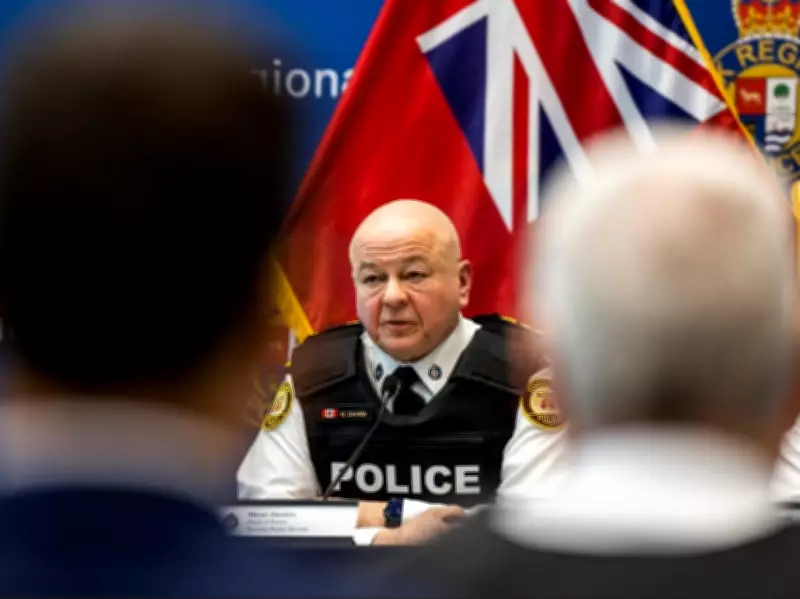
"We are examining the legal authorities I have in regards to suspension without pay," Chief Demkiw said during a press conference Thursday. "Presently, at least four of the seven I will be seeking suspension without pay." By the end of the day, his spokesperson confirmed the Chief had provided notice to four officers that their pay will be cut off while suspended.

End of a Costly Era for Ontario Taxpayers
Until 2024, Ontario stood alone as the only province in Canada where suspended officers could continue collecting full paycheques while facing criminal charges – sometimes even after conviction. A 2024 CBC News investigation revealed this system cost Ontario taxpayers approximately $134 million over 11 years, with 87% of paid suspensions involving criminal charges.
One of the most notorious cases involved former Toronto Police Const. Ioan-Florin (John) Floria, who collected more than $1 million while suspended with pay after his 2007 arrest for allegedly assisting friends in a multimillion-dollar Eastern European drug cartel. Though acquitted on criminal charges in 2012, he was eventually dismissed in 2018 after disciplinary proceedings.
The New Law That Changed Everything
Following years of public outrage and lobbying by the Ontario Association of Chiefs of Police, the 2024 legislation finally allows police chiefs to suspend officers without pay under specific circumstances. The law applies when an officer is in custody or on bail with conditions that interfere with their ability to perform duties, or when charged with a serious off-duty offence that could lead to dismissal.
The four officers affected by Chief Demkiw's decision – Const. Timothy Barnhardt, Const. Saurabjit Bedi, Sgt. Robert Black and Sgt. Carl Grellette – will see their pay suspended beginning 60 days from receipt of the notice. This represents a significant departure from previous practice where officers would have continued receiving salary while awaiting trial.
A Mockery of Public Trust
The old system created absurd situations that undermined public confidence in law enforcement. Former Waterloo Regional Police constable Craig Markham, finally fired after collecting $400,000 in salary and benefits during his three-year suspension, thanked the police service for its "nice gift" that allowed him to sit at home, play golf, travel and train to become a firefighter while receiving "a first class pay check."
Chief Demkiw's action represents more than just a financial decision – it's a crucial step toward rebuilding public trust in a police service rocked by serious allegations. While the officers remain innocent until proven guilty, the suspension without pay acknowledges the gravity of the charges and the public's expectation that those accused of such serious crimes shouldn't profit from their positions while awaiting trial.
If exonerated, the suspended officers would receive back pay with interest. But if convicted, this new approach ensures that alleged police misconduct doesn't come with continued financial reward at taxpayer expense. The move, while seemingly obvious, marks a historic shift in how Ontario handles police accountability and represents a victory for both police reformers and concerned citizens who have long demanded change.