Sotomayor Condemns Kavanaugh's Stance on Racial Profiling in Immigration Cases
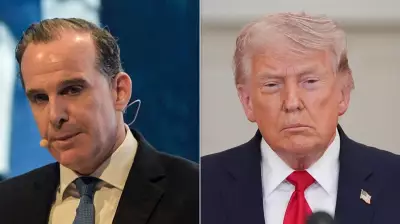
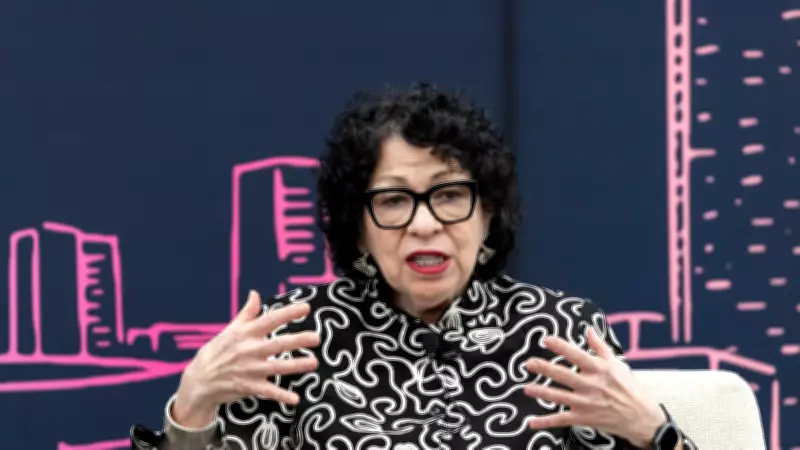
In an unusual public rebuke, Supreme Court Justice Sonia Sotomayor has sharply criticized fellow Justice Brett Kavanaugh for his justification of racial profiling in immigration-based stops targeting U.S. citizens. Speaking at a University of Kansas School of Law event on Tuesday, Sotomayor took aim at Kavanaugh's concurring opinion in the case of Noem v. Vasquez Perdomo, which was first reported by Lawrence Journal-World and Bloomberg Law.
The Case and Kavanaugh's Argument
The case, ruled on by the Supreme Court in September 2025, challenged immigration enforcement tactics used during Trump's mass deportation push in Los Angeles that summer. Immigration agents were accused of racial profiling, detaining individuals who appeared Latino to verify their citizenship status. The court's six conservatives blocked a lower court ruling that banned such profiling through an unwritten shadow docket decision, leaving Kavanaugh's concurrence as the sole justification.
In his concurrence, Kavanaugh argued that race or ethnicity could be a "relevant factor" when combined with other elements like employment in day labor, landscaping, agriculture, or construction, or speaking Spanish instead of English. He contended that the burden on citizens or legal non-citizens would be minimal, stating, "If the person is a U.S. citizen or otherwise lawfully in the United States, that individual will be free to go after the brief encounter."

Sotomayor's Scathing Critique
Sotomayor, however, dismissed this view as out of touch, noting Kavanaugh's background. "I had a colleague in that case who wrote, you know, these are only temporary stops," she said. "This is from a man whose parents were professionals. And probably doesn’t really know any person who works by the hour." She emphasized the real-world consequences, adding, "Those hours that they took you away, nobody’s paying that person. And that makes a difference between a meal for him and his kids that night and maybe just cold supper."
In her dissent, joined by her two liberal colleagues, Sotomayor argued that Kavanaugh's opinion "all but declared that all Latinos, U.S. citizens or not, who work low wage jobs are fair game to be seized at any time, taken away from work, and held until they provide proof of their legal status to the agents’ satisfaction." She labeled his claim that stops would be brief as "blinking reality," citing examples from the case where plaintiffs faced violence and detention despite asserting their citizenship.
Real-World Impacts and "Kavanaugh Stops"
Contrary to Kavanaugh's assurances, these encounters have proven far from brief or benign. Citizens subjected to profiling have experienced:
- Physical manhandling, hitting, and being zip-tied
- Kidnapping off streets and detention for days without lawyer access
- Agents refusing to accept documents proving citizenship
- At least 20 children among those detained
Such incidents have become known as "Kavanaugh Stops," named after the justice's concurrence that seemingly authorizes them. Despite this, the Supreme Court has not officially ruled on the use of racial profiling in roving mass deportation operations, leaving the legal landscape uncertain.
This public criticism highlights deep divisions within the court over immigration enforcement and civil liberties, underscoring the ongoing debate about racial profiling's role in U.S. policy.