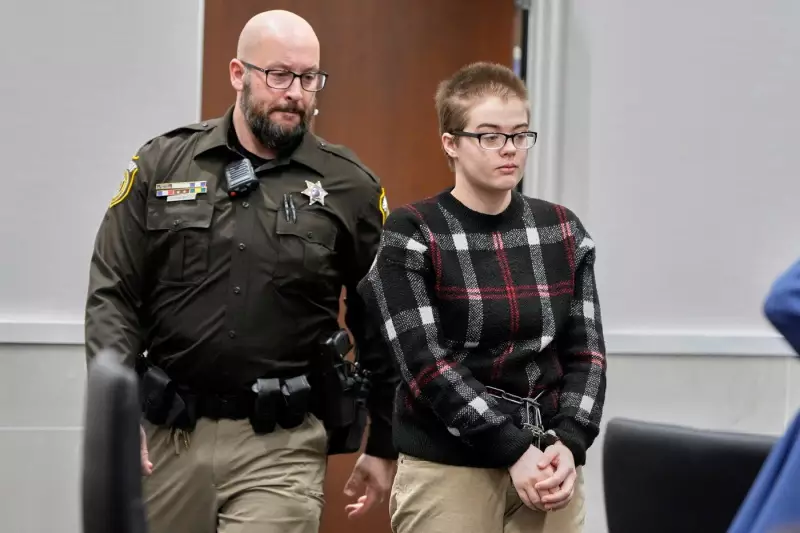
Morgan Geyser, one of the two women convicted for the infamous 2014 Slender Man stabbing in Wisconsin, will not contest the state's legal move to revoke her conditional release privileges. This decision comes after Geyser briefly escaped from a mental health facility earlier this month.
Courtroom Decision Follows Facility Escape
Geyser appeared in a Waukesha County courtroom on January 9, 2025, where her attorney indicated she would not fight the Wisconsin Department of Justice's petition. The state is seeking to formally revoke the conditional release she had been granted to a mental health institution. This legal action was triggered directly by an incident in December 2025, where Geyser left the facility without authorization.
The escape, though short-lived, violated the strict terms of her release. Geyser was found and returned to custody a few hours later, but the breach was significant enough for prosecutors to immediately file paperwork to end her community access privileges.

A Notorious Case Revisited
Morgan Geyser and her then-friend Anissa Weir were just 12 years old when they stabbed their classmate 19 times in a Waukesha park in 2014. They told investigators they committed the act to please the fictional internet horror character Slender Man. The victim, miraculously, survived the attack.
Both girls were charged as adults with attempted first-degree intentional homicide. However, their cases were later moved to juvenile court. In a 2019 plea deal, Geyser was found not guilty by reason of mental disease or defect and was committed to a state mental health facility for a minimum of 40 years. Her release to a less restrictive conditional program was a subsequent step in her treatment, contingent on strict compliance with rules.
The recent escape represents a major setback in her long-term rehabilitation path. Legal experts note that the state's petition to revoke release is a standard but serious procedure following such a violation.
What Happens Next?
By not contesting the state's effort, Geyser effectively concedes that the escape violated her release conditions. A judge is now expected to formally grant the state's petition, resulting in Geyser's return to a more secure state mental health institution.
This development closes a chapter of conditional freedom and resets the clock on any future considerations for release. The case continues to draw significant public attention, serving as a stark reminder of the complex intersection of juvenile crime, mental health treatment, and public safety.
The victim of the 2014 stabbing and her family have maintained a private profile in recent years. The latest events in Geyser's case are likely to rekindle public discussion about the justice system's handling of profoundly disturbed juvenile offenders.