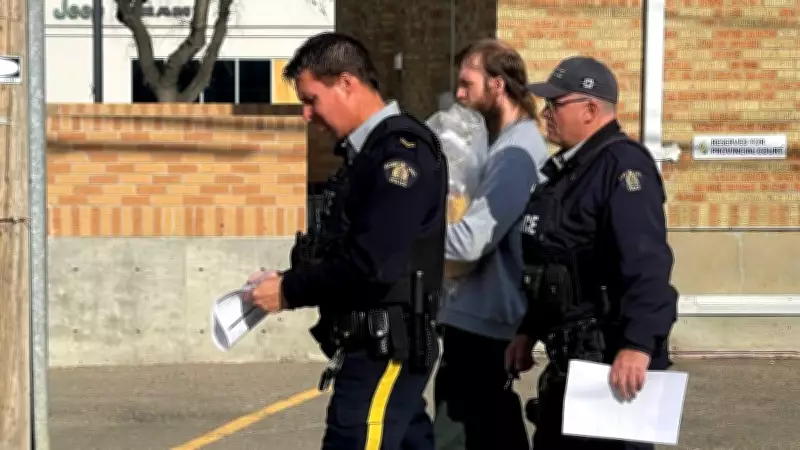
In a troubling development from Saskatchewan, a man previously convicted for disseminating hateful speech against Jewish individuals has been arrested once more, this time on charges that include impersonating a police officer and assault. Travis Patron, 31, the former leader of the now-defunct Canadian Nationalist Party, finds himself back in legal trouble, highlighting ongoing concerns about his conduct and the broader issues of hate crimes and public safety.
Background of Prior Conviction
Patron's legal history dates back to October 2022, when he was sentenced to one year in jail at the Court of King's Bench in Estevan, Saskatchewan. A jury had found him guilty of hateful speech targeting Jewish people, a conviction that underscored the serious nature of his actions and their impact on the community. This case drew significant attention due to Patron's role as a political figure and the explicit nature of the hate speech involved.
New Charges and Arrest Details
The recent arrest involves allegations that Patron impersonated a police officer, a serious offense that can undermine public trust in law enforcement and pose direct risks to individuals. Additionally, he is charged with assault, adding to the gravity of the situation. Authorities have not released extensive details about the specific incidents leading to these charges, but they emphasize that the investigation is ongoing and that public safety remains a priority.

This arrest comes as a stark reminder of Patron's pattern of behavior, raising questions about rehabilitation and recidivism in cases involving hate crimes and violent acts. The timing of the arrest, in April 2026, suggests that Patron may have been under surveillance or that new evidence emerged, prompting swift action by law enforcement.
Implications for Community and Legal System
The case of Travis Patron highlights several critical issues within the Canadian legal and social landscape. First, it underscores the persistent challenge of combating hate speech and its real-world consequences, as individuals convicted of such offenses may continue to engage in harmful behavior. Second, the charge of impersonating a police officer points to the dangers of individuals exploiting authority figures to commit crimes, which can lead to public confusion and endangerment.
From a legal perspective, this arrest may prompt discussions about sentencing and monitoring for individuals with prior hate crime convictions. It also raises awareness about the need for robust public education on recognizing and reporting impersonation attempts, as well as the importance of community vigilance in preventing such incidents.
Broader Context and Public Reaction
In Saskatchewan and beyond, this case has sparked renewed debate about hate speech laws and their enforcement. Community leaders and advocacy groups have expressed concern over the recurrence of such behavior, calling for stronger measures to address root causes and support victims. The arrest also comes amid a national conversation on public safety and the role of law enforcement in protecting diverse communities from targeted violence and harassment.
As the legal proceedings unfold, observers will be watching closely to see how the courts handle these new charges, particularly in light of Patron's previous conviction. The outcome could set precedents for how similar cases are managed in the future, emphasizing the need for a balanced approach that upholds justice while safeguarding societal values.