A Personal Tragedy Exposes Systemic Flaws in Police Training
In 1998, a Kern County, California, SWAT team shot and killed my father, Lyle Federman, firing 18 times as he was surrendering. He had no criminal record, was accused of no crime, and the police had no warrant. An eccentric, nature-loving computer programmer and rabbi, he simply wished to be left alone in his Tehachapi mountain home. The Ninth Circuit Court of Appeals later ruled a jury could find police used excessive force and violated his constitutional rights.
A Pattern of Brutality and the Echoes of Antisemitism
Pulitzer Prize-winning author Edward Humes detailed Kern County's brutality and corruption in his book Mean Justice. Recently, Hulu's series Killing County highlighted the county's persistent pattern of corruption, coverups, and excessive force. In my father's case, antisemitism was also at play. During the standoff, an officer—after being told my father was a rabbi and Jewish—antagonistically asked if he was Christian, as admitted in deposition testimony.
This history made it particularly rattling to learn that Border Patrol field leader Gregory Bovino allegedly mocked a Minnesota U.S. attorney's Orthodox faith and Shabbat observance just one day before six career federal prosecutors reportedly resigned over the Justice Department's handling of another killing. Watching the country relive similar scenes of police violence is excruciating, dragging me back into the worst nightmare of my life. I do not watch as a spectator, but as someone who has lived through what law enforcement escalation costs.

Analyzing Police Shootings: The Wrong Focus on Final Seconds
Yet, we keep analyzing police shootings incorrectly. Public debate often treats each new video like a forensic puzzle, freezing frames to ask whether a hand twitched or a wheel turned. Those final seconds, however, are only the last frame of a much longer story. Videos do not show why officers rushed instead of waiting, closed distance instead of backing up, or escalated situations unnecessarily.
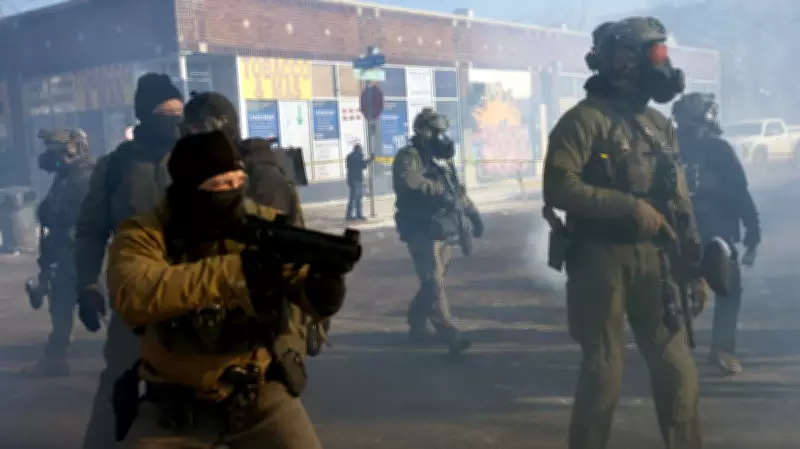
Consider two recent deaths in Minneapolis involving U.S. immigration enforcement agents. On January 7, an ICE agent shot and killed Renee Nicole Good, an unarmed 37-year-old mother of three, as she attempted to drive from the scene. Video shows her turning the vehicle away from an officer to avoid him. On January 24, federal agents fatally shot Alex Jeffrey Pretti, a 37-year-old ICU nurse with a concealed carry permit. The government initially claimed—without evidence—he posed a threat and intended a massacre, even when video showed he was holding a camera and attempting to assist others before being pepper-sprayed, tackled, and shot multiple times.
My Father's Case: How a Welfare Check Turned Deadly
My father's tragedy illustrates how quickly these sequences unfold. Neighbors reported him exhibiting what officers described as odd but noncriminal behavior. Without a warrant and without consulting mental health professionals, a deputy decided my father should be taken into custody for an evaluation—a decision he was never informed of. Instead, officers surrounded his home with armored vehicles and snipers, antagonized him, and what began as a noncriminal welfare check turned into a siege, a warrantless entry, and a fatal shooting. The Ninth Circuit emphasized the police's tactics themselves transformed a minor situation into a deadly one.
Attorney John Burton, who represented my family, explained: Cases often turn on everything the police did before that final second. When officers rush, surround and surprise people, they often create the danger to which they claim to be responding.
The Path Forward: Emphasizing De-escalation in Training and Culture
Officer training and culture must shift to emphasize modern de-escalation tactics. This involves:

- Creating Time and Distance: Officers should create space between themselves and a potential threat to allow for assessment and communication. Closing the gap quickly increases fear on both sides and reduces options for peaceful resolution.
- Safe Vehicle Protocols: When someone is in a vehicle, the safest response is to give it room to move, not to swarm it or stand in its path, as occurred with Renee Good.
- Clear, Calm Communication: Officers should use simple, one-at-a-time instructions. Narrating intentions, like I am stepping back now, reduces perceived threat and confusion.
- Avoiding Manufactured Emergencies: De-escalation means avoiding actions that create crises, such as surprise entries, using pepper spray without imminent danger (as with Alex Pretti), or using flashbangs to force compliance. When time allows, containment and negotiation save lives.
When force becomes necessary, it should be proportional, limited to interrupting an immediate threat, and stopped as soon as that threat ends. Often, patience, communication, and distance prevent a momentary spike in fear from becoming a fatal bullet.
A Legal Standard Undermined by Training Culture
Nearly 40 years ago, in Tennessee v. Garner, the Supreme Court held that deadly force is justified only when an officer has probable cause to believe a suspect poses an imminent threat of serious harm. Training that treats ambiguity itself as danger undermines this fundamental requirement.
These are not abstract debates. They are questions of life and death. My father's death was not an anomaly. The deaths of Renee Good and Alex Pretti demonstrate that without intentional training, policy, and cultural change, law enforcement will continue to escalate encounters.
If we want fewer lives lost, we must stop treating each shooting as an isolated tragedy. The problem is not simply individual misconduct; officers are not inherently malicious. It is a system that rewards escalation and normalizes confrontation. Until we change how officers assess risk and interact with civilians, we will continue to call these deaths unavoidable. They are not.