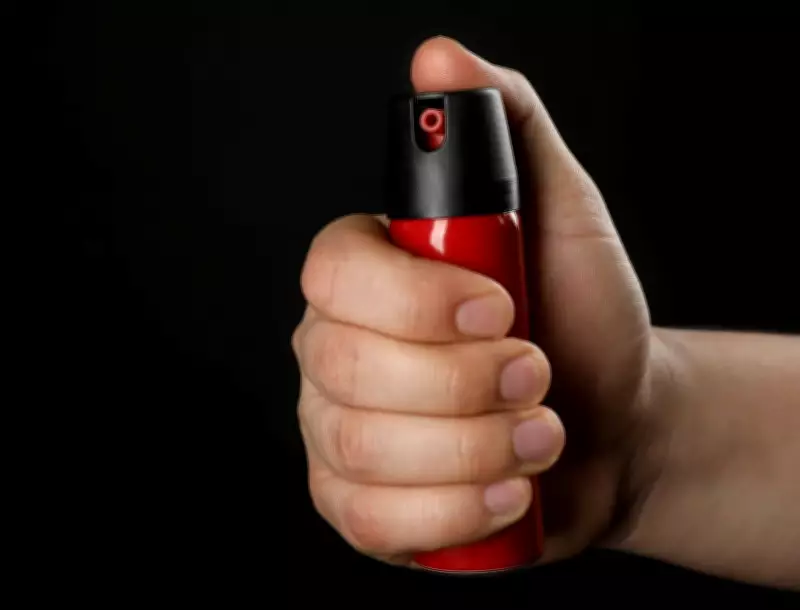
Ontario's Push to Legalize Pepper Spray for Self-Defence Meets Legal Complexities
Ontario's recent initiative to legalize the carrying of pepper spray for self-defence purposes has ignited a province-wide debate, but legal experts caution that the path to implementation is fraught with significant legal hurdles. Earlier this week, Ontario Attorney General Doug Downey formally requested the federal government to permit Canadians to carry canisters of oleoresin capsicum (OC) spray, commonly known as pepper spray, for personal protection.
The Legal Definition of a Weapon Presents a Major Obstacle
Michael A. Johnston, a lawyer with the Ottawa-based firm Shore & Johnston, emphasizes that legalizing pepper spray is far more complicated than it might initially appear. The Criminal Code's expansive definition of a weapon creates a fundamental challenge, as Section 2 classifies anything designed or usable as a weapon under this category. "The intention with which we carry something is often the matter of focus," Johnston explained to the Toronto Sun. "It sounds almost like a circular definition, but it's just so expansive."
Current Regulations and the Bear Spray Loophole
Currently, civilian use of pepper spray against humans is strictly prohibited in Canada. However, there exists a notable exception: sprays designed for deterring animal attacks, such as bear or dog spray, are legally available for purchase and carry. This legal distinction hinges entirely on intent; carrying bear spray with the purpose of using it against humans transforms it into a prohibited weapon, violating both the Criminal Code and the Firearms Act.

OC spray itself is an oily compound derived from capsaicin in hot peppers, differing from other irritants like tear gas. When deployed, it causes intense burning to the eyes and mucous membranes, temporarily incapacitating an attacker.
Concealed Weapons and Regulatory Grey Areas
Even if pepper spray were legalized, Johnston points out that it would remain classified as a weapon, merely shifting from a prohibited to a regulated status. Canadian law explicitly forbids carrying concealed weapons, adding another layer of complexity. "You're allowed to carry a knife, for example—but you're not allowed to carry a concealed knife, technically speaking," he noted, highlighting existing ambiguities in weapons regulations, such as multi-tools like Leatherman devices that include knife components.
Potential for Escalation and Unanswered Questions
The lawyer also raised concerns about potential unintended consequences. Legalizing pepper spray could inadvertently encourage criminals to arm themselves with more powerful weapons, leading to disproportionate force and escalating violent confrontations. Johnston questioned the rationale behind Premier Doug Ford's specific focus on pepper spray. "What's the panacea there? Why is pepper spray going to make the difference? Is it going to have a meaningful deterrent effect? I'm left asking these questions, personally speaking," he stated, while affirming the fundamental right to self-defence.
The provincial appeal has garnered mixed reactions across Ontario, praising enhanced personal safety measures while criticizing potential risks. As the debate continues, the federal government's response will be crucial in navigating the intricate legal landscape surrounding self-defence tools in Canada.