California Governor Intensifies Criticism of Border Patrol Commander Over Fatal Shooting Incident
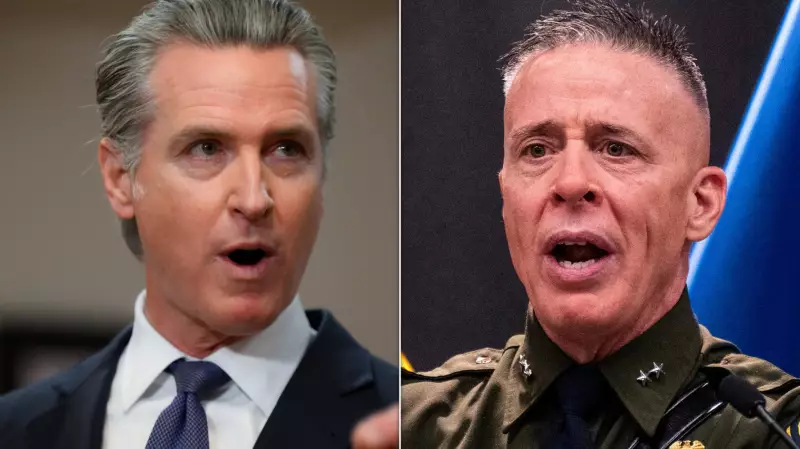
California Governor Gavin Newsom has significantly escalated his public criticisms of U.S. Border Patrol commander Greg Bovino this weekend, following Bovino's attempts to justify the deadly shooting of Minneapolis resident Alex Pretti. The governor's sharp rebuke comes amid growing controversy surrounding the circumstances of Pretti's death during an encounter with immigration enforcement officers.
Border Patrol Commander Defends Agents' Actions on National Television
Appearing on CNN Sunday, Commander Greg Bovino claimed that Border Patrol agents had attempted to use what he described as "deescalation techniques" on Pretti, a 37-year-old Minneapolis resident, before ultimately gunning him down in the street. During a tense conversation with CNN's Dana Bash, Bovino stated: "He was in the scene actively impeding and assaulting law enforcement to the point."
When Bash countered that Pretti had simply been filming ICE officers at the time of his death, Bovino responded sharply: "He was there for a reason, and that reason was to impede law enforcement." This exchange has sparked significant debate about the appropriate use of force by federal agents and the rights of citizens to document law enforcement activities.

Newsom's Forceful Response and Historical Comparisons
Governor Newsom wasted little time reacting to Bovino's televised comments. Through his press office on Sunday, Newsom posted on X: "Gestapo Greg says filming ICE agents with your cell phone is assault and justifies them shooting you in cold blood." This inflammatory statement directly likened Bovino to the secret police of Nazi Germany and German-occupied Europe during World War II.
Responding to additional segments from Bovino's CNN appearance, Newsom called Pretti's death "absolutely unacceptable" and wrote: "They shot an American in cold blood! For exercising First Amendment rights our Founders fought to defend and enshrine in our Constitution." This represents the governor's strongest condemnation yet of the Border Patrol's actions in this case.
Historical Context of the Controversy
This is not the first time Newsom has evoked Nazi Germany while discussing Commander Bovino, who has served as a senior official with the U.S. Border Patrol since 2019. Speaking at the World Economic Forum in Davos, Switzerland, last week, Newsom compared Bovino's distinctive calf-length green trenchcoat to "SS garb," referencing a claim that had circulated on social media following Bovino's visit to Minneapolis earlier this month.
That visit occurred after the fatal shooting of another 37-year-old, Renee Nicole Good, further intensifying scrutiny of Border Patrol practices in the region. Newsom's repeated historical analogies have transformed what might have been a routine law enforcement controversy into a broader debate about civil liberties and government overreach.
Bovino's Response and Defense of His Conduct
Commander Bovino has largely dismissed Newsom's criticisms with a mixture of humor and factual rebuttal. In an interview with NewsNation last week, Bovino stated that his controversial coat was "definitely Border Patrol-issued" and had been in his possession for "over 25 years." He provided specific context to counter the governor's accusations.
Bovino pointed out that he had worn the same coat to an official event in 2021, when President Joe Biden was in office, and had "received nothing but compliments" at the time. He posed a rhetorical question that highlighted what he sees as political inconsistency: "Fast forward a few years to this administration, all of a sudden it's a problem. Hey, what changed there? Why is it a problem now [and not] during the last administration?"
This ongoing exchange between a prominent Democratic governor and a senior federal law enforcement official reflects deepening tensions between state and federal authorities on immigration enforcement matters. The controversy touches on fundamental questions about:

- The appropriate use of force by federal agents
- Citizens' rights to document law enforcement activities
- The boundaries of political rhetoric in law enforcement debates
- Accountability mechanisms for federal agencies operating within state jurisdictions
As this story continues to develop, it raises significant questions about the relationship between state governments and federal immigration enforcement agencies, particularly regarding transparency, accountability, and the protection of constitutional rights during enforcement operations.