Montreal Police Department Implements Comprehensive Anti-Racism Strategy
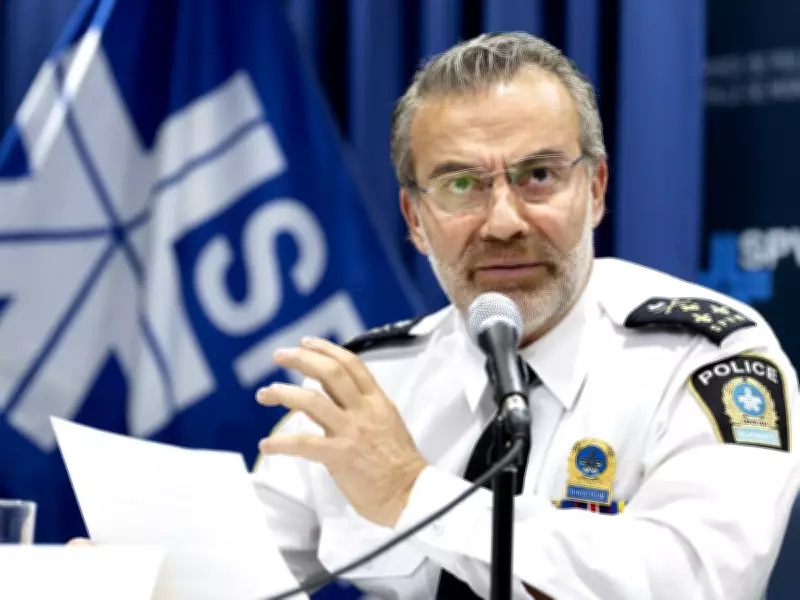
The Service de police de la Ville de Montréal (SPVM) has officially launched an ambitious five-year action plan designed to eradicate racism and discrimination both within the police force and during community interventions across the city. Police Chief Fady Dagher presented the detailed strategy on Tuesday, emphasizing that visible minorities have been disproportionately targeted by officers according to recent findings.
Internal Climate as Foundation for External Service
Chief Dagher explained that creating a healthy organizational climate internally is essential for improving external police services. "We need to feel that, internally across the organization, there is a healthy climate," Dagher stated from police headquarters. "Once that's solved, the service provided externally will mirror what's happening on the inside."
The plan represents the latest initiative from the SPVM to confront systemic issues that have persisted despite previous efforts. It was developed following extensive consultations with community groups and approximately 1,000 police officers, including anonymous feedback sessions that allowed officers to speak freely without fear of reprisal.

Proactive Identification of Discriminatory Behaviors
A significant component of the strategy focuses on identifying "discriminatory and at-risk behaviors" among officers before these attitudes manifest in field operations. Dagher illustrated this approach by referencing the case of George Floyd, whose 2020 death in Minneapolis involved an officer with numerous prior misconduct complaints.
"At the SPVM, we want to do everything we can to not end up with one of our officers who has 17 incidents yet we only act when it's too late," Dagher emphasized, highlighting the importance of early intervention and continuous monitoring.
Specific Strategies for Vulnerable Communities
The action plan outlines targeted approaches for interactions with Indigenous communities and aims to improve relationships with youth across Montreal. Additionally, the department will enhance monitoring of emerging ideological movements, including far-right and far-left groups, to prevent recruitment or adherence among current officers.
Demographic data reveals challenges in police representation: only about 16 percent of SPVM officers come from visible or ethnic minorities according to the 2024 annual report. Dagher acknowledged recruitment difficulties, noting that distrust of police within minority communities creates barriers to diversifying the force.
Addressing Systemic Issues Identified in Multiple Reports
The new plan follows multiple reports documenting racial disparities in policing. Studies from 2019 and 2023 found that Indigenous, Black, and Arab individuals face disproportionate targeting by Montreal police. A 2020 report by the Office de consultation publique de Montréal further accused both the city and police force of ignoring systemic racism and discrimination.
Dagher affirmed that he has never denied the existence of systemic racism, pointing to recent reforms including a new street check policy implemented last year, the 2024 ban on the controversial Thin Blue Line badge, and a community immersion training program for recruits launched in 2023.
Expert Perspective on Organizational Change
Sociologist Frédéric Boisrond, who served as an SPVM adviser and consulted on the plan, expressed cautious optimism about the initiative. "Systemic racism is the racism that stays in the rules of an organization even when all the racists are gone—and that applies to misogyny, homophobia, to all," Boisrond explained.
"There are rules in every organization," he added. "And what I'm hearing today is how they're going to try to change those rules." While encouraged by the effort, Boisrond noted that only time will determine whether the plan achieves its intended effects in transforming police culture and community relations.
The five-year plan represents a continuation of reforms Dagher has pursued since becoming police chief in 2022, rather than a completely new direction. "We're not starting today—we're continuing," he stated, reinforcing his commitment to building trust between Montreal's diverse communities and the police force sworn to protect them.