The Notorious Manitoba Gold Heist: The Folk Hero Criminal Who Stole Millions
In the annals of Canadian crime, few figures capture the public imagination quite like Ken Leishman, the infamous Manitoba criminal whose audacious multi-million-dollar gold heist in 1966 cemented his status as a folk hero. This daring theft, executed with precision and bravado, remains one of the most legendary robberies in the nation's history, blending elements of high-stakes adventure with a Robin Hood-esque allure that continues to fascinate decades later.
The Mastermind Behind the Heist
Ken Leishman, often dubbed "The Flying Bandit" due to his background as a pilot, meticulously planned the gold heist that would make him a household name. Operating from Winnipeg, Manitoba, Leishman targeted a shipment of gold bullion valued at over $400,000 at the time—equivalent to several million dollars in today's currency. His scheme involved exploiting vulnerabilities in the transportation and security protocols of the era, showcasing a level of cunning that set him apart from typical criminals.
Leishman's criminal career was not limited to this single act; he had a history of smaller thefts and frauds, but the gold heist represented his magnum opus. What made him particularly notable was his ability to evade capture for a significant period, using his aviation skills to stay one step ahead of law enforcement. This elusiveness, combined with the sheer scale of the theft, contributed to his mythic reputation among the public, who often viewed him as a charismatic anti-hero rather than a mere lawbreaker.

The Execution and Aftermath of the Robbery
The heist itself unfolded with cinematic flair. Leishman and his accomplices intercepted the gold shipment, employing disguises and forged documents to bypass security checks. They successfully made off with the bullion, sparking a massive manhunt across Manitoba and beyond. The theft sent shockwaves through the financial and law enforcement communities, highlighting gaps in the security of valuable cargo and prompting widespread media coverage that sensationalized Leishman's exploits.
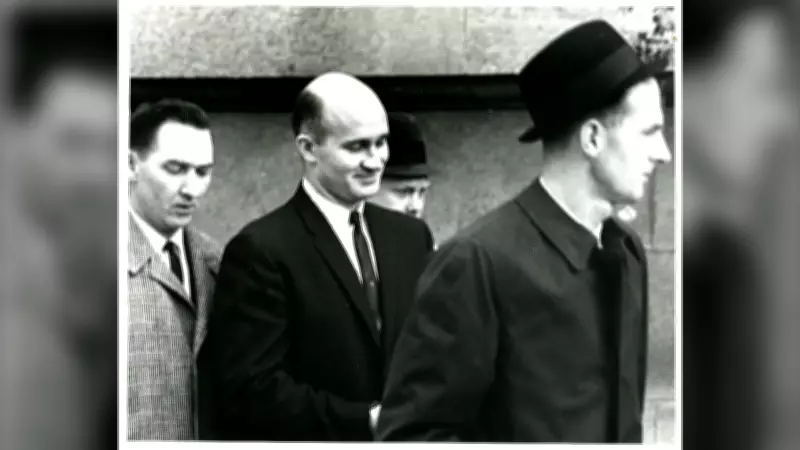
Despite his initial success, Leishman's luck eventually ran out. He was apprehended later in 1966, following a dramatic court appearance in Winnipeg that was captured in photographs, such as the one from the Winnipeg Tribune Collection archived at the University of Manitoba. His capture did little to diminish his legend; instead, it solidified his image as a daring outlaw who had challenged the system. In the years that followed, Leishman became a symbol of rebellion and ingenuity, with stories of his heist being passed down through generations, often embellished to enhance his folk hero status.
Legacy and Cultural Impact
Ken Leishman's gold heist left an indelible mark on Canadian crime lore. It serves as a case study in the psychology of criminal celebrity, where public fascination with audacious acts can transform perpetrators into cultural icons. The heist also had practical repercussions, leading to tightened security measures for gold and other high-value shipments in Manitoba and across Canada.
Today, Leishman is remembered not just as a criminal, but as a complex figure whose story blurs the lines between villain and hero. His tale is often recounted in true crime circles, documentaries, and local histories, reflecting a enduring curiosity about those who dare to defy the odds. As we look back on this pivotal event from 1966, it reminds us of the thin line between infamy and admiration, and how a single act of theft can capture the imagination of an entire nation.