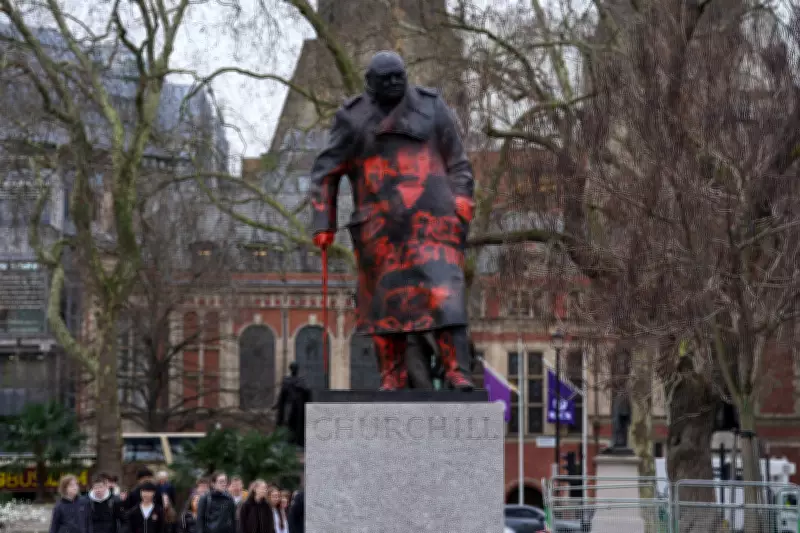
London's Metropolitan Police have made an arrest following an act of vandalism targeting one of the city's most prominent historical monuments. The statue of former British Prime Minister Winston Churchill, located in Parliament Square, was discovered defaced with graffiti on Friday, February 27, 2026.
Swift Police Response to Monument Defacement
Authorities responded promptly to reports of the vandalism, which involved spray paint being applied to the bronze statue. The incident, captured in photographs showing the graffiti, drew immediate public attention and condemnation. Police have confirmed that a man is now in custody and facing charges related to the act.
Historical Significance of the Site
The Churchill statue has stood in Parliament Square since 1973, serving as a tribute to the wartime leader's legacy. Its location near the Houses of Parliament makes it a focal point for both tourists and political demonstrations. This is not the first time the monument has been targeted; during previous protests, it has been both vandalized and protected with temporary coverings.

Investigation and Community Impact
Forensic teams have been examining the scene to gather evidence, while police continue to investigate whether the act was isolated or connected to broader activities. The defacement has sparked discussions about the preservation of public monuments and the appropriate responses to such incidents in a democratic society.
Local officials have expressed concern about the vandalism, emphasizing the importance of respecting historical artifacts while acknowledging the right to peaceful protest. Cleanup operations are underway to restore the statue to its original condition, though the process may require specialized techniques to avoid damaging the bronze surface.
The arrest demonstrates the police's commitment to addressing crimes against public property, particularly those involving culturally significant landmarks. As the case progresses through the legal system, it will likely prompt further debate about monument protection laws and the balance between free expression and property rights in urban spaces.