University Lecturer Faces 20-Year Sentence for Tear Gas Toss During ICE Raid
When Angelmarie Taylor and Jonathan Caravello learned that federal immigration agents were conducting a raid at Glass House Farms, a cannabis facility, last July, they rushed to the scene. Upon arrival, they found roads blocked by federal agents, with a growing crowd of desperate families seeking information about loved ones trapped inside. Workers had texted that they were ordered to shut off their phones, cutting communication entirely.
Chaos and Confrontation
Over several hours, the crowd documented the unfolding raid and protested the arrests. Federal agents responded by deploying rubber bullets, pepper spray, and tear gas into the crowd, which included children and elderly community members. When a tear gas canister landed near his feet, Caravello threw it away from the crowd, in a high arc over the federal agents, according to Taylor. He later removed another canister stuck under someone in a wheelchair and tossed it aside.
Shortly after, Taylor said an agent snatched Caravello, pinned him to the ground, and several others piled on top. Agents placed him in a car and drove away through protesters attempting to block their exit. Taylor jumped in a truck to follow, but agents threw tear gas through the vehicle’s window, she recounted. By the time she recovered, Caravello was gone.

Search and Detention
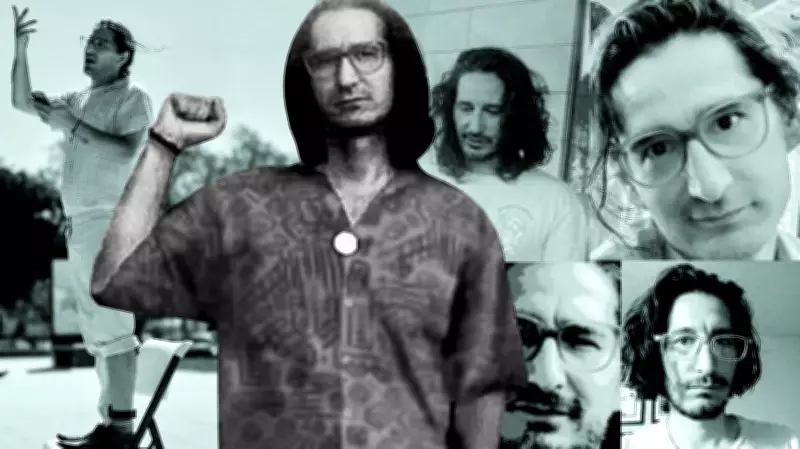
Caravello, a 38-year-old philosophy lecturer at California State University Channel Islands and active union member, had informed friends he was at the raid. When he stopped responding to messages, colleagues, friends, and students formed an impromptu search committee. They checked hospitals and jails, eventually traveling 70 miles to the Los Angeles Metropolitan Detention Center, where immigrants from the raid were held.
Caravello was detained without access to a lawyer, but searchers only discovered this two days later when his name appeared in the federal prisoner database. Each visit to the detention center was met with officials turning them away, refusing information. “It was one of the most difficult moments of my life,” said Taylor, a former student and community organizer. “My mother is a deportation survivor. Having people kidnapped and disappeared is something I have deep trauma with. It was like losing a father, uncle, or brother. To see it happen so blatantly, right before my eyes — I couldn’t sleep, I couldn’t eat.”
Brutal Raid Details Emerge
As the search continued, details of the raid surfaced: Federal agents arrested 361 immigrants across two Glass House facilities. One worker, 56-year-old Jaime Alanis García, fell from a 30-foot roof after calling his family to say he was hiding from agents. He died days later, marking the first known fatality during the Trump administration’s immigration raids.
Legal Charges and Defense
Days after the raid, federal officials accused Caravello of throwing a tear gas canister at U.S. Customs and Border Patrol agents, charging him with misdemeanor assault on a federal officer. An affidavit by Homeland Security Investigations Special Agent Virginia Pulido claimed the canister came within several feet of agents’ heads but did not describe any injuries.
Caravello was released after four days on a $15,000 surety bond. Prosecutors later convened a grand jury to bring a felony charge of assault on a federal officer with a deadly or dangerous weapon, carrying a maximum 20-year prison sentence. Caravello learned of the felony charge from friends who saw a post on X by U.S. Attorney Bill Essayli.
His trial begins Tuesday, with his defense likely arguing he was protecting himself and others from tear gas rather than attacking agents. “They rolled it at him and some other protesters as they were walking away and he threw back over their heads,” said his attorney Knut Johnson in November after Caravello pleaded not guilty. Caravello declined to comment due to his pending case, and the Department of Justice did not respond to requests for comment.

Broader Pattern of Criminalization
The aggressive charging in Caravello’s case reflects a broader federal pattern of seeking long sentences against those resisting anti-immigration policies. “This is not an isolated situation,” said Margarita Berta-Ávila, president of the California Faculty Association, Caravello’s union. “We know that this is a reflection of patterns of escalation to criminalize dissent and activism with respect to our undocumented communities, immigrant communities, and communities of color in general.”
Nationwide, juries have often declined to convict protesters on baseless assault charges, but the charges themselves can chill activism. “They want the drama of being able to post that they’re going to throw a peaceful protester in jail for 20 years,” said Kendall McClellan, an English faculty member at CSUCI. “They’re not receiving convictions on these — I don’t think that’s the point. The point is to scare people so we won’t stand up for our First Amendment right to protest.”
Community and University Context
CSUCI, where Caravello teaches, is a five-minute drive from Glass House Farms in Camarillo, California. Known as the “People’s University” for its lower tuition and diverse student body, the Channel Islands campus has 62% Latinx students and 60% first-generation students. Caravello starts each course by emphasizing he “cares about us as people first and students second,” said Ryan Witt, a former student and union intern. He actively supports students with mental health, housing, and food insecurity resources.
Taylor met Caravello seven years ago in his philosophy class as a runaway youth without parental support. She credits him as a mentor who empowered students to organize for change. Together, they founded the university’s chapter of Students for Quality Education and worked on Title IX reforms and alternatives to campus police. Ahead of Donald Trump’s reelection, Caravello connected students with immigrant rights groups to learn protection strategies.
By the raid, both were participating in community patrols to monitor immigration enforcement. The night before, they urged Camarillo City Council to reject federal immigration presence. “Many of my students are undocumented and many of their families are undocumented. It’s my responsibility to protect them, and so I’ve been patrolling the city streets following armed, masked thugs trying to kidnap my neighbors,” Caravello said at the meeting. “ICE is not welcome here.”
Harsh Release Conditions
After release in July, Caravello faced strict conditions: an ankle monitor costing $130 monthly, a curfew from 8 p.m. to 5 a.m., confinement to the Central District of California, and random drug testing. He downplayed the hardships, noting others had it worse, but friends saw the toll. “It’s like a night-and-day difference, John before this incident and John after this incident,” Taylor said.
His visits to family in Arizona were paused, organizing work reduced due to the ankle monitor’s risk to activists, and even ocean swims were forbidden. In March, a judge replaced the monitor with a phone app requiring random nighttime selfies to prove he was home. For two weeks, he got no more than four hours of uninterrupted sleep, prompting the judge to lift the requirement late last month after his lawyer cited sleep deprivation affecting trial preparation.
Solidarity and Support
Supporters urge community attendance at the trial, framing it as part of a federal crackdown on dissent. “We will not allow them to make an example of our professor, our ally, our friend,” said MEChA co-chair Mercedes Cacho at a pre-trial rally. “Your courage and bravery to protect us doesn’t go unnoticed. It fuels us. The fear instilled by these state powers don’t work on us, in fact, they do quite the opposite. This is because we know that solidarity and organization between people like John and I and who we represent is the most powerful.”