Windsor Woman's Killing Sparks Global Debate on Khalistan Separatist Movement
The tragic stabbing death of Windsor resident Nancy Grewal has ignited a firestorm of controversy in an already volatile global landscape marked by divisive geopolitics and diplomatic tensions. In the aftermath of her killing in LaSalle, foreign media outlets, pro-India online commentators, and even members of Grewal's own family have pointed fingers at the Khalistan movement, which advocates for an independent Sikh homeland within India.
Conflicting Narratives and Unanswered Questions
Each side in this complex conflict—the Indian government and the Khalistan independence movement—accuses the other of spreading misinformation and perpetrating violence, including murder. Indian authorities frequently label Khalistan supporters as extremists and terrorists. In contrast, Khalistan activists argue that the Indian government employs violence and disinformation campaigns to suppress their movement, citing high-profile plots against independence advocates on Canadian and American soil.
However, LaSalle police investigators, who are being assisted by the Ontario Provincial Police, have made no public connection between Grewal's homicide and Indian separatists, despite confirming that the attack was targeted. As of this week, no arrests have been announced in the case.

"To attribute it to the Khalistan movement is problematic in the sense that police have not actually provided a motive or suspects," explained Balpreet Singh, legal counsel for the World Sikh Organization of Canada. "Until you find out what actually motivated this and who's responsible, I think it's irresponsible."
Who Was Nancy Grewal?
Nancy Grewal, a 45-year-old personal support worker who immigrated to Canada from India in 2018, was stabbed to death on the doorstep of a client's LaSalle home on March 3. Beyond her professional role, Grewal was also a social media influencer with outspoken views against the Khalistan movement among other issues. She had previously stated in an online video that she had received threats and feared for her safety.
"The murder is tragic, and whoever is responsible has to be brought to justice," said Singh, who is also 45. "And the fact that she was being threatened, it's very unfortunate."
Her death quickly gained international attention, with widespread speculation focusing on potential involvement by Khalistan "extremists."
Understanding the Khalistan Movement
The Khalistan movement represents a long-standing separatist effort to establish an independent Sikh homeland carved out of Indian territory. While there is no consensus on precise borders, this proposed state would generally encompass the Punjab region in northern India, where Sikhs constitute the majority population.
"I always say, if you ask 10 Sikhs what Khalistan is, you might get 11 different answers," noted Singh. "But at its core, the concept of self-determination, a place where Sikhs and all people can live with dignity and freedom, is something that I would argue almost all Sikhs support."
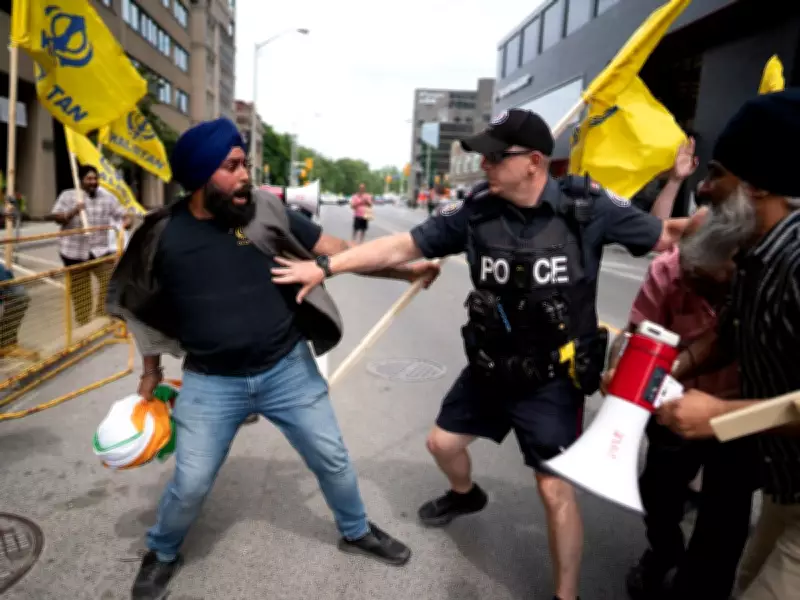
The movement has periodically gained international attention through protests and demonstrations, including notable confrontations outside Indian diplomatic offices in cities like Toronto. The killing of Nancy Grewal has now thrust this complex geopolitical issue back into the global spotlight, raising difficult questions about political violence, free expression, and the challenges of investigating crimes with potential international dimensions.