In a stark warning, columnist Barbara Kay asserts that Canadian Jews are facing a profound security dilemma, caught between hostile mobs and a perceived failure of state protection. Drawing direct parallels to the deadly Bondi Beach Hanukkah celebration massacre in Australia, which left 15 dead and 40 wounded, Kay questions who will protect Jewish communities if law enforcement will not.
A Chilling Echo from Bondi
Kay recounts a haunting witness account from the Australian tragedy. A mother, separated from her three-year-old daughter, approached police officers who were hiding behind a car. In desperation, she tried to grab one of their weapons to defend herself and her child, only to be physically stopped by an officer. For Kay, this moment encapsulates the modern diaspora Jew's plea and the state's twofold refusal: "Protect us. No? Then allow us the means to protect ourselves. Also, no."
She argues that the foundational belief of immigrant forebears—that democratic societies offer equal protection to all minorities—has been shattered. Security in the West, she contends, is contingent on there being "no political downside to its provision." In Australia, fear of organized Islamism's growing power allegedly activated this contingency, leading to a catastrophic security failure.

A Pattern of Inaction in Canadian Streets
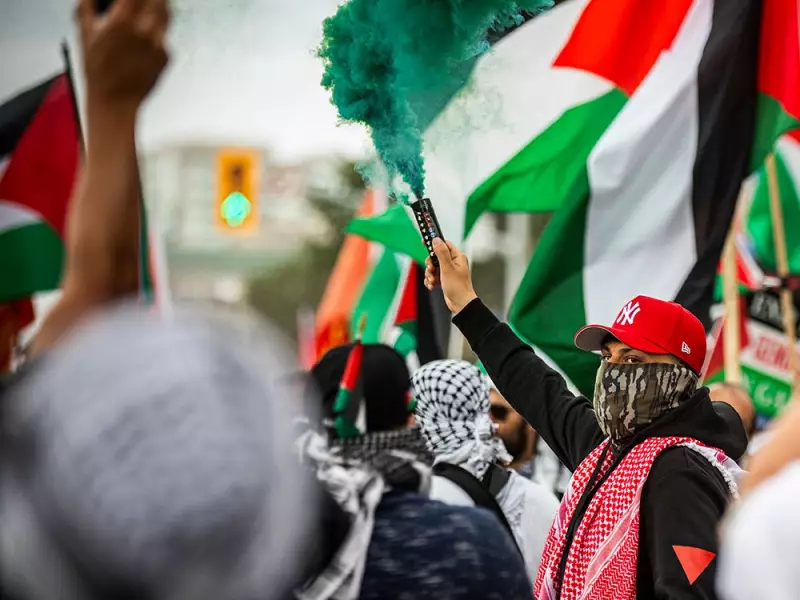
Kay details what she sees as a consistent pattern of police passivity across Canada. She points to events like Al-Quds Day rallies, where virulent antisemitic rhetoric is broadcast without consequence. She highlights the continual blocking of roads by pro-Hamas protesters calling for a "global intifada," a phrase she identifies as a dog whistle for violence against Jews.
Furthermore, she cites the ongoing intimidation and harassment of Jews in Toronto's Bathurst-Shepherd area by antisemitic mobs. Quoting her colleague Fr. Raymond De Souza, Kay states that police "have been allergic to any enforcement of existing laws that might give some relief to Canadians who are simply living while Jewish." The conclusion, she writes, is alarming: It is pure luck a Bondi-like attack hasn't happened here. Yet.
Historical Precedents and the Search for Self-Defence
The column explores the theme of Jewish vulnerability and the history of self-defence when state guarantees prove illusory. Kay references a late-December Breaking History podcast hosted by national security expert Eli Lake, titled "A History of Tough Jews." The segment revisits the 1930s in New York, where police were passive in the face of mass rallies by Hitler sympathizers.
The only effective pushback then, she notes, came from organized crime figures like Meyer Lansky and Lucky Luciano, who used intimidation and baseball bats to confront Bund supporters. While not advocating for vigilantism, Kay uses this history to underscore the desperation that arises when official protection fails.
She also draws a link between the intellectual climate of the 1930s and today, citing Stephen H. Norwood's book, The Third Reich in the Ivory Tower, which documents how American academia, including Harvard, often assisted Nazis in gaining Western acceptance. Kay asserts that the October 7 attacks have further inflamed antisemitism among progressive intellectuals, creating a permissive environment for hatred.
Barbara Kay's central argument is a dire one: For two years, Canada has, in her view, pandered to elements whose purpose is to demonize Israel and foment hatred against Jews. The combination of police inaction, empowered mobs, and a failure of moral leadership from some institutions has, she warns, created a tinderbox where a catastrophic attack is a matter of when, not if.