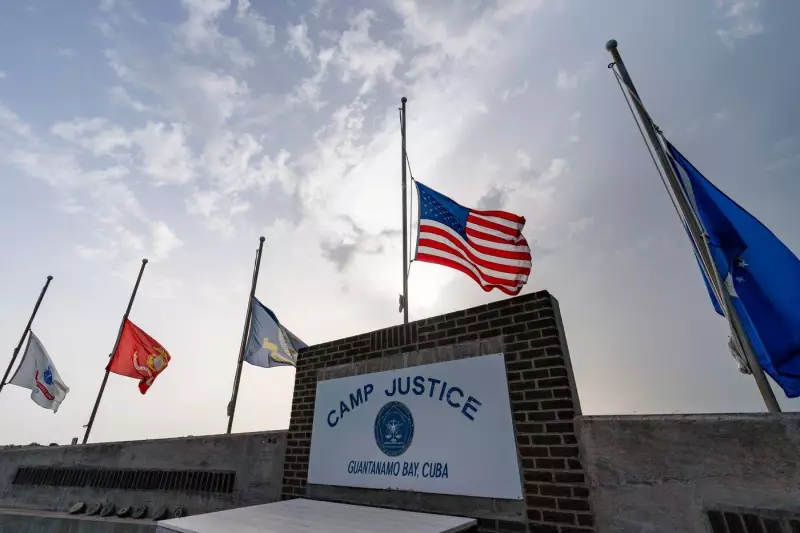
A federal judge in the United States has dealt a significant blow to the former Trump administration's legal strategy, refusing to throw out a major lawsuit that contests the detention of migrants at the Guantánamo Bay naval base.
Legal Challenge Moves Forward
The ruling, delivered on December 06, 2025, allows the contentious case to proceed in court. The lawsuit directly challenges the policy and practice of holding migrants at the controversial detention facility in Cuba, a site long associated with the war on terror rather than immigration enforcement.
Judge Alison J. Nathan of the U.S. District Court for the District of Columbia rejected the Department of Justice's motion to dismiss the case. The government's lawyers, representing the former administration's stance, had argued the lawsuit should be tossed out, but the judge found the plaintiffs' claims substantial enough to warrant a full hearing.

Details of the Controversial Policy
The lawsuit centers on the use of Guantánamo Bay, officially known as the Guantanamo Bay Naval Base, for detaining migrants. This policy marked a dramatic expansion of the base's role. For decades, its detention camps were synonymous with holding terrorism suspects indefinitely. The shift to using it for migrant detention sparked immediate legal and humanitarian concerns from advocacy groups.
Plaintiffs in the case argue the detentions violate U.S. and international law, citing poor conditions and a lack of due process. The photo released by the U.S. military and referenced in court documents, showing flags at half-staff at Camp Justice on August 29, 2021, serves as a backdrop to the ongoing legal battles at the remote base.
Implications and Next Steps
This decision is a pivotal moment for the plaintiffs and sets the stage for a potentially landmark legal battle over the scope of executive power in immigration and detention matters. By allowing the case to move forward, the judge has ensured that the legality of using Guantánamo for migrant detention will be scrutinized in open court.
The ruling does not determine the ultimate outcome of the lawsuit but is a crucial procedural victory for those challenging the policy. It compels the government to defend the detentions on their merits, presenting evidence and responding to allegations of rights violations. Legal experts anticipate a protracted court fight that could eventually reach higher courts, shaping U.S. detention policy for years to come.