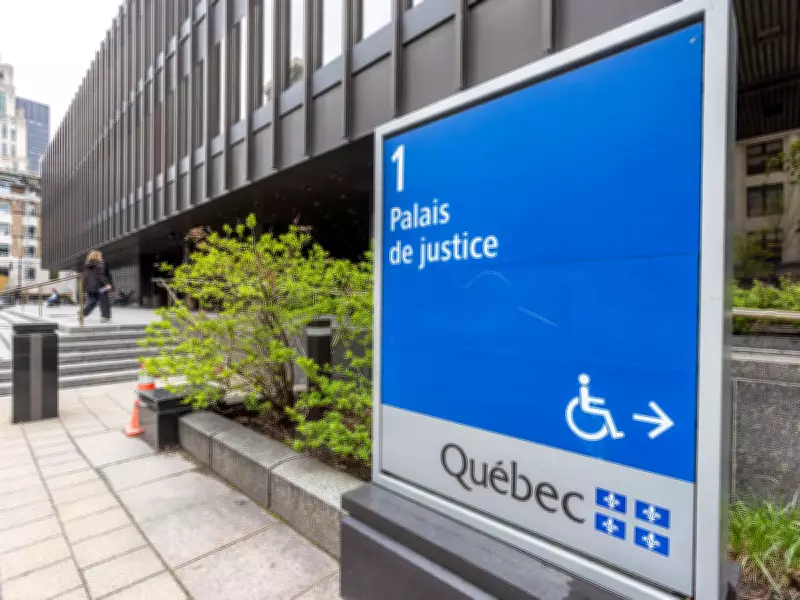
A Quebec judge has firmly stated that Canada cannot establish a separate judicial system for immigrants who face criminal charges, weighing into a national debate about how immigration status should influence sentencing decisions.
Judge's Ruling on Immigration Consequences
Provincial court Judge Dennis Galiatsatos made this significant observation while handling the case of Raed Ahmad Sariss, a married immigrant in Montreal who criminally harassed his former girlfriend over six months. The defendant, who arrived in Canada in 2018, believed his actions were acceptable under Sharia Law as he wanted the victim as a second wife.
"Immigration consequences cannot take a sentence out of the appropriate range or justify what would otherwise be an unfit sentence," Judge Galiatsatos declared in his March 23 sentencing decision. "They must not be allowed to dominate the exercise or skew the process either in favour of or against deportation."

Warning Against Parallel Justice Systems
The judge cautioned that considering immigration status must not lead to a parallel criminal justice system where non-citizens receive lighter sentences than Canadian citizens for identical offenses committed under similar circumstances. He emphasized that the justice system must maintain consistency and fairness regardless of citizenship status.
Judge Galiatsatos cited several appellate court cases where discharges given to immigrants in domestic violence situations were overturned and replaced with jail time, demonstrating that courts have previously corrected sentences that appeared influenced by immigration considerations.
Political Context and Conservative Response
The issue has gained political traction, with federal Conservatives actively engaging in the debate. Last fall, Conservative MP Michelle Rempel Garner introduced private member's Bill C-220, which would prohibit judges from considering how a sentence might affect an offender's immigration status.
Conservative Leader Pierre Poilievre voiced strong support for the legislation in December, stating: "It should be a stated policy of our system to get criminals out of Canada. If someone is not a citizen, not a Canadian, and commits a crime, then they should be shown the door."
Details of the Criminal Harassment Case
The case before Judge Galiatsatos involved Raed Ahmad Sariss, 46, who pleaded guilty to criminally harassing his former girlfriend between November 2023 and April 2024. The victim was 22 years old at the time and worked as Sariss's employee at a Montreal bar, where she was 22 years younger than him.
According to court documents:
- Sariss was born in the United Arab Emirates to Palestinian refugee parents
- He immigrated to the Philippines in 2010, where he married his pregnant girlfriend
- His wife and children continue to live in Manila
- He believed polygamy was permitted under Islamic law and planned to marry the victim
When the victim ended the relationship, Sariss refused to accept her decision and engaged in an intense campaign of writing, following, and watching her despite her repeated pleas to be left alone. Even after his arrest and signing of release conditions, he violated those terms one month later by returning to watch her at her home.
The judge noted that Sariss remained undeterred by legal consequences, demonstrating persistent behavior that warranted appropriate sentencing without consideration of potential immigration repercussions.
Broader Implications for Canadian Justice
This ruling comes amid increasing scrutiny of how immigration status intersects with criminal sentencing across Canada. The judge's decision reinforces the principle that criminal justice must remain consistent for all individuals within Canadian borders, regardless of their citizenship status or potential deportation outcomes.
The case highlights the complex balance between maintaining fair sentencing practices and addressing legitimate concerns about criminal behavior among non-citizens, setting a precedent that could influence future cases involving immigrants facing criminal charges in Canada.