New information has surfaced about the U.S. Immigration and Customs Enforcement (ICE) agent involved in the fatal shooting of a woman in Minneapolis, revealing he was the victim of a severe vehicular assault just six months earlier. The incident, which occurred on January 7, 2026, resulted in the death of 37-year-old Renee Nicole Good and has ignited a fierce national debate.
The Incident and a Revealing Past
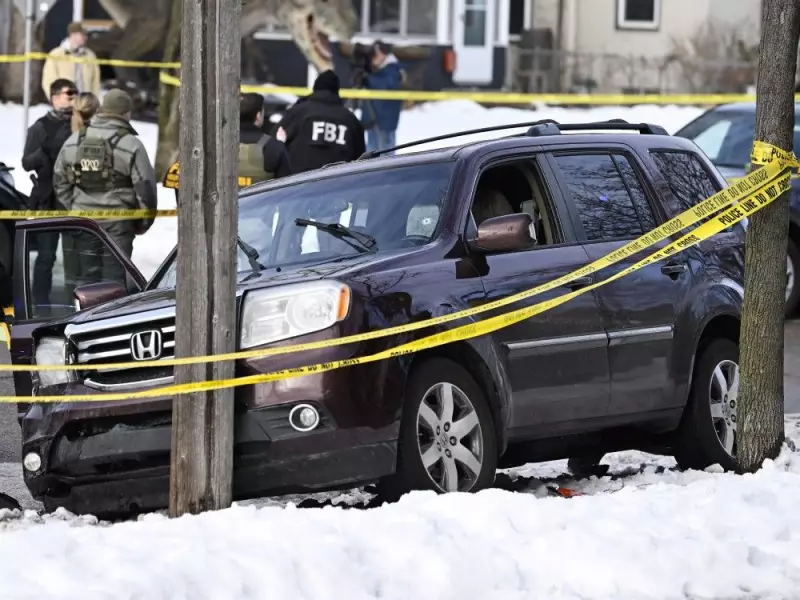
During a federal law enforcement operation in Minneapolis, ICE agents attempted to stop an SUV driven by Renee Nicole Good. According to officials, Good failed to comply with commands, reversed her vehicle, and then drove toward an agent. The agent, identified by the Minnesota Star-Tribune as Jonathan Ross, fired his weapon, fatally striking Good.
The context took a significant turn when U.S. Vice President J.D. Vance disclosed during a January 8 White House news conference that Agent Ross had been the victim of an attempted murder by vehicle only months before. Vance stated Ross was dragged between 50 and 100 yards in that prior attack, suffering injuries that required 16 to 30 stitches.

"So you think maybe he’s a little bit sensitive about somebody ramming him with an automobile?" Vance asked rhetorically, defending the agent's actions as self-defence.
Political Fallout and a Call for Compliance
The shooting has drawn sharp political lines. Vice President Vance characterized Good not as an innocent bystander but as part of a group of "left-wing radicals" who were present to "interfere" with the ICE operation. He placed the responsibility for the tragedy squarely on Good's actions.
"The reason this woman is dead is because she tried to ram somebody with her car and that guy acted in self-defence," Vance asserted. "That is why she lost her life and that is the tragedy."
This perspective is echoed in the commentary of journalist Joe Warmington, who argued that the outcome was "self-inflicted" and that Good would be alive today had she complied with law enforcement. The sentiment was reportedly supported by a family member of Good, who was quoted saying she "should have minded her own business" and had no reason to be at the scene.
A Canadian Parallel and Broader Implications
The debate over the use of force when a vehicle is used as a weapon recalls a tragic Canadian case. In 2011, York Regional Police Constable Garrett Styles was killed in Ontario after a 15-year-old driver he had pulled over accelerated, dragging the officer and ultimately pinning him under the vehicle. Styles died from his injuries, while the teenage driver was left a paraplegic and later pleaded guilty to manslaughter.
This historical precedent is cited to underscore the lethal danger vehicles can pose to officers and the split-second decisions they must make. The article contrasts the extensive media coverage and crowdfunding for Good's children—which has raised nearly one million dollars—with what it describes as the relative public forgetfulness surrounding the murder of U.S. National Guard Specialist Sarah Beckstrom in Washington in November 2025.
The core argument presented is that regardless of political stance or opinions on immigration enforcement, the fundamental lesson is that fleeing from or driving a vehicle at law enforcement carries extreme risk. The piece concludes that while the Minneapolis shooting will be thoroughly investigated, the agent's traumatic past and the immediate threat he faced are pivotal facts that cannot alter the central reality: Renee Nicole Good's decision to not comply directly led to her death.