Disturbing Patterns Emerge Following ICE-Involved Deaths in Minnesota
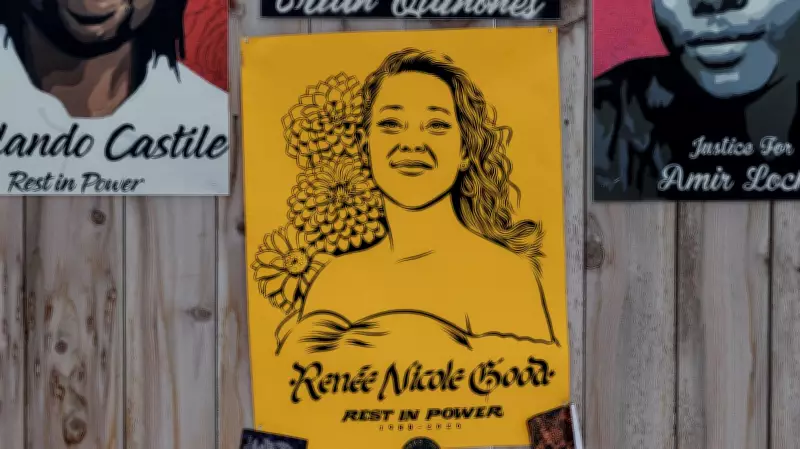
In the aftermath of the fatal shootings of Renee Nicole Good and Alex Pretti by federal immigration officers in Minnesota, public scrutiny has intensified around the conduct of Immigration and Customs Enforcement agents. While investigations have meticulously analyzed the events, one particularly chilling detail from Good's death continues to resonate: video evidence shows that immediately after agent Jonathan Ross shot Good in the head, he referred to her as a "fucking bitch." This moment has become a focal point for understanding broader patterns of behavior within ICE.
Systemic Misogyny in Federal Law Enforcement
According to Megan J. Peterson, executive director of Gender Justice and Gender Justice Action, this language is not an isolated incident. "We are seeing basically in the reports that are coming in that, it's not just [Good] who he called a 'fucking bitch,'" Peterson stated. "That is now a popular refrain that ICE is using when encountering women protesters and ICE Watch folks. We've definitely gotten reports of that in an ongoing way."
Her organization, which launched a tool for reporting gender-based violence by federal law enforcement following the killings, has documented additional troubling behaviors. These include agents telling women "they should be home with their children," making disparaging comments about women's appearances, and systematically misgendering and mistreating transgender women in detention facilities.

The response to Good's death revealed a disturbing mix of misogynistic and anti-queer sentiments, with right-wing circles labeling her a "domestic terrorist" despite video evidence showing her final words were "I'm not mad at you." This contrast between her peaceful demeanor and the violent, derogatory response highlights significant gender dynamics at play.
Recruitment and Toxic Masculinity
To understand these dynamics, experts point to ICE's recruitment strategies and the psychological profiles they attract. Soraya Chemaly, author of "All We Want Is Everything: How We Dismantle Male Supremacy," explains that policing institutions consistently draw men who identify with hegemonic masculine power structures. "Men who identify with this image of hegemonic masculine power, separate spheres for men and women, gender hierarchies, sexual hierarchies, are much more likely to gravitate toward those more authoritarian structures in society," Chemaly noted.
This attraction extends beyond straight, white, Christian men to include men of color and conservative women who respond to messages of "masculine restoration." Chemaly observed that during recent elections, "Hispanic men, Black men, particularly immigrant men [who are] new to the country who maybe had citizenship, also really were very supportive of Trump" and his associated rhetoric.
The Psychology of Aggrieved Entitlement
Sociologist Michael Kimmel's concept of "aggrieved entitlement" helps explain this phenomenon. Many American men perceive gains in equality as losses to their own status, creating resentment that manifests in hostility toward women, minorities, and progressive policies. "It's also compelling to outsource the causes of your distress: it's their fault," Kimmel explained, referring to how these individuals blame others for economic and social challenges.
For men struggling to adapt to changing gender roles and economic realities, ICE and similar institutions offer an outlet for this frustration. Kimmel added, "Racism, antisemitism, misogyny — the MAGA trifecta" becomes a way to externalize their anxieties.
ICE as a Hyper-Masculine Enforcement Tool
Chemaly describes ICE as a "hyper-masculine militarized policing force" used by the government to discipline populations perceived as vulnerable or feminized. "When people resist that, they are being punished for resisting it," she said. The agency's actions in Minnesota demonstrate a desire not just to control space but to punish solidarity and resistance.

The lack of accountability for agents who violate use-of-force policies further enables this behavior. Chemaly connected this to political messaging that promises restoration of masculine glory without consequences. "When Trump stood up and said 'I'm going to restore you to your former place of glory and status,' along with that came, 'and allow you to act without accountability,'" she stated.
Redefining Masculinity Through Tragedy
Peterson highlighted the case of Alex Pretti, a nurse who was shot while helping a woman stand up and directing traffic. "I think the fact that he is a man and also was in a caretaking role, in a community protecting role, is a way in which that old neat division of men versus women, masculinity against femininity, just doesn't hold anymore," she said. Pretti's actions represent "healthy, emotionally intelligent expressions of masculinity" that contrast sharply with the toxic behaviors displayed by some ICE agents.
This tragedy underscores the urgent need to address both the systemic issues within federal law enforcement agencies and the broader cultural forces that fuel misogyny and authoritarianism. As investigations continue, the patterns emerging from Minnesota suggest deep-seated problems requiring comprehensive reform.