The chief prosecutor of the International Criminal Court (ICC) has stated unequivocally that the arrest warrant for Russian President Vladimir Putin will not be rescinded, even if successful peace negotiations to end the war in Ukraine are achieved.
A Permanent Legal Obligation
Karim Khan, the ICC prosecutor, emphasized that the warrant issued for Putin's alleged involvement in war crimes represents a lasting judicial mandate. The warrant, related to the unlawful deportation of children from Ukraine to Russia, was issued in March 2023. According to Khan, the court's decisions are not diplomatic tools but are based on evidence and legal procedure, creating obligations for all member states of the Rome Statute.
Implications for Diplomacy and Justice
This firm stance places a significant and potentially complicating factor into any future peace process. It underscores the ICC's position that accountability for core international crimes is separate from political settlements. Any country that is a party to the ICC would be legally bound to arrest Putin if he were to travel on its territory, a reality that would severely limit his ability to engage in international diplomacy directly.

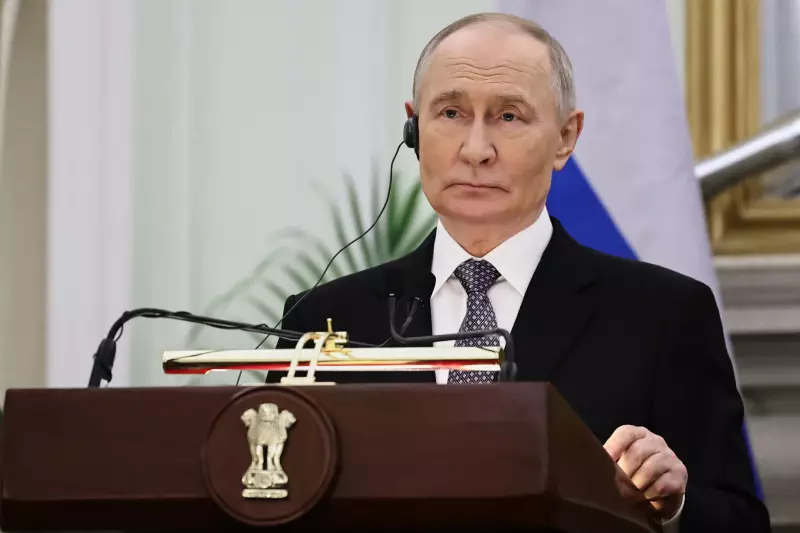
The announcement comes amid a complex global landscape. The statement was made on Friday, December 5, 2025, a day when Putin was photographed in New Delhi, India, for talks with Indian Prime Minister Narendra Modi. India is not a member of the ICC, highlighting the geopolitical divisions surrounding the court's reach.
Global Reactions and the Path Forward
Legal experts note that the ICC's position reinforces the principle that serious crimes under international law cannot be bargained away. While peace talks are a political necessity, the pursuit of justice operates on a parallel, independent track. This creates a enduring challenge for global leaders seeking to broker an end to the conflict while upholding international legal norms.
The warrant against Putin, along with one for Russian official Maria Lvova-Belova, marked a historic moment as the first time the ICC issued charges against a leader of a permanent member of the United Nations Security Council. The prosecutor's latest comments confirm that this legal action is intended to be a permanent feature of the historical record, irrespective of how the war concludes.