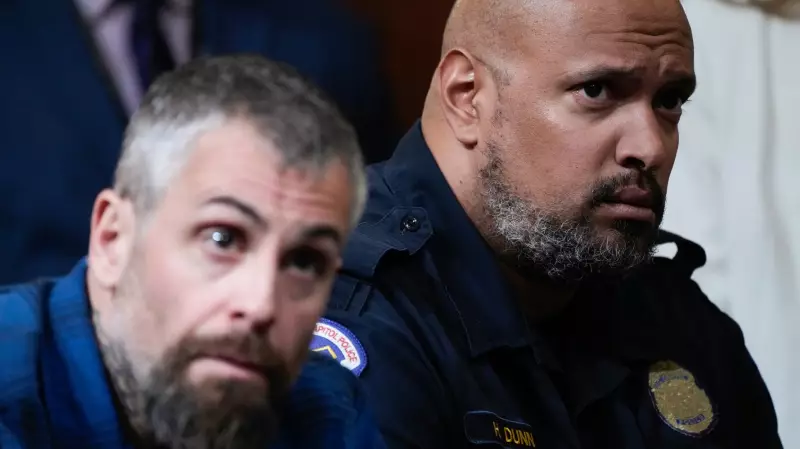
For the past five years, former U.S. Capitol Police Officer Harry Dunn has been driven by a singular mission: to tell the unvarnished truth about the January 6, 2021, attack on the Capitol and to ensure Donald Trump is held accountable for his role in it. "I'm so tired and exhausted, but the fight continues to go on," Dunn recently told HuffPost. He emphasized the ongoing need to counter politicians who urge the nation to "move on" from the insurrection, stating that such a step is impossible without first correctly acknowledging what happened and resisting attempts to rewrite history.
A Witness Against Whitewashing
Dunn's commitment to truth-telling has taken many forms. While still on the force, he was among the first officers to publicly testify about the harrowing violence he faced defending the Capitol. He became a frequent media presence, debunking conspiracy theories about the event. His sworn testimony was also pivotal in courtrooms, most notably during the 2022 seditious conspiracy trial of the Oath Keepers, where he dismantled claims that the extremist group was "helping" police.
The dismissal of special counsel Jack Smith's criminal case against Trump following the 2024 election was a profound disappointment for Dunn. Although the case was dismissed without prejudice, leaving a technical possibility for its revival, Dunn acknowledges the long odds. "There's still an opportunity somewhere down the line for accountability to be had, in a legal sense," he said, maintaining a thread of optimism.

Confronting the "Day of Love" Narrative
Regardless of legal proceedings, Dunn remains focused on combating what he calls "the lies and whitewashing." He directly challenges Trump's repeated characterizations of January 6 as a "day of love" and the former president's framing of convicted rioters as "hostages" and "political prisoners." One of Trump's first acts in his second term was to pardon all individuals convicted of January 6-related crimes, a move Dunn sees as part of a broader effort to distort the event's legacy.
This effort, Dunn argues, includes the rejection by House Republicans of a plaque to honor officers injured on January 6—a subject of a lawsuit he filed with Metropolitan Police Officer Daniel Hodges. Rejecting the plaque is, in his view, "a continuation of them trying to do away with that history and paint Jan. 6 as a favorable event to Donald Trump."
Rioters' Return and a Shift in Strategy
On a recent Tuesday anniversary of the attack, several pardoned, high-profile rioters, including former Proud Boys leader Henry "Enrique" Tarrio, gathered in Washington, D.C. The event aimed to recast the violent insurrection as a peaceful protest and to celebrate Ashli Babbitt, the rioter fatally shot by police. Organizers also reportedly planned to honor fallen Capitol Police Officer Brian Sicknick, who died a day after the attack.
Dunn reacted with blunt skepticism to the notion of rioters honoring Sicknick. "They're full of crap honoring Brian Sicknick," he stated. "They don't give a damn about him. They don't." He expressed little interest in the Proud Boys' activities, instead redirecting his focus to political accountability. "I'm only interested in making sure the people who enabled and supported Donald Trump don't see office," Dunn said. His current definition of accountability is clear: defeating political candidates who carry Trump's endorsement. "That's what accountability looks like to me now," he concluded.